Q2 Freight Brokerage Rates Need a Strategy, Not a Guess

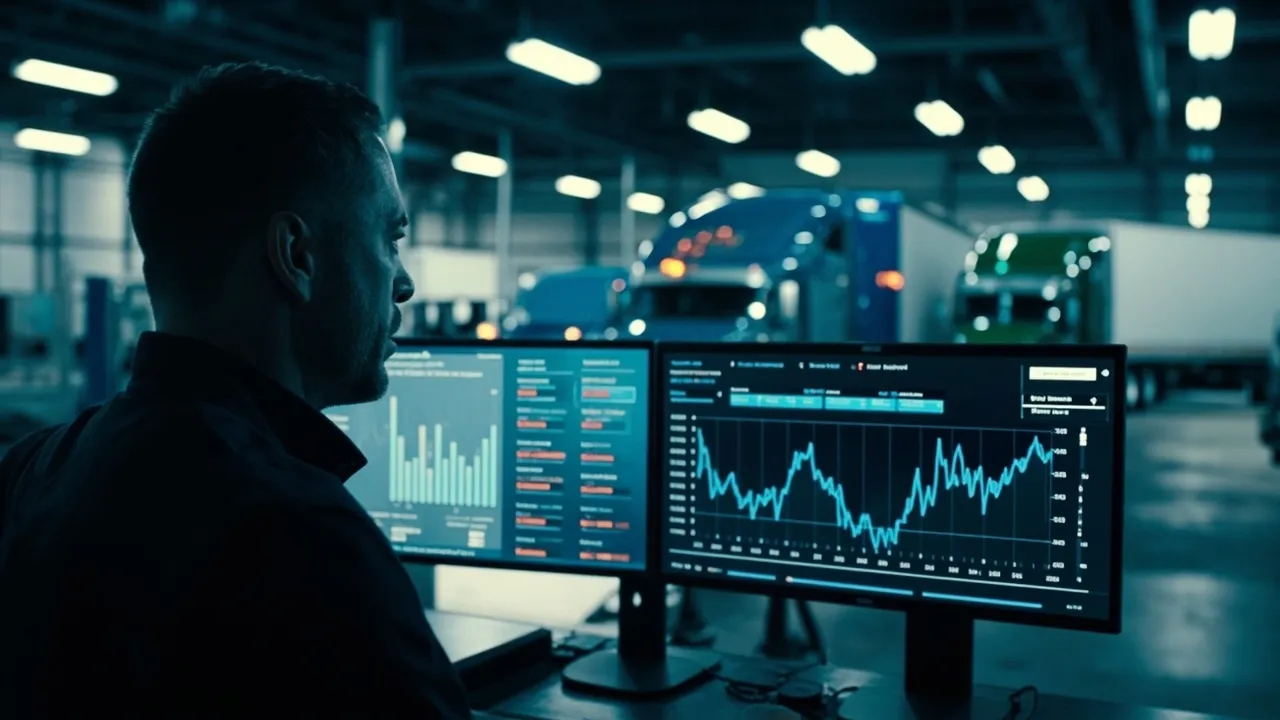
Freight brokerage teams are entering the middle of 2026 with a problem that cannot be solved by last quarter’s routing guide. Rates are not simply “recovering” in a clean, predictable line. Capacity is thinner in the wrong places, spot markets are reacting faster than contract playbooks, and shippers are still cautious about demand. That combination makes rate strategy harder—and more valuable.
FreightWaves’ new Q2 2026 Freight Brokerage Rate Report frames the issue directly: brokers need current intelligence from both market data and broker survey responses to make decisions for the months ahead. The report covers Q2 themes, brokerage survey insights, and takeaways for 2026. In plain English, the market is no longer forgiving enough for “use last bid plus a few percent” planning.
The uncomfortable reality for brokers and shippers is that the next mistake may not be an overpayment. It may be a service failure caused by underpricing a lane that no longer has reliable capacity.
The Market Is Capacity-Sensitive Again
The clearest warning comes from FreightWaves’ June 2026 State of the Industry report. FreightWaves describes a volatile and capacity-sensitive environment where disruptions such as Roadcheck quickly pushed tender rejections and spot rates higher. It also notes that spot rates are outpacing contract rates, widening the gap and pulling capacity toward the spot market.
Tender behavior is where bad pricing assumptions reveal themselves. A routing guide can look healthy until carriers reject the load; then procurement scrambles, operations reaches for the spot market, customer service starts apologizing, and finance discovers that the “savings” were theoretical.
FreightWaves also flags pressure points that belong in rate strategy: stable-but-soft demand, elevated fuel and input costs, producer price inflation around 6%, carrier exits, and stricter broker vetting. None of those creates a simple national rate answer. They create lane-by-lane exposure.
A refrigerated lane into a tight produce market, a flatbed move tied to data center construction, and a routine dry van lane in a soft consumer-goods corridor should not be priced with the same confidence level. The operating context is different. The risk premium should be different too.
Static Bids Are Too Slow for Uneven Recovery
The old procurement rhythm assumes the market will tolerate slow feedback. Run a bid. Award the business. Lock the guide. Measure performance later. That still works in balanced markets, but it breaks down when spot movement, carrier exits, safety vetting, and fuel costs change faster than the bid cycle.
SupplyChainBrain recently reported that major carriers have been able to push double-digit pricing increases, with spot rates up 16% year over year in the first quarter of 2026. The same piece describes a supply-driven recovery, with capacity leaving the market through bankruptcies and regulatory pressure. That is exactly the kind of recovery that punishes static assumptions: demand does not have to boom for rates to move if available capacity keeps shrinking.
For brokers, this changes the job. Rate intelligence is not just a pricing input. It is a margin-control tool, a carrier-risk tool, and a service-protection tool. A broker that prices too low can win freight and lose money. A broker that prices too high can lose shipper confidence. A broker that ignores carrier quality can expose the customer to service failures, claims, or safety risk.
For shippers, the lesson is just as sharp. A cheap primary carrier is not cheap if every third load rolls to the spot board. A contract rate is not protective if it sits below the level required to attract dependable capacity. A routing guide is not strategic if it cannot adapt when rejection patterns change.
Pair Spot Intelligence With Contract Discipline
The answer is not to abandon contract commitments and chase the spot market every morning. That is chaos with a dashboard. The better approach is to use spot intelligence as an early-warning system while preserving disciplined commitments on lanes that still deserve stability.
Start by segmenting lanes into three groups.
First are stable core lanes. These have consistent volume, reliable incumbents, acceptable tender acceptance, and limited seasonal volatility. Contract commitments should remain the backbone here, with periodic checks against market movement.
Second are watch-list lanes. These lanes show rising rejection rates, widening spot-contract gaps, fuel exposure, or service volatility. They need more frequent reforecasting and clear escalation rules before failures become expensive.
Third are exposure lanes. These are lanes where historical rates no longer reflect market reality: capacity is tight, carrier options are thin, freight characteristics are specialized, or customer commitments carry high penalties. These lanes need proactive procurement, backup carrier depth, and pricing that reflects service risk.
That segmentation gives brokers and shippers a better conversation than “rates are up” or “rates are down.” It asks: which lanes are changing, why, and what action follows?
Carrier Financial Risk Belongs in the Rate Conversation
A capacity-sensitive market also makes carrier health more important. When carrier exits continue, the cheapest available option can be the most fragile option. Brokers and shippers should not evaluate rate alone; they should look at service history, claims behavior, insurance status, safety profile, payment experience, and tender reliability.
Many brokerage workflows are still too spreadsheet-heavy. Pricing, carrier compliance, tender history, and service outcomes often live in different systems. A low linehaul rate may hide chronic late pickups, detention disputes, poor communication, or weak recovery performance.
Rate strategy should therefore combine four signals: current spot intelligence, contract commitments, lane-level service history, and carrier risk. If one of those signals is missing, the decision is weaker than it looks.
What CXTMS Teams Should Operationalize
CXTMS is built for this kind of execution problem: not just finding a rate, but turning rate intelligence into better transportation decisions.
A practical workflow starts with lane reforecasting. When market data shows a widening spot-contract gap or repeated tender failures, the lane should be flagged for review. The system should surface volume history, current commitments, recent exceptions, accessorial patterns, carrier acceptance, and customer-service impact in one place.
Next, tender rules should become dynamic. If a primary carrier misses an acceptance threshold, the system should not wait for a weekly meeting. It should trigger a procurement exception, activate approved backups, or route the load through a controlled brokerage process with clear margin and service rules.
Finally, exception-based procurement should replace blanket rebidding. Not every lane needs attention every week. The lanes that need attention are the ones where rate movement, service failures, and capacity risk are converging. Those are the lanes where logistics teams should spend their time.
The Q2 freight brokerage market is not asking teams to guess better. It is asking them to build tighter feedback loops between market intelligence and execution. Brokers need to protect margin without losing service. Shippers need to protect budget without pretending capacity risk is free. Both sides need lane-level truth.
Want to turn freight-rate volatility into a managed workflow instead of a fire drill? Schedule a CXTMS demo and see how CXTMS connects lane intelligence, tender rules, carrier performance, and exceptions in one operating platform.