Flexible Robots Change the Warehouse Automation Capacity-Buying Decision

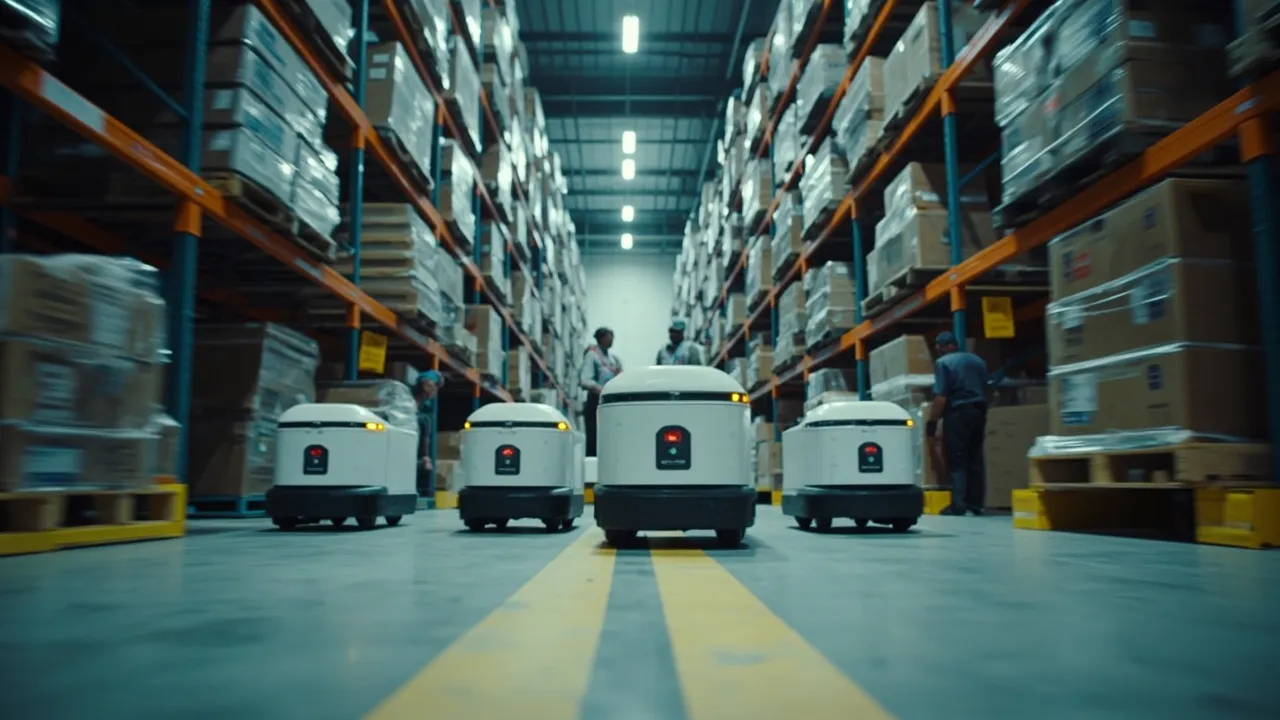
Warehouse automation used to begin with a layout drawing and a capital request. The operator estimated a design-year volume, installed fixed equipment, and hoped the order profile remained close enough to the forecast to justify the asset for years.
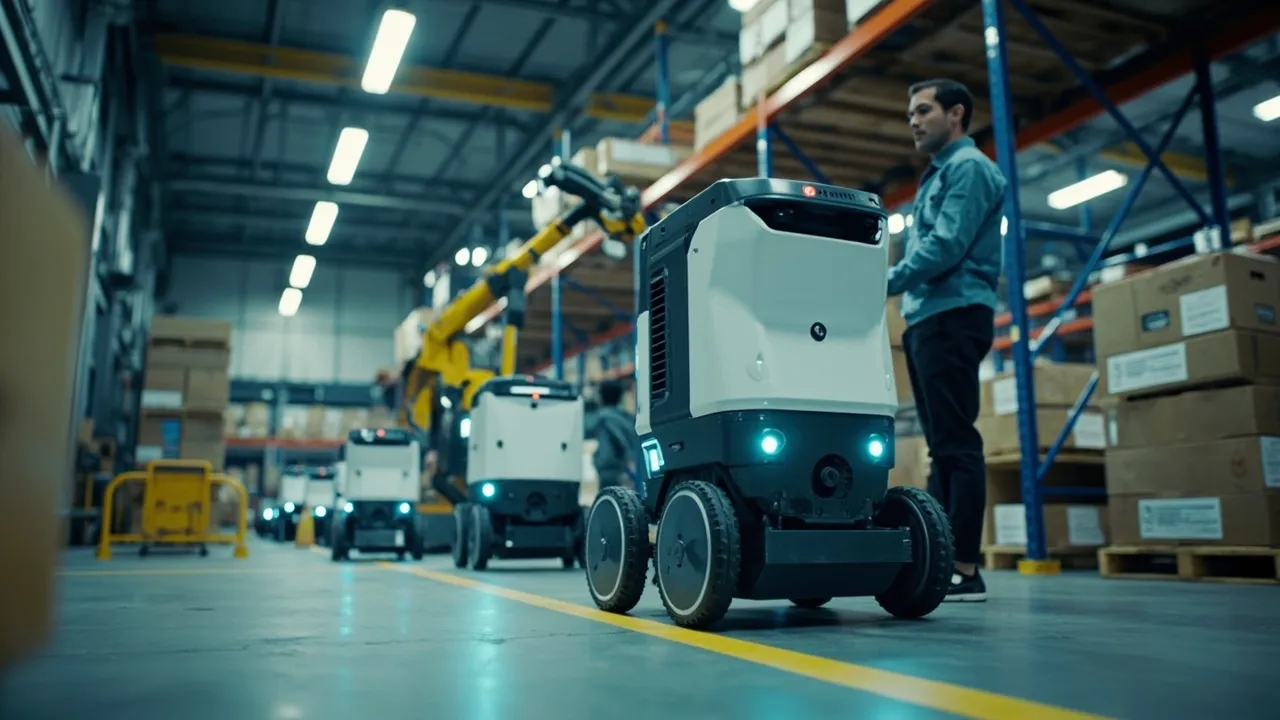
Flexible robots change that decision. Autonomous mobile robots (AMRs) and other modular systems can be deployed without embedding a permanent path in the floor, expanded in increments, and reassigned as order patterns change. The central question is no longer simply, “Should we automate this building?” It is, “How much automated capacity should we buy now, and how quickly can we add or remove it?”
That distinction matters in warehouses where peaks are sharp, labor is uncertain, customer contracts expire, and SKU profiles evolve faster than fixed infrastructure.
Robotics is becoming a capacity option
The market has moved well beyond pilot-only adoption. A 2026 survey by Modern Materials Handling, MHI, and the Robotics Group found that 52% of respondents currently use one or more types of robots, up from 48% a year earlier. Another 32% expect to deploy robotics within three years, while the share with no plans fell to 3%.
The same research shows why capacity planning must sit at the center of the business case. Reduced labor cost was the leading motivation, followed by productivity and throughput. Among respondents naming the single most important labor factor, 67% chose labor cost and 33% chose labor availability. Yet physical warehouse constraints ranked as the leading overall supply chain challenge.
Flexible robotics addresses both pressures. It can reduce associate travel and increase output within an existing footprint without requiring the operator to build a conveyor route around one assumed flow. But flexibility is not automatic. It must be designed into the commercial agreement, data model, integration, and operating process.
Choose ownership according to demand risk
There are three practical ways to secure robotic capacity.
Owned capacity usually makes sense when base demand is stable, utilization will remain high, and the process has a long expected life. The operator accepts a larger upfront commitment in exchange for control and potentially lower lifetime unit cost. The risk is stranded capacity if a contract ends, the network changes, or order characteristics shift.
Leased capacity reduces the upfront burden and aligns payments more closely with the period of use. It can suit a known multi-year requirement, but buyers must scrutinize minimum terms, early-return charges, refresh provisions, and responsibility for maintenance.
Robotics as a service (RaaS) treats robot availability more like variable operating capacity. Units can often be added for peak and removed later, though contract terms determine whether that promise is real. In the 2026 survey, organizations planning robotics split their funding preference between hybrid CapEx/OpEx at 36%, pure CapEx at 36%, and RaaS at 29%. Current users leaned more heavily toward owning hardware and subscribing to software, at 53%.
The right answer may be a portfolio: own enough robots for the predictable base, then contract for flexible units above it. Model a normal week, promotional peak, labor-short week, new-customer ramp, and demand decline. For each scenario, compare total cost per completed order—not merely the monthly robot price.
Data determines usable capacity
A robot count is not a throughput guarantee. Before selecting a platform, assemble at least 8 to 12 representative weeks of operational data, including a real peak.
Start with order demand: lines per order, units per line, release timing, priority classes, cutoff times, cancellations, and the hourly arrival curve. Add SKU facts such as dimensions, weight, velocity, storage location, handling restrictions, and seasonality. Map travel paths, aisle widths, one-way rules, congestion points, charging locations, and the distance between pick faces and handoff stations.
Exception data is equally important. Record short picks, blocked aisles, damaged inventory, depleted batteries, lost connectivity, unreadable labels, and WMS latency. A solution that performs brilliantly on clean orders but repeatedly calls for human rescue may create less capacity than its headline rate suggests.
Operators should also connect warehouse work to transportation commitments. Order priority, carrier cutoff, dock availability, and trailer departure are part of the same execution clock. CXTMS can help coordinate shipment requirements and downstream milestones so added picking capacity supports an achievable dispatch plan rather than simply building a faster queue at the dock.
Test the operating system, not the demo
An acceptance test should reproduce the work the building actually sees. Run the target order mix across multiple shifts with representative staffing, replenishment activity, congestion, and exceptions. Establish four categories of success measures before signing off.
First, measure throughput by hour and by labor hour, including the sustained rate rather than a short burst. Second, measure utilization: active mission time, waiting time, charging time, and idle time by robot. Third, measure recovery: mean time to recognize and clear blocked paths, failed scans, robot faults, and integration outages. Fourth, count human intervention, including touches per 1,000 lines and minutes of specialist support per shift.
Do not accept averages alone. Require performance at peak volume and publish the 90th- or 95th-percentile recovery time. Define who owns every failure mode, what evidence the vendor must provide, and whether missed performance triggers remediation.
The evidence for robotics is encouraging: 74% of users in the Modern Materials Handling survey said projects met business goals, and 94% met or beat expectations for speed to results. Still, 21% said projects fell short. A disciplined acceptance test is what separates purchased equipment from dependable capacity.
Buy flexibility you can prove
SupplyChainBrain reports that RaaS lets operators add or subtract units as demand changes, with companies reporting two-to-three-times more volume handled in a typical shift. Another approved-source analysis notes that person-to-goods robotic implementations can produce ROI in under 12 months. Those are useful reference points, not substitutes for a site-specific model.
The best automation decision ties commercial flexibility to measured operational flexibility. Set the base fleet from reliable demand, reserve a defined expansion mechanism for peaks, validate the data and integration, and make recovery performance contractual. That turns robots from an exciting technology purchase into a controlled unit of warehouse capacity.
Ready to connect warehouse execution with smarter freight planning? Request a CXTMS demo and see how one operational platform can keep orders, shipments, and transportation milestones aligned.