FedEx's $400 Million India Air Cargo Investment Needs a Gateway Allocation Model


FedEx's planned $400 million investment in two Indian airport cargo facilities is more than a capacity announcement. For freight forwarders, it creates a network-design decision: which shipments should move through Delhi, which should move through Mumbai, and when should an incumbent gateway remain the better choice?
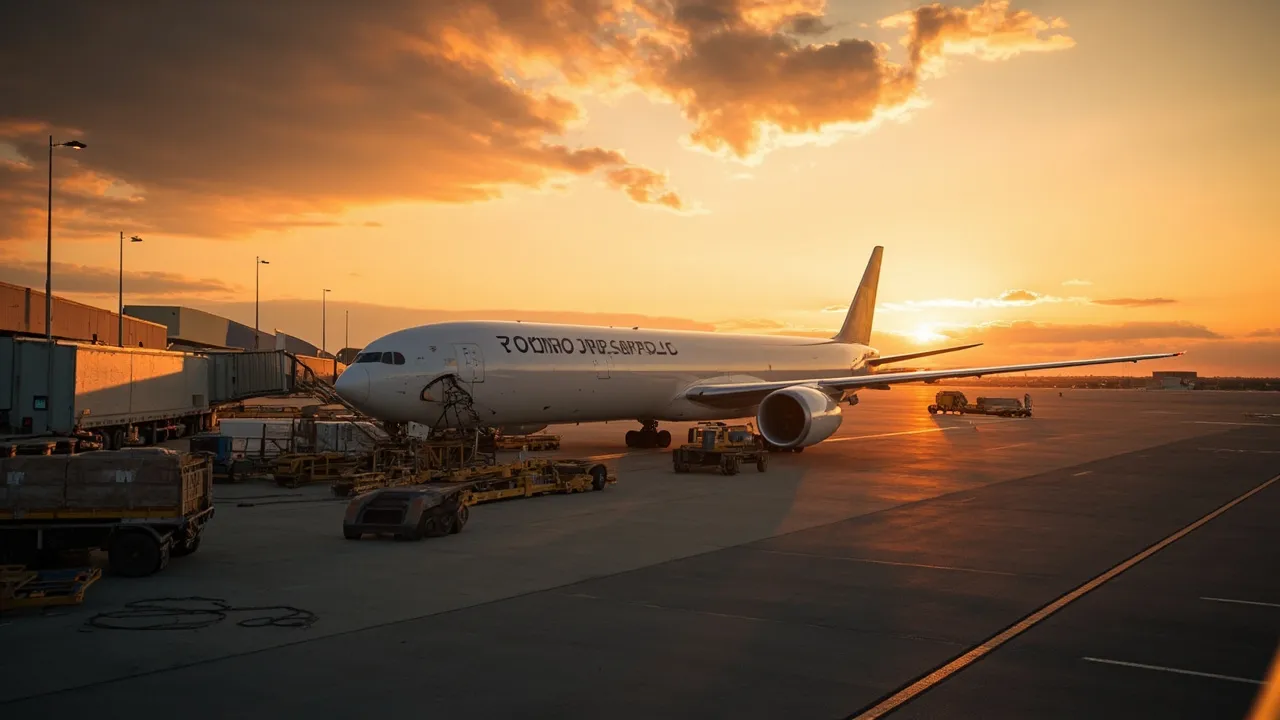
FreightWaves reports that FedEx plans to spend $150 million on a Delhi air cargo terminal, following a separate $250 million commitment for a dedicated parcel hub at the new Mumbai airport. Together, the projects create a potential north-and-west gateway pair. But new infrastructure does not automatically produce better service. Forwarders need an allocation model that converts promised capacity into shipment-level routing rules.
Capacity is only one part of the routing decision
The Delhi operation is reported to handle parcels alongside industrial, pharmaceutical, and manufacturing freight, with throughput capacity of 4,000 packages per hour. Meanwhile, the Mumbai project is tied to a new airport cargo complex intended to serve western India.
Those figures establish scale, not usable capacity. A forwarder cannot allocate freight using a terminal's theoretical hourly rate alone. The relevant question is how much capacity remains available for a specific lane, product, cutoff, and service commitment after arrival bunching, security screening, customs activity, unit-load-device availability, and aircraft uplift are considered.
This distinction matters because airport throughput and flight capacity are separate constraints. A shipment may clear a terminal quickly and still wait for uplift. Conversely, an available flight is not useful when feeder traffic misses the acceptance cutoff. The allocation model must therefore connect terminal processing, landside transfer, customs readiness, and scheduled uplift rather than treating each as an isolated milestone.
Build the model around four gateway scores
A workable model can score every eligible routing across four dimensions.
1. Transit reliability
Start with actual performance, not the timetable. Measure the percentage of shipments that reach destination by the committed date, then break failures into missed origin cutoff, terminal delay, customs delay, offload, and destination recovery. Use rolling 30- and 90-day views so planners can distinguish a temporary disruption from a structural pattern.
Reliability should carry more weight for pharmaceuticals, production-line components, and other shipments where one missed connection destroys the value of a cheaper routing. Air cargo moves roughly one-third of global trade by value, according to Reuters, which helps explain why reliability and custody controls matter far beyond shipment weight.
2. Handling risk
Count physical touches, transfers between facilities, breakdown and build-up events, and custody handoffs. Then adjust for commodity requirements such as temperature control, dangerous-goods acceptance, oversize capability, and high-value security.
A direct gateway with a slightly longer truck leg may be safer than an apparently faster routing that adds an airport transfer. Record damage, temperature excursion, and handling-exception rates by facility and commodity. Do not substitute a networkwide average for local evidence.
3. Customs time
Measure time from document readiness to release, separating broker preparation, customs submission, examination, duty payment, and terminal release. Compare like with like: express parcels, formal entries, bonded transfers, and regulated commodities should not share one benchmark.
The model should also account for operating calendars and arrival time. A gateway with a lower median clearance time can still be the worse choice if a Friday-night arrival produces a weekend hold. Use percentile performance—especially the 90th percentile—because a median hides the long delays that consume inventory buffers.
4. Total landed cost
Combine origin pickup, feeder or line-haul cost, terminal and screening charges, airfreight, customs brokerage, duties, destination delivery, and expected exception cost. Add the financial impact of additional inventory days and service failures. A low air rate can lose its advantage when it requires an extra transfer or an earlier pickup.
Keep quoted, accrued, and invoiced amounts separately. That makes the model useful for both pre-shipment selection and post-shipment audit.
Capture the data needed for a fair comparison
Every candidate routing needs a common shipment record. At minimum, retain origin and destination postal codes; ready time; promised delivery time; commodity; weight and dimensions; package count; declared value; temperature and security requirements; customs-entry type; planned and actual milestones; flight number; cutoff; uplift status; and all cost components.
The comparison must also preserve routing versions. When a cutoff changes or a new flight is added, planners should know which rule was active when a shipment was booked. Without version control, yesterday's performance is easily—and incorrectly—judged against today's schedule.
For each lane, create a baseline using the incumbent gateway before shifting volume. Then test Delhi and Mumbai with controlled shipment groups. A useful scorecard might weight on-time performance at 35%, total landed cost at 30%, customs predictability at 20%, and handling risk at 15%. The exact weights should change by customer and commodity, but the inputs and scoring method should remain visible.
Allocate in stages, then keep an escape route
Begin with freight that has schedule flexibility, complete documents, standard handling requirements, and more than one viable uplift. Increase allocation only after the new path meets agreed thresholds for several consecutive weeks. Protect critical shipments with a fallback gateway and a defined decision deadline.
Trigger reassignment when projected terminal dwell exceeds the lane threshold, uplift confidence falls below the service requirement, customs documents remain incomplete at cutoff minus a set buffer, or total landed cost moves outside the approved tolerance. The TMS should recommend the alternative while preserving the reason, approver, revised milestones, and expected cost impact.
FedEx's investment could give forwarders valuable new options across northern and western India. The winners will not be the teams that simply route more freight through the newest buildings. They will be the teams that measure each gateway as a connected operating system and allocate every shipment according to service risk and total cost.
Ready to turn gateway capacity into defensible routing decisions? Request a CXTMS demo and see how one transportation platform can connect lane rules, milestones, costs, and exceptions.