Costco's Ultra-Fast Delivery Expansion Needs Store-Level Capacity Controls

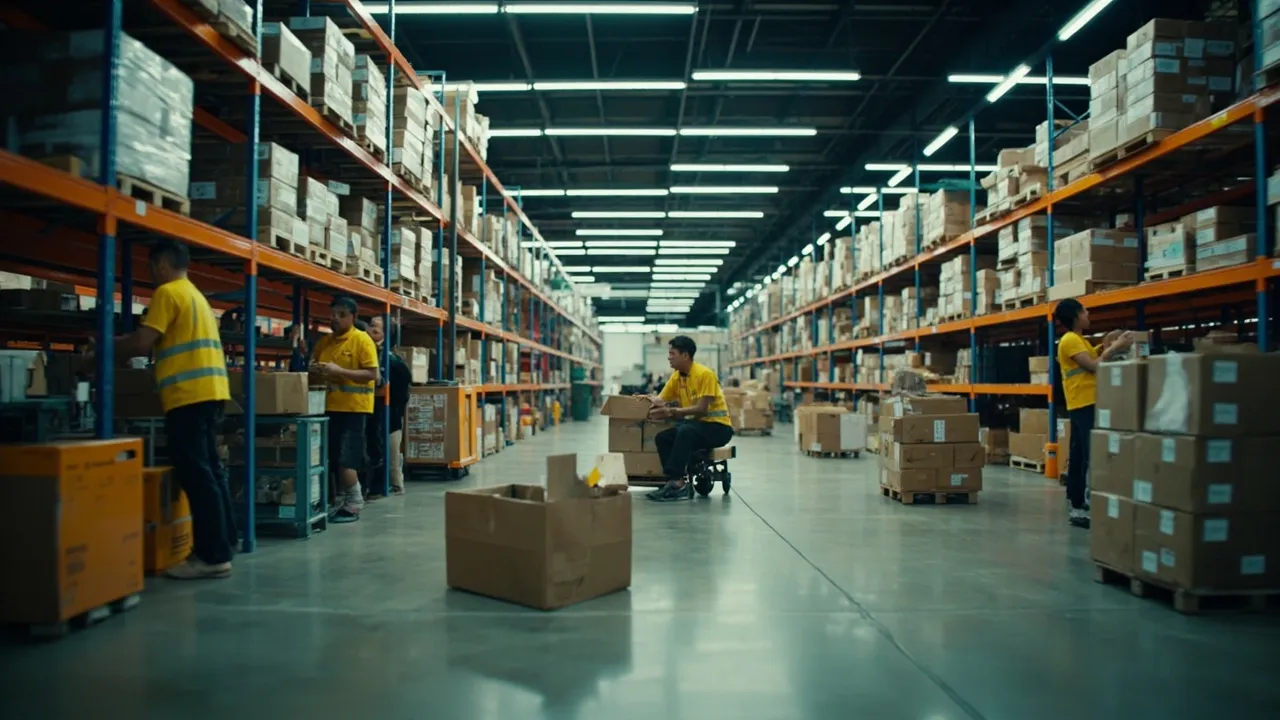
Costco's expansion onto DoorDash and Uber Eats gives members more ways to order, but it also turns each participating warehouse into a node in a multi-marketplace fulfillment network. That is not merely a last-mile change. It creates a real-time capacity problem inside stores designed primarily for pallet displays, high basket sizes, and member traffic.
FreightWaves reports that Uber expanded Costco delivery from 17 states to 47, with nearly 600 locations available through Uber Eats. DoorDash now offers Costco groceries, dry goods, household essentials, and other products in the United States, extending a relationship already operating in several international markets. At the same time, online sales account for 16.5% of total retail sales and are growing about 10% annually.
Those numbers create reach. They do not create unlimited picking labor, staging space, or shelf inventory. Retailers need store-level controls that admit only the digital demand each location can execute without damaging the in-store member experience.
Treat every marketplace as one demand stream
A store can appear on its own website, DoorDash, Uber Eats, and other delivery platforms simultaneously. If each channel manages availability and promised time independently, they compete for the same units and labor while seeing only part of the workload.
The control layer should consolidate every order before making a promise. For each store and 15-minute interval, it needs to know open orders, expected item count, active pickers, average pick minutes, staging positions, courier arrivals, and checkout constraints. Capacity should then be allocated across channels from one shared pool.
A simple admission rule is more useful than a blanket daily limit. Estimate the labor minutes required for an incoming basket, add the work already queued, and compare the result with productive minutes available before the promise cutoff. If utilization crosses a safe threshold, the system can lengthen the quoted window, reduce the delivery radius, suppress labor-intensive items, or temporarily pause new orders.
This matters because the network is broad. FreightWaves says DoorDash serves eight of North America's 10 largest food retailers and has tens of thousands of retail stores on its platform. Marketplace demand can arrive quickly; store capacity cannot expand at the same speed.
Reserve inventory without creating phantom availability
Warehouse-club assortments are distinctive: large packs, fast-moving staples, seasonal items, and high-value products often share limited floor inventory. A marketplace listing that updates slowly can promise a unit already placed in another member's cart or picked for a different channel.
Inventory should move through explicit states: available, soft-reserved, pick-confirmed, staged, and handed off. A short soft reservation can protect stock while payment and order validation complete. The reservation should expire automatically if the transaction fails. Pick confirmation should use a scan, not an assumption based on system quantity.
Safety stock also needs to vary by item and time. A high-velocity SKU with unreliable on-hand accuracy needs a larger buffer than a stable item. During peak store hours, the system may reserve more inventory for walk-in demand. Near closing, it may expose more stock digitally if replenishment and shelf checks support the decision.
Substitution rules must be equally precise. Bulk products can make a seemingly similar substitute materially more expensive or unsuitable. Capture customer permission by category, cap acceptable price and quantity variance, and prevent pickers from making improvised swaps that create refunds or poor experiences. When confidence falls below the threshold, showing an item as unavailable is better than manufacturing a broken promise.
Control the physical handoff
Ultra-fast delivery compresses the time between pick release and courier arrival. Without appointment logic, several platforms can dispatch drivers to the same entrance at once, filling staging racks and blocking member traffic.
Assign every completed order a temperature zone, staging position, ready time, and courier handoff window. Driver dispatch should follow actual pick progress rather than the original order timestamp. If picking runs late, platforms need an updated ready signal before a driver begins an unproductive wait.
Staging capacity belongs in the admission calculation. A location with labor to pick 30 orders may have safe space for only 15 completed baskets. Once predicted staging occupancy reaches its limit, the store should meter releases even if pickers are available. Grocery orders also need maximum dwell rules for ambient, chilled, and frozen items, with alerts that trigger repicking or cancellation before product integrity is compromised.
The handoff experience counts. In Supply Chain Dive's interview with Chewy COO Scott Anderson, he argues that delivery is part of the customer experience and recommends combining operational metrics with customer anecdotes. For store fulfillment, that means tracking courier wait, missing items, substitutions, temperature exceptions, and member complaints together—not as separate platform reports.
Put a profitability gate behind the service promise
More orders are not automatically better orders. Calculate contribution at order level after marketplace fees, picking labor, packaging, substitution losses, refunds, promotional funding, and exception handling. Then relate margin to the capacity consumed.
A large, easy-to-pick basket may justify a wider delivery zone. A small basket containing scattered, bulky, or tightly controlled items may not. The decision engine should distinguish profitable demand from demand that merely adds gross sales while consuming scarce peak capacity.
Use four gates when expanding a zone or assortment:
- Service: on-time ready rate, fill rate, substitution acceptance, and cancellation rate meet target.
- Capacity: pick labor, checkout, staging, and courier queues remain below safe utilization.
- Experience: in-store congestion and member complaints do not deteriorate.
- Economics: contribution per order and per labor minute clear the required threshold.
Expand only when all four hold for several weeks across both peak and normal periods. If performance slips, step back by item, zone, platform, or time window instead of shutting down the entire service.
Costco's own logistics history shows why operating design matters. Supply Chain Dive reported that Costco Logistics delivered more than 4.5 million big-and-bulky items in fiscal 2024, up 29% year over year, and completed almost 1 million deliveries in fiscal Q1 2025. Ultra-fast store fulfillment is a different operating model, but the lesson is the same: growth becomes durable when capacity, inventory, service, and economics are managed as one system.
CXTMS gives logistics teams a shared view of orders, capacity, delivery partners, exceptions, and service performance across channels. Request a CXTMS demo to see how store-level controls can support faster delivery without sacrificing profitability or the member experience.