Petsense Same-Day Delivery: Govern Store Inventory Across a Marketplace Fleet

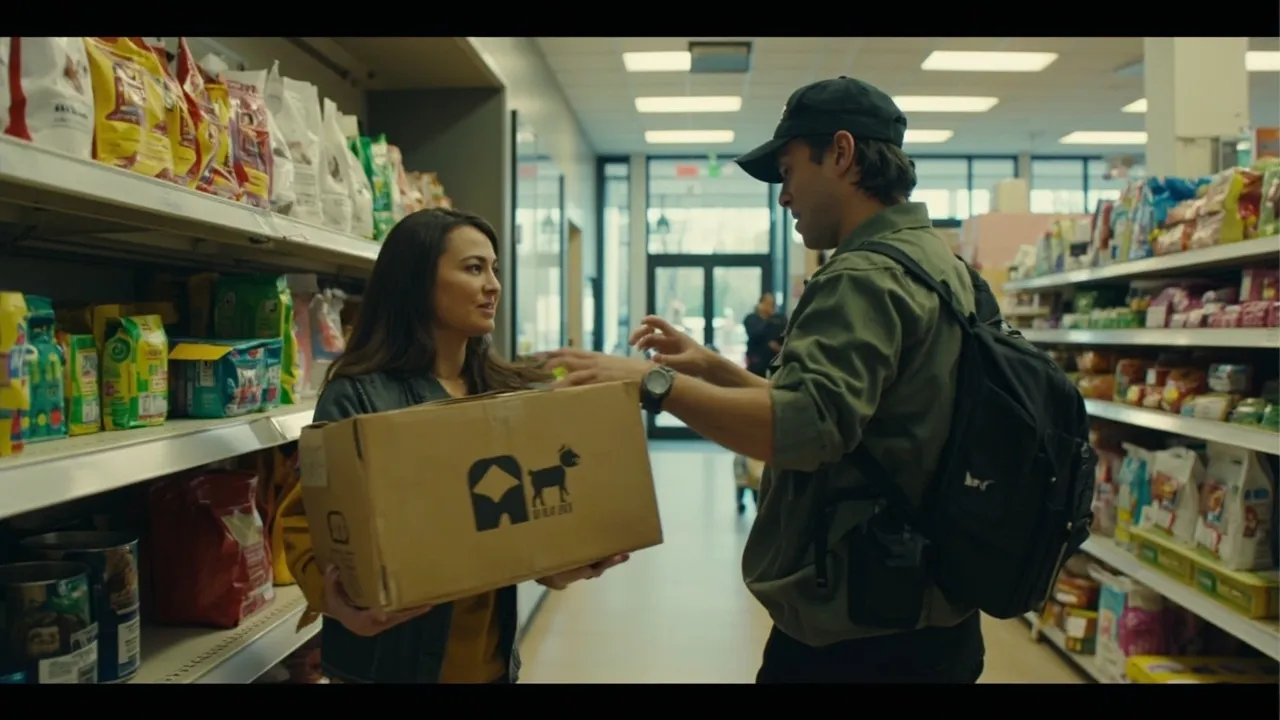
Same-day delivery turns every participating store into a miniature fulfillment center. The shelves may look the same, but the operating model changes: inventory must be accurate enough to promise online, associates must pick against a clock, substitutions need customer-approved rules, and a marketplace courier must receive the right order with an auditable handoff.
That is the challenge behind Petsense by Tractor Supply's new delivery offer. The retailer has made Instacart its exclusive same-day delivery partner, giving customers access to pet food and supplies without turning Petsense into a parcel carrier. The partnership expands reach quickly, but the customer will still judge Petsense—not the marketplace—when an item is missing, a substitute is unsuitable, or an order arrives late.
More Than 130 Stores Become Fulfillment Nodes
Supply Chain Dive reports that the service is available from more than 130 Petsense stores, with delivery in as little as one hour and no markups. It also extends a broader relationship: Instacart same-day service was already available from more than 2,400 Tractor Supply stores.
That scale makes store execution the product. A one-hour promise leaves little room for reconciliation between the point-of-sale system, online catalog, associate workflow, and marketplace application. A store that shows one bag of prescription-sensitive food on hand when the shelf is actually empty does not merely create an inventory discrepancy. It starts a chain of search time, customer messages, substitution decisions, courier delay, and possibly cancellation.
The right unit of control is therefore the store-SKU-zone combination. Availability should reflect sellable on-hand quantity, recent sales velocity, safety stock, and the delivery zone's remaining cutoff—not a nightly inventory snapshot. Fast-moving essentials deserve larger promise buffers than slow-moving accessories because a stockout of a customer's regular pet food is far more likely to break trust.
Set Inventory Rules Before Opening the Delivery Window
Retailers should define four controls for each eligible SKU:
- Promise buffer: Hold back a small quantity from online availability when shrink, shelf movement, or delayed receiving makes the system balance uncertain.
- Freshness threshold: Suppress inventory feeds that have not updated within the approved interval. An old count is not a reliable promise.
- Pick exception: Require associates to record whether an unavailable item was not found, damaged, expired, or reserved elsewhere. Those reasons guide different fixes.
- Cycle-count trigger: Automatically request a count after repeated not-found events or whenever physical and system quantities diverge during picking.
Substitution policy needs equal precision. Pet products are not universally interchangeable. Brand, formulation, animal age, package size, flavor, and veterinary or dietary attributes can all matter. Customers should be able to approve a specific alternative, allow associate-selected substitutes within defined attributes, or require a refund. The picker should never improvise beyond that consent.
Picking cutoffs also need to account for workload. A store may technically be open, yet unable to accept another order and complete it before the courier window. Capacity should be calculated from available pick labor, open orders, expected lines per order, and handoff time. Temporarily reducing assortment or closing a delivery slot is better than accepting a promise the store cannot keep.
Use One Status Vocabulary Across Store and Marketplace
Retailers often lose visibility because internal and marketplace systems describe the same order differently. A shared event vocabulary prevents that ambiguity. At minimum, every order should move through these timestamped states:
- Offered: The marketplace has sent a valid order to the selected store.
- Accepted: The store has committed inventory and capacity.
- Picking: An identified associate has begun work.
- Exception pending: A stockout or substitution requires a decision.
- Ready: Items are packed, labeled, staged, and available for collection.
- Courier assigned: The delivery partner has committed a driver.
- Handed off: Store and courier have confirmed order ID, package count, and custody time.
- Out for delivery: The courier has departed with the order.
- Delivered: Time, location, and approved proof of delivery are captured.
- Cancelled: A reason code identifies who cancelled, when, and why.
Each system can retain its internal terminology, but integrations should map to this common record. The handoff deserves special attention: a scan or paired confirmation should associate the courier, order, package count, and timestamp. That boundary makes it possible to distinguish a late pick from courier dwell or an unsuccessful doorstep delivery.
Measure the Promise by Zone, Not Just Networkwide
An overall on-time percentage can conceal weak stores and difficult delivery areas. Performance should be segmented by store, time window, delivery zone, order size, and product category.
Four measures provide a practical operating scorecard:
- Cost-to-serve: marketplace fees, store picking labor, packaging, refunds, redelivery expense, and customer-service effort per completed order.
- Cancellation rate: cancelled orders divided by accepted orders, with reason codes for stockout, capacity, customer decision, courier availability, and delivery failure.
- Delivery accuracy: complete, correct, damage-free orders delivered within the promised window, not merely orders marked delivered.
- Repeat purchase: the share of customers placing another order within a defined period, compared by zone and by whether the first order contained an exception.
This cadence matters because shipping conditions now change faster than many management processes. A 2026 survey of 240 logistics, supply chain, finance, procurement, and IT leaders found that 56% of enterprise shippers use at least three parcel carriers, while only 13% continuously benchmark rates. SupplyChainBrain's report also found that respondents valued faster issue identification (52%) and cost predictability (50%) at least as much as delivery-performance improvement (46%). The lesson applies to marketplace delivery: monthly averages arrive too late to protect a one-hour promise.
A daily exception review should identify stores, SKUs, and zones with rising not-found, substitution, handoff-dwell, cancellation, or late-delivery rates. Weekly reviews can then adjust promise buffers, labor plans, assortment eligibility, and delivery radiuses. Finance should reconcile billed marketplace charges to the same order events used by operations.
Govern the Experience End to End
Petsense's launch demonstrates how a retailer can add rapid delivery across a national footprint without building an entire courier network. But outsourcing movement does not outsource the promise. Reliable same-day service depends on a governed operating file that connects shelf availability, customer consent, store capacity, courier custody, proof of delivery, and economics.
CXTMS gives logistics teams a shared workflow for milestones, exceptions, costs, and partner handoffs. Request a CXTMS demo to see how one operational record can keep fast delivery accountable from order acceptance through proof of delivery.