Cold Chain Logistics Is Moving From Warehousing to Control-Tower Accountability


Cold chain logistics used to sound like a real estate problem: find temperature-controlled space, keep refrigeration running, and make sure product does not sit too long. That model is not enough for healthcare anymore.
The center of gravity is moving from storage capacity to control-tower accountability. The hard part is no longer only keeping freight cold. It is knowing, in real time, whether a high-value shipment is in the right condition, under the right custody, moving through the right handoff, and still recoverable when something starts to go wrong.
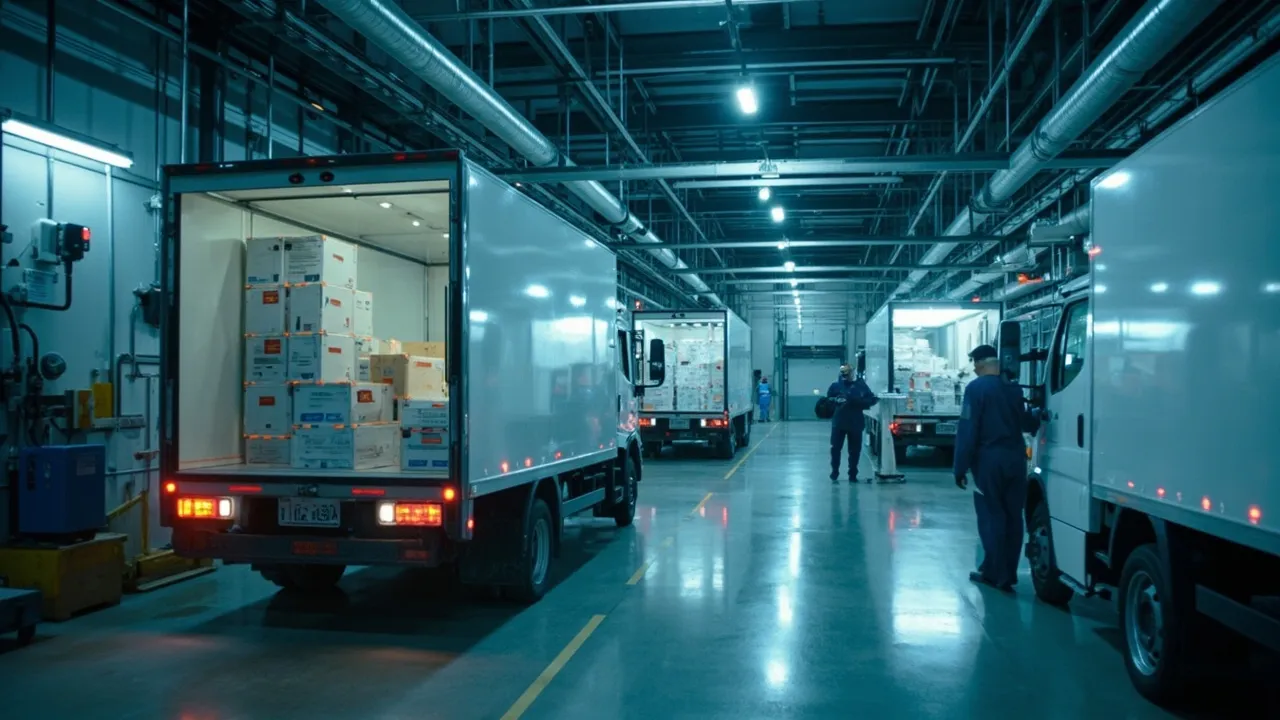
UPS made that shift explicit with a new healthcare logistics investment reported by Logistics Management. The company invested $48 million in 27 temperature-controlled freight cross-dock facilities across key U.S. and international markets, including Europe, Asia, and the Americas. These sites are designed for short-term storage between air and ground moves while maintaining required temperature ranges, including 2-to-8 degrees Celsius, 15-to-25 degrees Celsius, and frozen conditions.
That is not just a bigger cold-room footprint. It is a network-control move.
The risk is at the handoff
UPS described the facilities as part of an integrated network intended to reduce handoffs between providers, improve visibility across the shipment journey, and support faster intervention. The cross-docks are also compliant with IATA CEIV Pharma certification, a recognized quality standard for pharmaceutical handling.
The reason is simple: risk often shows up between modes, not inside a perfectly controlled facility. A shipment can be packed correctly, stored correctly, and still fail when it moves from warehouse to truck, truck to airport, airport to linehaul, or linehaul to final distribution. Each handoff creates a custody question, a condition question, and a response-time question.
For healthcare shippers, that variability is getting more expensive. Logistics Management noted that temperature-sensitive biologics are projected to grow at an 8.3% compound annual growth rate through 2033, reaching $39.1 billion. The same report cited PharmaSource data indicating that roughly one in three newly approved drugs is a biologic, and more than 85% of biologics require temperature-controlled handling.
That pipeline changes the operating standard. Biologics, GLP-1 injectables, mRNA platforms, and cell and gene therapies are not forgiving freight. Many are high value, time critical, and sensitive to temperature excursions. A missed alert is not just a service failure. It can become product loss, regulatory exposure, patient impact, and a chain-of-custody problem.
UPS also cited estimates that cold-chain failures cost roughly $35 billion annually and contribute to 50% of global vaccine waste. Cold-chain failures are too expensive to manage after the fact.
FedEx is chasing the same premium healthcare lane
UPS is not alone. Supply Chain Dive reported that FedEx launched a dedicated FedEx Life Sciences organization to support healthcare shipping and end-to-end pharmaceutical logistics. FedEx said it exited fiscal 2026 with nearly $10 billion in healthcare transportation revenue, up from $9 billion at the end of fiscal 2025.
That number explains why carriers are building specialized healthcare capability instead of treating cold chain as a niche add-on. FedEx is emphasizing premium B2B and high-value B2C shipments while stepping away from less-profitable e-commerce volume. In Q4, FedEx average daily volume grew 2% and revenue per package increased 11%, according to the Supply Chain Dive report.
Healthcare is attractive because the freight values reliability, monitoring, and white-glove handling. But that also means shippers should expect carriers and logistics providers to compete on accountability, not just coverage. A provider that can hold the right temperature is table stakes. The better question is whether it can prove what happened at every point in the journey and intervene before a deviation becomes a loss.
Static visibility is not enough
Cold-chain visibility has often been treated as a reporting layer. The data exists somewhere: temperature logger results, proof of delivery, facility timestamps, tracking events, accessorial charges, exception notes, maybe a customer-service email thread. The problem is that the information arrives too late or sits in too many systems.
That is fatal for temperature-sensitive freight. If a pallet is trending out of range at a cross-dock, the transportation team needs an escalation path now. If a truck misses an airport cut-off, the shipper needs a recovery plan, not a dashboard that confirms failure tomorrow morning. If custody changes between providers, the shipment record should show who had control, freight condition, and action taken.
This is why the control-tower model matters. It changes cold chain from passive monitoring to active exception management. The operating questions become sharper:
- Which shipments are currently within temperature tolerance?
- Which handoffs are late, incomplete, or missing custody confirmation?
- Which lanes have repeat excursion patterns?
- Which providers respond quickly when intervention is needed?
- Which customers, products, or therapies require priority recovery rules?
Those answers cannot live only in carrier portals. Healthcare shippers need a transportation layer that brings temperature status, milestones, documents, provider performance, and escalations into one operating view.
The future cold chain is accountable by design
Inbound Logistics, in its healthcare supply chain coverage, framed resilience as a network discipline rather than a series of isolated functions. That point is exactly right. A cold-chain network is not resilient because every node looks good on a slide. It is resilient when the entire chain can sense risk, coordinate action, and preserve evidence under pressure.
For logistics teams, that means the next wave of cold-chain improvement should focus on four controls.
First, map product requirements to shipment execution. A frozen pharmaceutical, a 2-to-8 Celsius biologic, and an ambient healthcare product should not share the same escalation logic. Service level, temperature range, custody documentation, and recovery priority need to be tied to the order.
Second, treat handoffs as risk events. Airport transfers, cross-dock moves, carrier changes, and final-mile releases should trigger explicit milestone checks. If the milestone is missing or late, the system should escalate automatically.
Third, measure providers on intervention quality. On-time delivery matters, but cold chain also needs metrics for excursion response, alert latency, recovery success, documentation accuracy, and lane-level repeat failures.
Fourth, keep evidence attached to the shipment. Temperature records, chain-of-custody events, quality releases, exception notes, and proof of delivery should be easy to retrieve when a customer, regulator, or internal quality team asks what happened.
CXTMS is built for that kind of discipline. By connecting orders, shipments, providers, milestones, documents, costs, and exceptions in one operating layer, CXTMS helps logistics teams manage cold-chain freight as a live accountability workflow instead of disconnected status updates.
Cold chain is becoming too valuable, too regulated, and too time-sensitive for static visibility. The winners will be the shippers that can prove control across every temperature band, every handoff, and every exception.
Ready to turn cold-chain visibility into real operating control? Schedule a CXTMS demo and see how connected transportation workflows help protect high-value healthcare shipments from dock to delivery.