UPS Healthcare Logistics Is Becoming an Acquisition Strategy, Not Just a Parcel Service

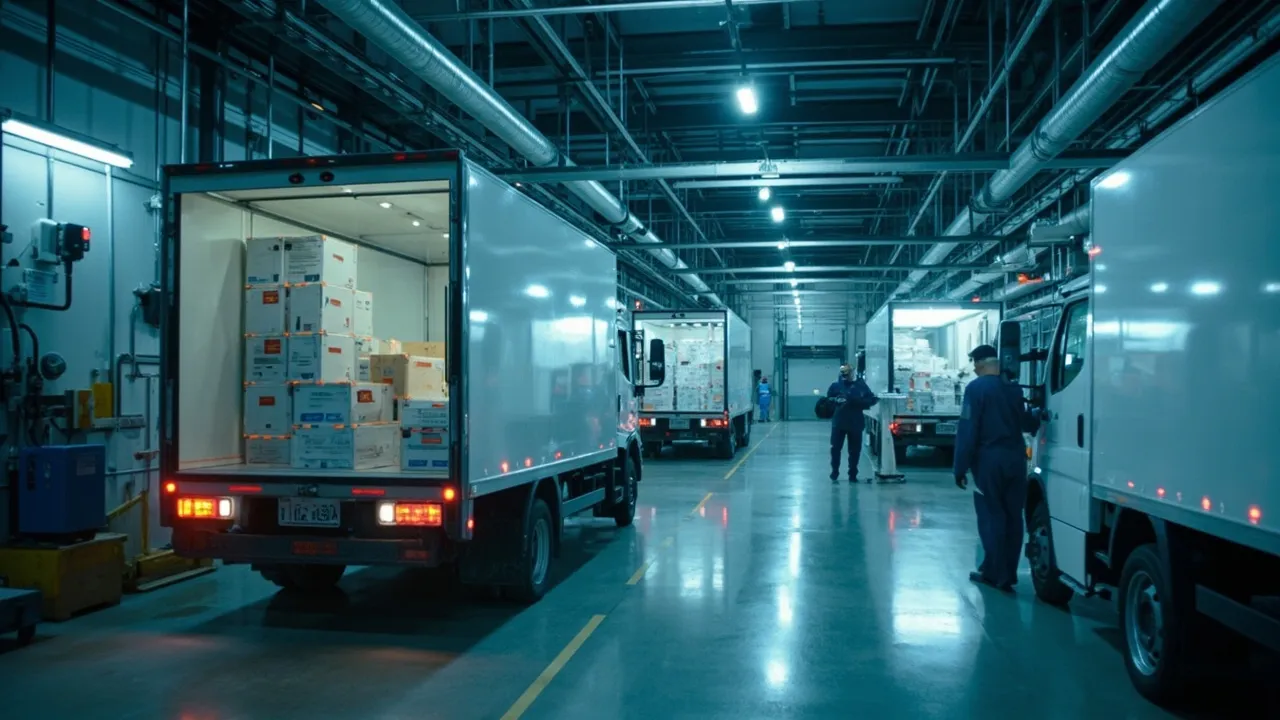
UPS is not treating healthcare logistics as a side vertical attached to a parcel network anymore. It is building the sector through a deliberate mix of organic facilities, acquisitions, cold chain specialization, and higher-value shipment strategy.
That matters because healthcare freight behaves differently from ordinary parcel or truckload freight. A delayed T-shirt is a customer-service problem. A delayed biologic, vaccine, clinical sample, medical device, or temperature-sensitive therapy can become a patient-risk, regulatory, claims, and brand problem all at once. UPS appears to understand that the prize is not simply more healthcare packages. The prize is control over the specialized network around those packages.
Supply Chain Dive reported that UPS Healthcare has an ambitious target: reach $20 billion in annual healthcare revenue by 2026, roughly double its 2023 revenue. A later Supply Chain Dive report said UPS healthcare revenue totaled about $10.5 billion in 2024. That gap explains the acquisition pace. UPS is trying to buy and build capabilities faster than organic network expansion alone would allow.
Andlauer shows the strategy in concrete terms
The clearest recent example is UPS' agreement to acquire Andlauer Healthcare Group for $1.6 billion. Supply Chain Dive reported that the deal is designed to strengthen UPS' cold chain capabilities in North America and advance its goal of becoming a leading complex healthcare logistics provider.
Andlauer brings more than a customer list. The company operates healthcare-focused logistics infrastructure, including 31 temperature-controlled facilities in Canada, plus specialized transportation for temperature-sensitive products. It also provides healthcare transportation services across the contiguous 48 U.S. states through trucking subsidiaries.
That is exactly the kind of network density healthcare logistics requires. Pharma and medtech freight does not just need a carrier willing to move a box. It needs validated facilities, monitored temperature ranges, trained handling, documented chain of custody, exception response, and partners who understand healthcare quality requirements. Acquiring those capabilities can be faster than recruiting local teams, certifying facilities, building standard operating procedures, and winning trust market by market.
UPS made the same argument in its broader healthcare expansion strategy. Supply Chain Dive's reporting on the company's revenue goal noted that UPS has leaned on both organic growth and inorganic growth, including acquisitions with strong cold chain capabilities across multiple countries. UPS opened a dedicated healthcare facility in Ireland and expanded ultra-cold storage at its Netherlands flagship facility, while also using deals such as MNX Global Logistics, Bomi Group, Transports Chabas Santé's healthcare unit, Frigo-Trans, and Andlauer to add specialized reach.
This is not random M&A. It is capability acquisition.
Why healthcare logistics rewards specialization
The economics are part of the story. UPS executives have pointed to healthcare as a higher-value segment compared with general e-commerce. Supply Chain Dive reported that CEO Carol Tomé described healthcare service margins as being in the high teens, while CFO Brian Dykes later said UPS is shifting away from lower-yield e-commerce volume and toward business-to-business, industrial, healthcare, and small business shipments.
That shift is happening as UPS reduces Amazon-related volume. Supply Chain Dive reported that UPS is shedding about $5 billion in Amazon revenue and about 2 million pieces of daily volume, while expecting revenue per package to rise 6.5% in 2026 as it pursues higher-value business.
Healthcare fits that playbook because customers are not buying the cheapest possible move. They are buying service assurance. They care whether a shipment stayed between required temperature thresholds, whether the handoff was documented, whether recovery options exist if a flight misses, and whether a logistics partner can support audits after delivery.
For freight forwarders, that is the important lesson. Healthcare logistics is becoming less forgiving of generic capacity. The winning providers will not be those with the broadest carrier list on paper. They will be those that can prove control over temperature, custody, documentation, exception management, and contingency routing.
What acquired healthcare networks actually add
A healthcare logistics acquisition can add four things a parcel network alone does not automatically provide.
First, it adds temperature-controlled infrastructure. Cold rooms, freezer capacity, ultra-cold storage, validated packaging stations, and monitored docks are physical capabilities. They cannot be faked by software after the shipment is already tendered.
Second, it adds local compliance knowledge. UPS executives have emphasized that European countries can interpret regulatory and customer execution requirements differently. The same principle applies across North America and other regions. Healthcare logistics depends on local quality procedures, licensing, inspection expectations, and customer-specific handling rules.
Third, it adds chain-of-custody discipline. Healthcare shipments need event records that survive audits: who handled the shipment, where it dwelled, what temperature data showed, when an exception occurred, who approved recovery, and what documentation moved with the freight.
Fourth, it adds specialized last-mile and time-critical capability. A medical shipment may need delivery into a lab, clinic, pharmacy, hospital, or patient setting rather than a standard dock. That changes appointment control, driver training, proof of delivery, returns, and escalation playbooks.
The freight forwarder checklist
Forwarders do not need to become UPS to learn from the strategy. They do need to tighten how they evaluate healthcare lanes.
Start with validation. Can the lane, facility, packaging, and partner network support the required temperature profile and handling procedure? If the answer is partly manual, document exactly where the risk sits.
Then test visibility. Shipment tracking is not enough. Healthcare logistics needs temperature visibility, facility dwell, custody handoffs, appointment status, and exception history in one operating record.
Build contingency routing before launch. If a flight cancels, a reefer unit fails, a customs hold appears, or a clinic appointment changes, the recovery path should not depend on whoever answers the phone first.
Finally, protect quality documentation. Certificates, temperature records, delivery proof, deviation notes, customer approvals, and claims evidence should live with the shipment record, not across emails and spreadsheets.
The CXTMS view
UPS' healthcare push is a useful signal for the broader logistics market: the future belongs to operators that combine network reach with specialized execution control. Acquisition gives UPS more cold chain assets and healthcare expertise, but the operational advantage only holds if those assets connect into disciplined workflows.
That is where a modern TMS matters. Healthcare freight needs more than visibility dots. It needs lane validation, partner governance, document control, exception ownership, and auditable shipment history.
CXTMS helps logistics teams connect those moving parts in one execution system, so specialized freight does not become a pile of disconnected portals and after-the-fact paperwork.
Ready to tighten control over complex healthcare, cold chain, or high-value freight? Request a CXTMS demo and see how connected execution, visibility, and documentation can make specialized logistics easier to manage.