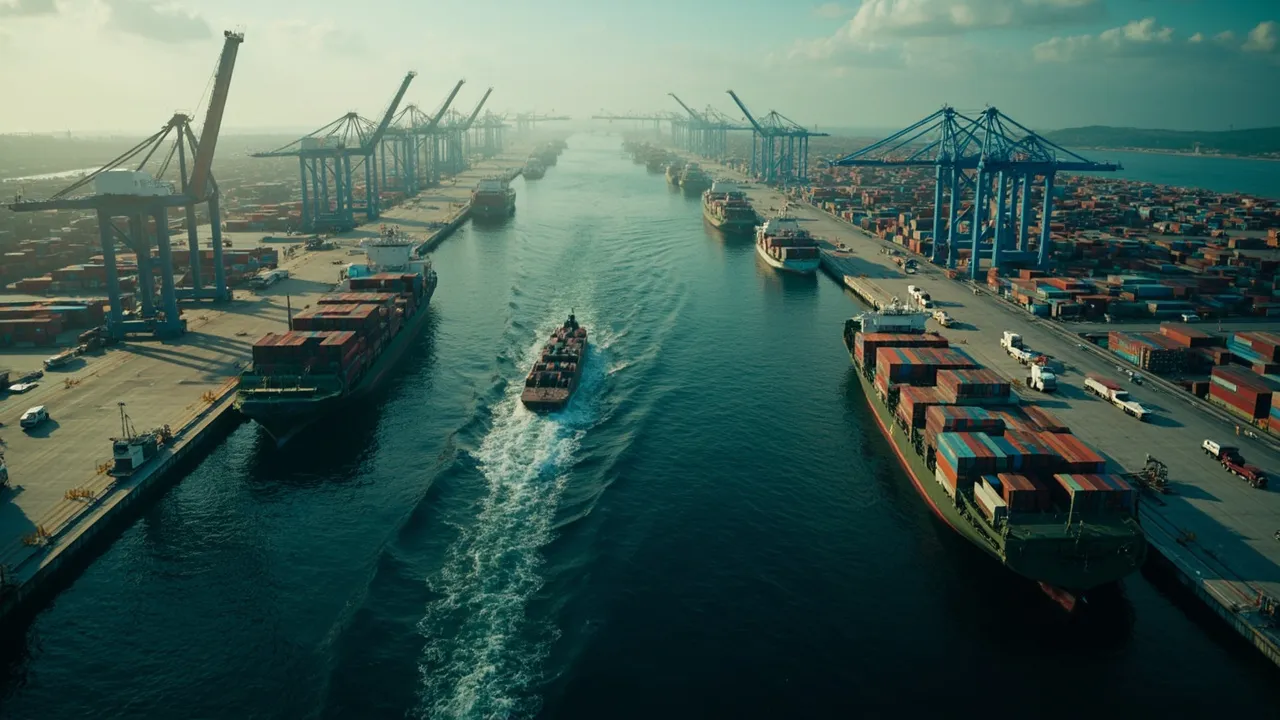
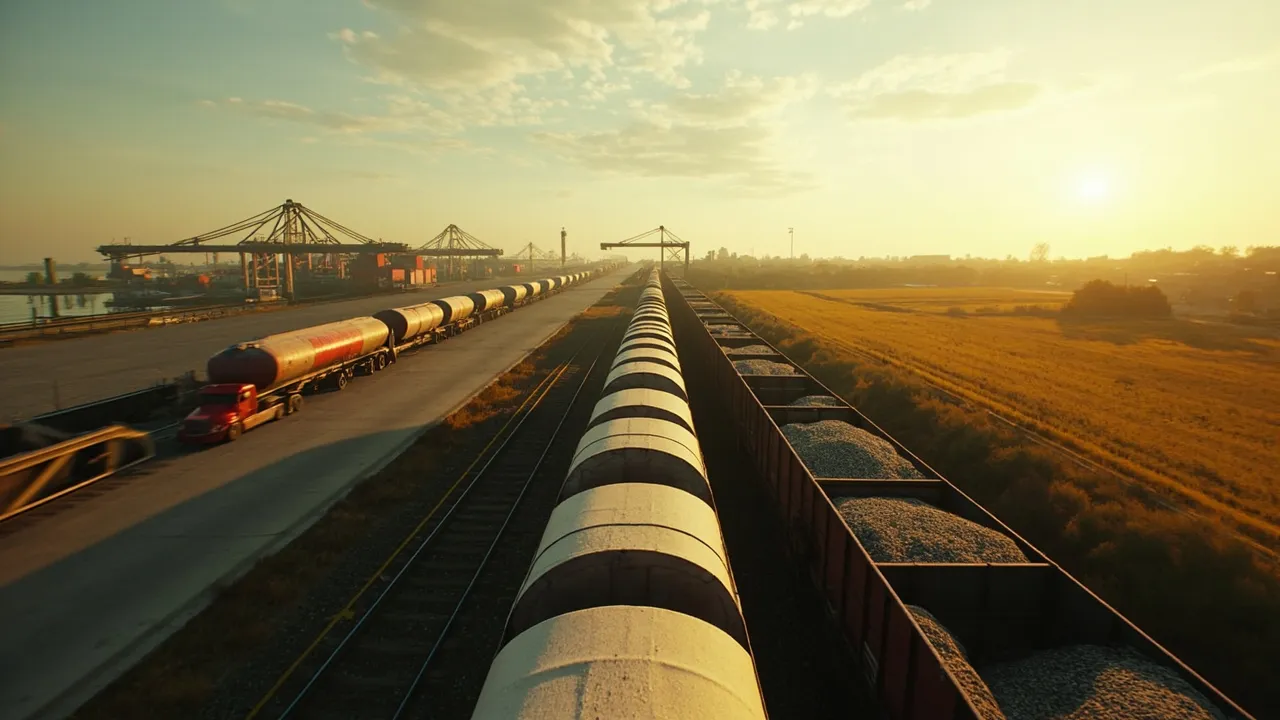
Agricultural Commodity Freight Under Siege: How Conflict-Driven Shipping Costs Are Threatening Global Food Trade Routes in 2026

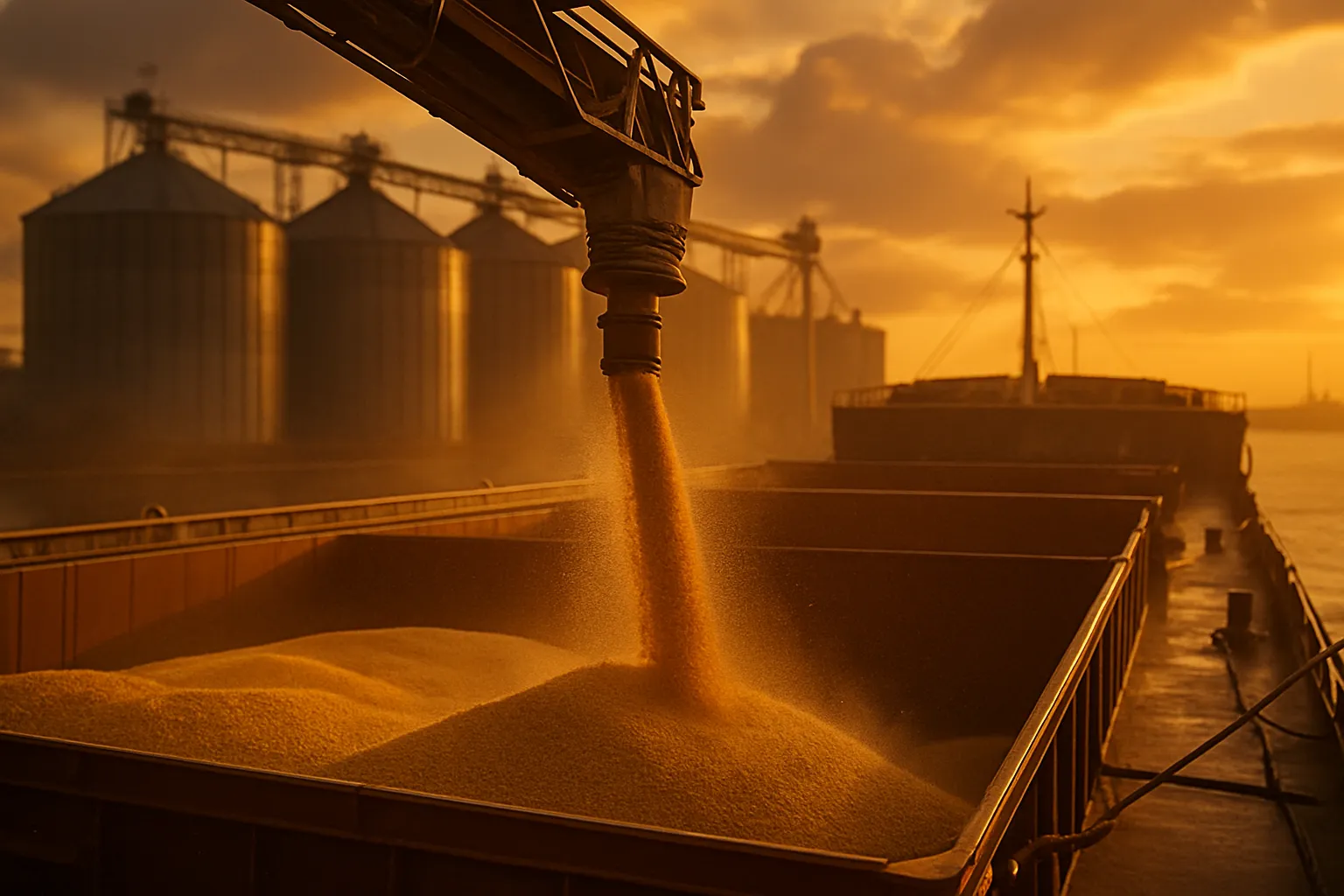
When a container of electronics absorbs a $1,500 war risk surcharge, the per-unit cost impact is negligible. When a container of rice absorbs that same surcharge, the math breaks entirely. That distinction — the fundamental vulnerability of low-margin agricultural commodities to freight cost spikes — is playing out in real time across global food trade routes in March 2026.
400,000 Tonnes of Basmati Rice, Going Nowhere
The numbers are staggering. According to Reuters, approximately 200,000 tonnes of Indian basmati rice are stuck in transit and an equal amount is stranded at Indian ports as the Strait of Hormuz crisis disrupts shipping routes across the Middle East. India, which accounts for more than 40% of global rice exports — shipping more than the combined exports of Thailand, Vietnam, and Pakistan — has seen new export deal signings grind to a near halt.
Nitin Gupta, senior vice president at Olam Agri India, told Reuters that freight rates are rising daily, with shippers adding war surcharges and emergency fuel surcharges that are making imports increasingly expensive for buyers. The result is a standoff: sellers cannot guarantee delivery timelines or costs, and buyers are waiting for conditions to stabilize before committing to new contracts.
Basmati shipments destined for Iran, Iraq, Qatar, and Saudi Arabia have been halted entirely due to the effective blocking of the Strait of Hormuz. Exporters report not knowing when vessels will be unloaded — or when they will receive payment for cargo already in transit.
Why Agricultural Freight Is Uniquely Vulnerable
The agricultural commodity supply chain operates on fundamentally different economics than manufactured goods logistics. Here is why conflict-driven cost increases hit food trade harder:
Razor-thin margins. A typical container of consumer electronics might carry $500,000 or more in value. A container of bulk rice might carry $15,000 to $25,000. When war risk surcharges of $500 to $1,500 per TEU are applied uniformly, the percentage impact on agricultural commodities is devastating — potentially adding 5% to 10% to the landed cost of grain shipments versus a fraction of a percent for high-value goods.
Perishability and timing pressure. Unlike manufactured goods that can sit in a bonded warehouse waiting for route clearance, many agricultural commodities have shelf-life constraints. Delays measured in weeks can mean spoilage, quality degradation, and rejected shipments at destination.
Inelastic demand, elastic supply routes. People need to eat. Demand for staple grains does not decrease when shipping costs spike. But the supply routes are highly elastic — rerouting grain shipments around conflict zones adds transit time, fuel costs, and transshipment fees that compound the already thin margins.
Concentrated trade corridors. Global food trade depends on a handful of maritime chokepoints. The Strait of Hormuz handles a substantial share of agricultural trade flowing between South Asia and the Middle East. When one chokepoint closes, the alternatives are not simple detours — they are fundamentally different logistics architectures.
The Fertilizer Domino Effect
The agricultural freight crisis extends beyond finished commodities. The disruption to the Strait of Hormuz is also threatening fertilizer supply chains, creating a compounding effect that could impact not just current harvests but future planting seasons.
As CNBC reported, fertilizer and agricultural flows are among the critical supply chains facing disruption from the Hormuz closure. Higher fertilizer prices, shipment delays, and rising freight costs are forcing farmers to either reduce nutrient application or absorb higher input costs. Unlike oil, fertilizers lack meaningful strategic reserves, leaving agricultural supply chains exposed to cascading disruptions.
This creates a double impact: current commodity shipments face higher freight costs today, while future crop yields may decline due to fertilizer shortages — setting up a potential food price spiral that extends well beyond the duration of the current conflict.
Rerouting Agricultural Commodities: The Cost of Alternatives
Gulf importers are scrambling to secure alternative routes for vital goods, including food and medicines, according to Reuters. But rerouting agricultural commodities is not as straightforward as redirecting a container ship.
Cape of Good Hope diversions add 10 to 15 days of transit time and significant fuel costs — costs that are amplified by surging bunker fuel prices driven by the same conflict disrupting the Strait of Hormuz.
Overland alternatives through Turkey, Central Asia, or Pakistan exist for some corridors but lack the infrastructure to handle bulk agricultural volumes. Rail and trucking networks in these regions were not designed for the scale of commodity flows that normally transit by sea.
Port congestion at alternatives is already building. Ports along the Red Sea, East Africa, and alternative Gulf access points are seeing increased vessel traffic as ships reroute, creating secondary bottlenecks that further delay deliveries.
For agricultural shippers specifically, these alternatives often mean the difference between a viable trade and an uneconomic one. When a rerouting adds $3,000 to $5,000 in total logistics costs to a container of rice worth $20,000, the trade may simply stop happening.
Food Security Implications for Import-Dependent Nations
The countries most affected by agricultural freight disruptions are often those least able to absorb the impact. Middle Eastern and North African nations that depend heavily on imported staples — rice, wheat, cooking oils — face the dual challenge of supply disruption and price inflation.
Saudi Arabia, the UAE, Qatar, and other Gulf states import the vast majority of their food. When the primary shipping route for their grain supply is blocked, food security becomes a national security issue. These nations have invested in strategic food reserves, but reserves are designed for short-term disruptions — not extended blockades of primary trade routes.
The broader implication for global food trade is that geopolitical risk is no longer a theoretical concern for agricultural logistics planners. It is an active, ongoing cost that must be modeled into every trade lane assessment and contract negotiation.
Building Resilience Into Agricultural Supply Chains
The current crisis is forcing agricultural shippers, traders, and importing nations to rethink fundamental assumptions about commodity freight:
Multi-corridor sourcing. Rather than depending on a single origin-destination pair, importers are diversifying supplier bases across geographies that use different maritime corridors. A buyer in Saudi Arabia sourcing rice from both India (Hormuz-dependent) and Vietnam (South China Sea route) has built-in redundancy.
Contract flexibility. The shift from CIF to FOB terms that Indian rice exporters are adopting — passing freight risk to buyers — is becoming a structural feature of agricultural trade contracts rather than a crisis response.
Strategic inventory positioning. Pre-positioning buffer stocks at transshipment hubs outside conflict-prone corridors provides importers with supply continuity even when primary routes are disrupted.
Real-time freight modeling. Agricultural traders need the ability to model alternative routes, cost scenarios, and margin impacts in real time as conditions change — not after the crisis has already eroded their margins.
How CXTMS Supports Agricultural Commodity Logistics
CXTMS provides agricultural shippers and commodity traders with the visibility and scenario-modeling capabilities needed to navigate volatile freight environments. Our platform enables multi-route cost comparison across alternative corridors, real-time surcharge tracking, and margin impact analysis that accounts for war risk premiums, fuel surcharges, and rerouting costs — giving commodity logistics teams the data they need to make profitable routing decisions even when traditional trade lanes are disrupted.
The 2026 Strait of Hormuz crisis has made one thing clear: agricultural commodity freight can no longer be treated as a simple, low-cost logistics function. It is a strategic capability that determines whether food reaches the people who need it — and whether the trade that delivers it remains economically viable.
Ready to build resilience into your agricultural commodity logistics? Request a CXTMS demo to see how real-time route modeling and cost scenario analysis can protect your margins when trade routes are under pressure.