Russian Rail Is No Longer a Temporary Disruption Story. It’s a Structural Network Recalibration.

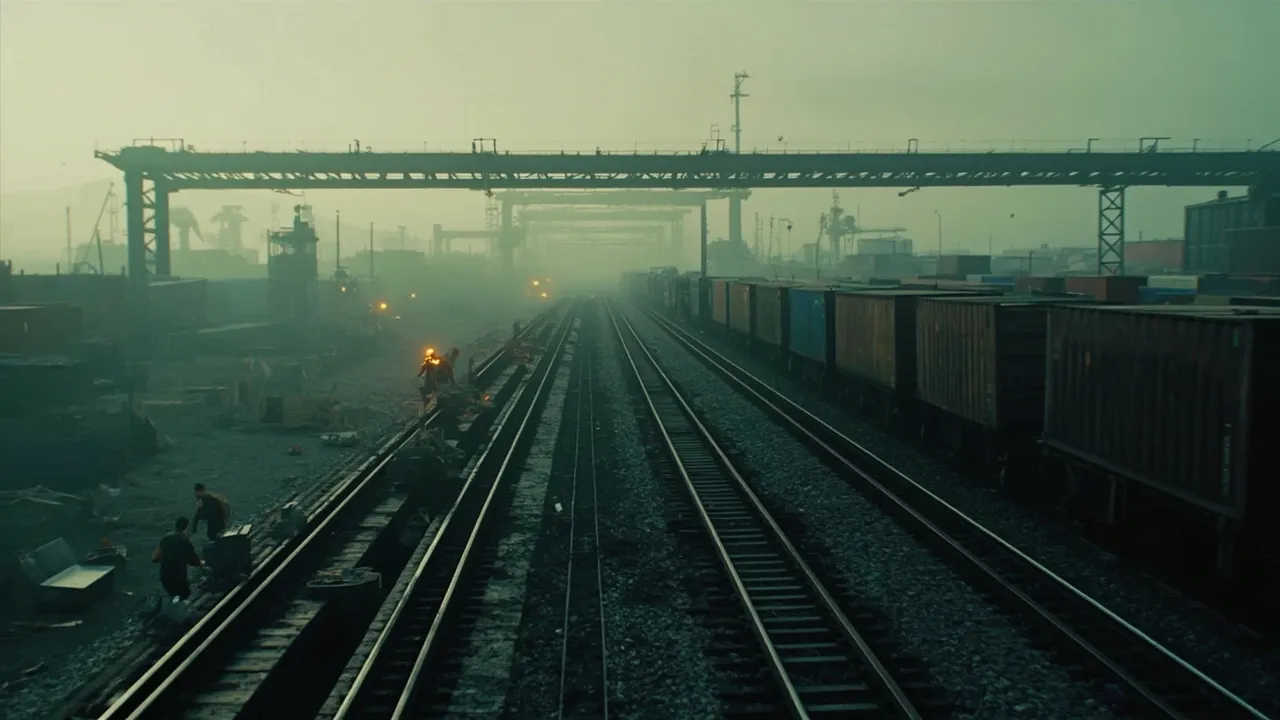
There are disruptions, and then there are systems that stop being trustworthy.
Russian rail now belongs in the second category.
For years, the Eurasian land bridge through Russia was sold as the practical middle path between cheap-but-slow ocean freight and fast-but-expensive air cargo. That pitch is falling apart. According to Inbound Logistics, Russian Railways (RZD) has seen debt triple since 2022, recently sought $10 billion in emergency government funding, and suffered cargo loading declines to the lowest levels since 2003. The same report says freight volumes dropped 9.8% last year.
That is not a temporary wobble. That is what structural degradation looks like.
And for logistics leaders moving freight between Asia, Europe, and adjacent sourcing markets, the real takeaway is bigger than Russia itself. This is no longer a story about waiting out a geopolitical storm. It is about redesigning network assumptions around a corridor that can remain technically open while being commercially unreliable.
The core problem is not one bottleneck. It is stacked fragility.
The Russian rail problem is ugly because several failure modes are now overlapping.
Inbound Logistics points to three that matter immediately:
- military shipments receiving operational priority over commercial cargo
- falling volumes in core commodities such as coal, timber, and metals
- locomotive and rolling stock constraints tied to missing imported components and idle freight cars
Any one of those would pressure service. Together, they turn rail planning into guesswork.
That is why the old question, "Can we still route through Russia?" is the wrong one. The better question is, "Can we depend on that corridor enough to promise customer service, inventory timing, and landed cost targets around it?"
Right now, that answer looks increasingly like no.
A corridor does not need to shut down completely to become strategically unusable. It just needs to become inconsistent enough that every move requires exception management, buffers, or executive escalation. Once that happens, the route may remain available on paper while becoming toxic in network design.
The Middle Corridor is a workaround, not a full replacement
When Russian rail reliability weakens, the obvious answer is to push more freight into the Middle Corridor via the Caspian region and Turkey. That shift is already happening. But the Middle Corridor is not a magic relief valve.
Inbound Logistics is blunt about the constraint: the route does not have the throughput capacity of the traditional Russian rail path, and the result is more border congestion and higher spot pricing. That matters because many shippers still talk about modal diversification as if alternate corridors can absorb volume cleanly once risk rises on the primary lane.
They usually cannot.
Alternative corridors tend to import the freight volume but also import the instability. Border handoffs multiply. Infrastructure mismatches get exposed. Equipment balance becomes harder. Local bottlenecks suddenly become global planning problems.
So the practical consequence is not just a shift from one route to another. It is a shift from one route to a network with more transfer risk, more timing variability, and more cost pressure.
East-West planning now needs bigger buffers and different math
This is where the topic stops being geopolitical theater and becomes real supply chain design.
If Russian rail can no longer be treated as a dependable East-West artery, then inventory strategy changes. Lead-time assumptions change. Mode allocation changes. Supplier promises change.
The most obvious effect is on inventory buffers. When rail reliability falls and alternate corridors cannot fully absorb diverted demand, the penalty for running lean gets harsher. That does not mean companies should panic into blanket stockpiling. It does mean safety stock, replenishment timing, and production sequencing need to reflect corridor instability more honestly.
It also changes modal planning. Freight that once made sense on rail may need to split three ways:
- critical SKUs move to air for service protection
- less time-sensitive goods return to ocean despite longer transit
- regionalized sourcing gets more attractive because Eurasian inland assumptions are weaker than they used to be
None of those options are free. Air kills margins fast. Ocean increases inventory carrying time. Nearshoring or regional diversification takes real procurement work. But pretending the old rail network will soon normalize is worse, because it pushes false certainty into every downstream planning decision.
Russian network stress is spilling into adjacent logistics risk
One reason this story matters beyond rail is that Russian transport fragility is showing up in neighboring freight systems too.
Reuters reported on April 20 that India expanded the number of Russian insurers allowed to provide marine cover for ships docking at its ports from eight to 11, underscoring how trade involving Russia is increasingly dependent on workaround mechanisms rather than normal market infrastructure. That development is maritime, not rail, but the lesson is the same: transport corridors tied to Russia are leaning more on exception structures, substitute capacity, and risk-tolerant operating models.
That should worry planners because workaround ecosystems are almost always less efficient than the systems they replace. They can keep flows moving, but usually with more legal complexity, less resilience, and worse cost predictability.
In other words, Russian rail deterioration is not an isolated inland problem. It is part of a broader pattern in which Eurasian logistics is becoming harder to insure, harder to route, and harder to trust.
What shippers should do now
Companies with Eurasian exposure should stop treating this as an event-driven issue and start treating it as a structural planning constraint.
Here is the practical playbook.
1. Reclassify Russian rail exposure as strategic risk, not operational noise
If a lane depends on Russian rail performance, that is no longer a normal execution dependency. It is a board-level network assumption that deserves scenario planning.
2. Stress-test alternatives before peak pressure hits
Do not wait until a customer-critical shipment gets stuck to evaluate the Middle Corridor, ocean fallback, or air contingency options. Map them now, including transit variance and handoff friction, not just average transit time.
3. Update inventory policy by lane, not by global average
Averages lie. If one corridor has structurally worse reliability, buffer strategy should reflect that corridor specifically. Global inventory rules are too blunt for this kind of disruption.
4. Revisit sourcing geography for vulnerable flows
If a product line is repeatedly exposed to Eurasian rail uncertainty, regionalizing some of that supply may be smarter than paying endless disruption tax through premium freight and emergency replanning.
5. Use TMS data to expose where network assumptions are already failing
A capable TMS should show where transit variance, mode exceptions, and cost overruns are clustering. That is the difference between talking about resilience and actually seeing where the network is bleeding.
The bigger lesson
Russian rail used to be part of the optimization conversation. Increasingly, it belongs in the contingency conversation.
Debt that has tripled since 2022, a $10 billion emergency funding request, cargo loading at the lowest point since 2003, and a 9.8% freight-volume decline are not the profile of a corridor about to bounce back. They are the profile of a system that can stay partially functional while becoming strategically unreliable.
That is a nasty category because it tempts shippers into denial. The route is not fully gone, so teams keep trying to use it as if normalcy is around the corner. That is how bad assumptions survive longer than they should.
The smarter move is more brutal and more useful: treat Russian rail as structurally impaired, assume alternate corridors will carry their own congestion premium, and redesign East-West planning accordingly.
That is not overreacting. It is finally catching up to reality.
CXTMS helps logistics teams compare modal options, track corridor risk, and turn network volatility into faster execution decisions.
If your team wants better visibility into route risk, mode fallback, and cost exposure, book a CXTMS demo.