Bonded Warehouses and Foreign Trade Zones: The Tariff Mitigation Strategy Every Importer Needs in 2026

Tariff rates shift. Trade policies reverse. Duty schedules that were stable for a decade can change with a single executive order. For importers navigating 2026's trade environment, the question is no longer whether tariff volatility will affect their business — it's how quickly they can adapt when it does.
According to FreightWaves, tariff instability and geopolitical disruption are pushing companies deeper into supplier diversification and regional realignment — trends that began during COVID but are now hardening into long-term structural change. Many companies are redesigning logistics routes, increasing multi-sourcing strategies, or leveraging bonded warehouses and tariff-friendly trade corridors to reduce exposure.
Two of the most powerful — and historically underused — tools in this fight are bonded warehouses and Foreign Trade Zones (FTZs). Together, they give importers the ability to defer duties, eliminate tariffs on re-exports, and even change tariff classifications through manufacturing. In a year where every percentage point of duty matters, understanding these mechanisms isn't optional. It's a competitive requirement.
The Scale of the FTZ Program: $794 Billion in Merchandise
The U.S. Foreign Trade Zone program is far larger than most supply chain professionals realize. According to the Foreign-Trade Zones Board's Annual Report to Congress, the total value of merchandise received in FTZs reached $794 billion. The National Association of Foreign-Trade Zones (NAFTZ) reports that 197 active FTZ programs operate across the United States, employing approximately 550,000 people at roughly 1,300 active operations and exporting $149 billion in merchandise.
These aren't niche facilities for a handful of multinational corporations. FTZs serve automotive manufacturers, pharmaceutical distributors, electronics assemblers, oil refiners, and increasingly, mid-size importers who are discovering duty deferral for the first time as tariff rates climb.
Bonded Warehouse vs. FTZ: Understanding the Difference
Both bonded warehouses and FTZs allow importers to delay duty payments, but they serve fundamentally different strategic purposes.
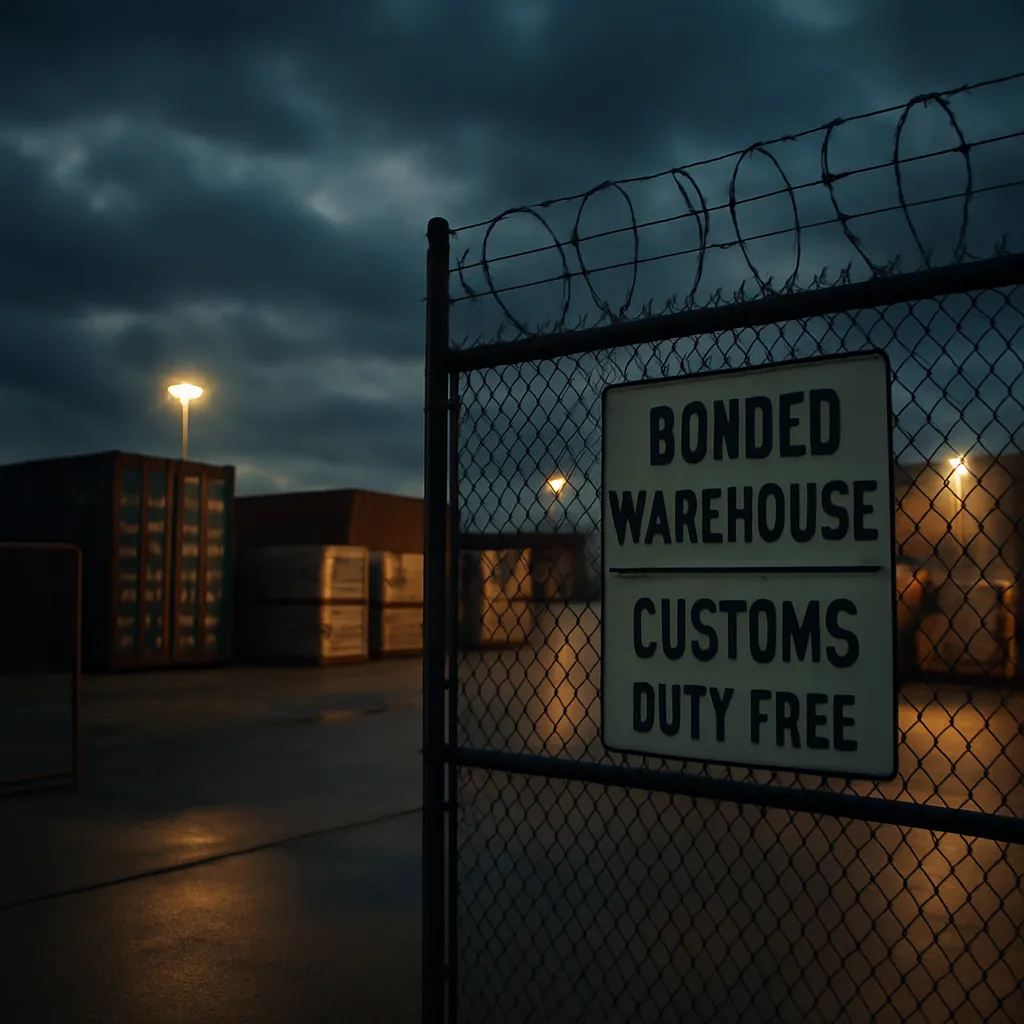
Bonded warehouses are CBP-supervised facilities where imported goods can be stored for up to five years without paying duties. Duties are only owed when goods are withdrawn for domestic consumption. If goods are re-exported, no duties are paid at all. Bonded warehouses permit limited manipulation — sorting, repackaging, labeling — but generally do not allow manufacturing operations. They're ideal for distributors, trading companies, and importers who need to hold inventory while waiting for favorable market conditions or tariff changes.
Foreign Trade Zones take the concept further. In an FTZ, duties are deferred until goods formally enter U.S. commerce, and re-exported goods are completely duty-free. But the critical advantage is tariff engineering through manufacturing. When a company manufactures or assembles products within an FTZ, it can elect to pay duties based on either the imported components or the finished product — whichever carries the lower tariff rate. This "inverted tariff" benefit can save manufacturers millions annually.
As IndustryWeek reports, duty is only due when an item leaves an FTZ facility for sale in the U.S. — if the manufactured item is exported outside the U.S., no duty is ever due.
Why 2026 Makes This Urgent
Genpact's global supply chain lead, Tanguy Caillet, told FreightWaves that most multinational shippers were better prepared for the current tariff environment than many observers expected — largely because pandemic-era investments in visibility and decision-making tools laid the groundwork. But preparation doesn't eliminate impact.
The broader trend is clear: companies are moving from cost-optimized, single-source supplier networks to resilient, multi-source, regionally diversified supply chains. As Caillet put it, what we're seeing is "a kind of deglobalization of supply chains and a real regionalization where supply chains need to become kind of like a bit less interdependent."
In this environment, bonded warehouses and FTZs become strategic buffers. They give importers time — time to wait for tariff reductions, time to reroute goods to duty-free export channels, and time to restructure supplier relationships without eating the full cost of duties on inventory that may never enter domestic commerce at current rates.
Some firms are now willing to pay higher transportation costs if it reduces their duty burden. Others are treating supplier portfolios like financial portfolios — with built-in hedges and alternative pathways that include bonded storage as a core component.
The Cost-Benefit Calculation
Bonded warehouse storage comes at a premium. Recent market benchmarks show costs ranging from 1.5x to 4x standard storage rates, depending on location, security requirements, and CBP compliance overhead. For low-value, high-volume goods, the math may not work. But for high-value imports facing significant tariff rates — electronics, automotive parts, pharmaceuticals, specialty chemicals — the duty deferral savings can dwarf the storage premium.
Consider a simplified example: an importer holding $10 million in electronics components subject to a 25% tariff faces $2.5 million in duty obligations. Storing those goods in a bonded warehouse at a premium of $50,000 per month while waiting for a tariff reduction or identifying re-export opportunities creates massive optionality for a fraction of the duty cost.
FTZ activation requires more upfront investment — application fees, compliance infrastructure, CBP audits, and operational restructuring — but the payoff scales with volume. For manufacturers processing significant volumes of imported components, the inverted tariff benefit alone can justify the overhead within months.
Step-by-Step: Activating a Bonded Warehouse or FTZ Strategy
For bonded warehouse utilization:
- Identify a CBP-bonded facility near your port of entry or distribution center
- Ensure your customs broker understands bonded warehouse entry procedures (CBP Form 7501 with appropriate entry type)
- Establish inventory tracking systems that satisfy CBP recordkeeping requirements
- Develop a withdrawal strategy aligned with demand planning and tariff monitoring
- Monitor tariff schedules to time withdrawals for minimum duty exposure
For FTZ activation:
- Determine whether a general-purpose FTZ or subzone designation best fits your operations
- File an application with the Foreign-Trade Zones Board through the Department of Commerce
- Implement the required security, recordkeeping, and customs compliance systems
- Work with CBP to establish an Activation Checklist that meets all operational requirements
- Develop manufacturing procedures that optimize tariff classification elections
Both paths require investment in compliance infrastructure, but the return on that investment is amplified in periods of tariff uncertainty — exactly the environment importers face throughout 2026.
How CXTMS Integrates Bonded Warehouse Strategy with Duty Management
Managing bonded warehouse inventory alongside standard warehouse operations creates complexity that spreadsheets can't handle. Importers need real-time visibility into which goods are in bonded status, what duties are deferred, when withdrawal deadlines approach, and how tariff changes affect the optimal timing for entry into domestic commerce.
CXTMS integrates bonded warehouse inventory tracking with landed cost modeling, allowing procurement and logistics teams to see the full duty picture across their supply chain. When tariff rates change, CXTMS can model the impact on bonded inventory and recommend optimal withdrawal timing. For companies operating across multiple FTZs or bonded facilities, the platform provides consolidated visibility into deferred duty obligations and re-export opportunities.
The platform's scenario modeling capabilities allow importers to compare duty costs across different entry strategies — immediate clearance vs. bonded storage vs. FTZ manufacturing — and make data-driven decisions about where and when to move goods into domestic commerce.
The Bottom Line
Bonded warehouses and FTZs aren't new. They've existed for decades. But in 2026's tariff environment, they've moved from nice-to-know trade compliance tools to essential components of import strategy. The companies that are thriving aren't the ones with the lowest per-unit costs — they're the ones with the most flexibility to absorb, defer, and redirect duty exposure as trade policy shifts beneath them.
With 197 active FTZ programs processing $794 billion in merchandise and bonded warehouse demand surging alongside tariff volatility, the infrastructure exists. The question is whether your supply chain is positioned to use it.
Ready to model duty deferral scenarios across your import portfolio? Request a CXTMS demo to see how bonded warehouse tracking and landed cost optimization can reduce your tariff exposure in 2026.