U.K. Air Traffic Control Outage Costs: Put Infrastructure Failure Into Air Cargo Contracts

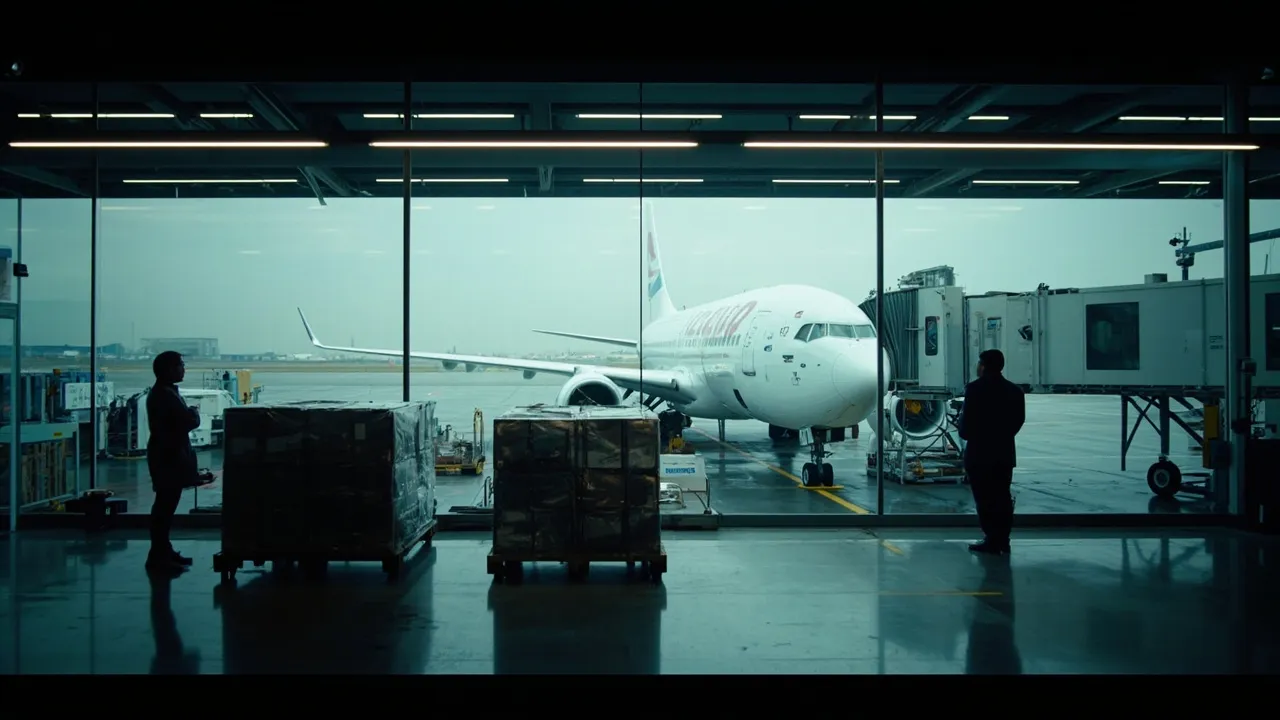
An air traffic control failure may sit outside a forwarder's control, but the invoice still lands somewhere. When the U.K.'s flight-processing system failed on September 8, airlines were left repositioning aircraft and crews, rebooking passengers and absorbing disruption long after the technical problem had been resolved. Air cargo faced the same network reality: a shipment does not recover merely because the system comes back online.
For forwarders and shippers, the lesson is contractual. “Force majeure” by itself is too blunt. Air freight agreements should identify disruption costs, assign each cost to the party best able to prevent or reduce it, and establish a timestamped recovery process before the next infrastructure failure.
A short outage can create a long cost tail
SupplyChainBrain reported that a technical issue affected the National Air Traffic Services flight-processing system on the afternoon of September 8. Although NATS resolved it later that day, U.K. airports recorded more than 1,750 cancellations on September 8, according to Cirium data cited by the publication. British Airways then canceled another 200 flights on September 9.
Airlines UK estimated that the financial fallout would run into tens of millions of pounds and fall entirely on carriers. Its chief executive, Tim Alderslade, argued that airlines should not be the “insurer of last resort” for failures they neither caused nor controlled.
That dispute matters to cargo owners because disrupted capacity does not reset instantly. Aircraft and crews finish in the wrong places. Priority shipments compete for the next available uplift. Airport storage clocks keep running, and a missed connection can turn one delay into several. A shipper may have no direct relationship with the infrastructure provider, leaving the airline, forwarder and customer to argue over costs after the fact.
Assign five cost categories before departure
Every air cargo agreement should address at least five disruption-cost categories and distinguish prevention from mitigation.
- Delay: The carrier controls re-accommodation options after capacity returns; the forwarder controls how quickly it requests them. Set the point at which a booking becomes eligible for alternate uplift and state whether premium recovery requires customer approval.
- Storage and handling: Define who pays terminal storage, breakdown, rebuild and transfer charges. Waive pass-through markups where the charge results from a network failure rather than a customer instruction.
- Rebooking and rerouting: Establish whether the carrier must offer the next available flight, an alternate airport or interline capacity. Specify who pays trucking between airports and any fare or rate difference.
- Spoilage or condition loss: The shipper must provide accurate product limits and packaging requirements. The forwarder must monitor milestones and escalate before the remaining shelf-life or temperature window becomes unusable.
- Missed connections: Identify minimum connection assumptions and define recovery responsibility when the original itinerary no longer works. A vague promise to use “best efforts” is not a measurable recovery commitment.
The goal is not to make one party liable for every external event. It is to stop avoidable costs from accumulating while everyone debates whether the event qualifies as extraordinary.
Open one disruption record per shipment
Claims fail when the operational history is scattered across email, airline portals and phone notes. Open a disruption record as soon as a flight is canceled, substantially delayed or placed under a capacity restriction.
The record should preserve the master and house air waybill numbers, booked and actual flights, airport pair, commodity, pieces, weight, service level and time-critical constraints. Add the first notice timestamp, source of the disruption, available recovery choices, approvals, tender attempts and final disposition. Attach every invoice and document the causal link between the event and the cost.
This evidence separates four questions that are often conflated: What happened? When did each party know? What recovery was available? Who authorized the added expense? It also prevents a broad ATC explanation from concealing a later operational miss, such as a forwarder waiting six hours to request rebooking or a carrier overlooking confirmed onward capacity.
Put escalation clocks in the agreement
Contracts need clocks, not adjectives. “Prompt notification” should become a defined number of minutes. A practical schedule might require event notification within 30 minutes of confirmation, recovery options within 60 minutes, customer approval within 30 minutes of receiving a priced option, and executive escalation when no confirmed uplift exists after four hours.
Set tighter thresholds for pharmaceuticals, perishables, aircraft-on-ground parts and other high-consequence freight. The clock should use the shipment's remaining usable window, not only its promised delivery time. For example, a temperature-controlled shipment with eight hours of validated packaging life needs intervention well before a general-service cargo SLA is breached.
Price rules should reflect the market in which recovery occurs. Supply Chain Dive reported that the global air cargo spot rate averaged $3.13 per kilogram in August 2026, up 24% year over year despite falling 3% month over month. Global volumes were up 6%, while the dynamic load factor reached 61%. Even in a softening month, replacement capacity was not necessarily cheap or abundant.
Accordingly, agreements can pre-authorize recovery up to a fixed percentage or dollar ceiling, require approval above it, and allow automatic action when delay would exceed a documented product-loss exposure. This gives operators room to move without writing a blank check.
Separate external cause from controllable response
A balanced liability clause should distinguish the original infrastructure failure from each party's subsequent decisions. Neither an airline nor a forwarder may be able to prevent an ATC outage. They can still control notice, option discovery, escalation, custody and evidence. Likewise, a shipper controls the accuracy of cargo requirements and the speed of commercial approval.
Define caps and exclusions, but do not let force majeure erase operational duties. Require cost mitigation, contemporaneous records and a post-event reconciliation. State which charges remain recoverable, what evidence is mandatory and how quickly disputes must be raised. For recurring lanes, review the incident against carrier performance and update routing rules rather than treating it as a one-off claims exercise.
CXTMS can keep flight milestones, airway bills, exception actions, approvals and disruption costs in one shipment record, giving forwarders a defensible timeline from first alert through final delivery. Request a CXTMS demo to turn air cargo disruption clauses into an operational workflow your team can execute and audit.