Container Misrouting After the Iran Conflict: The New Economics of Equipment Repositioning

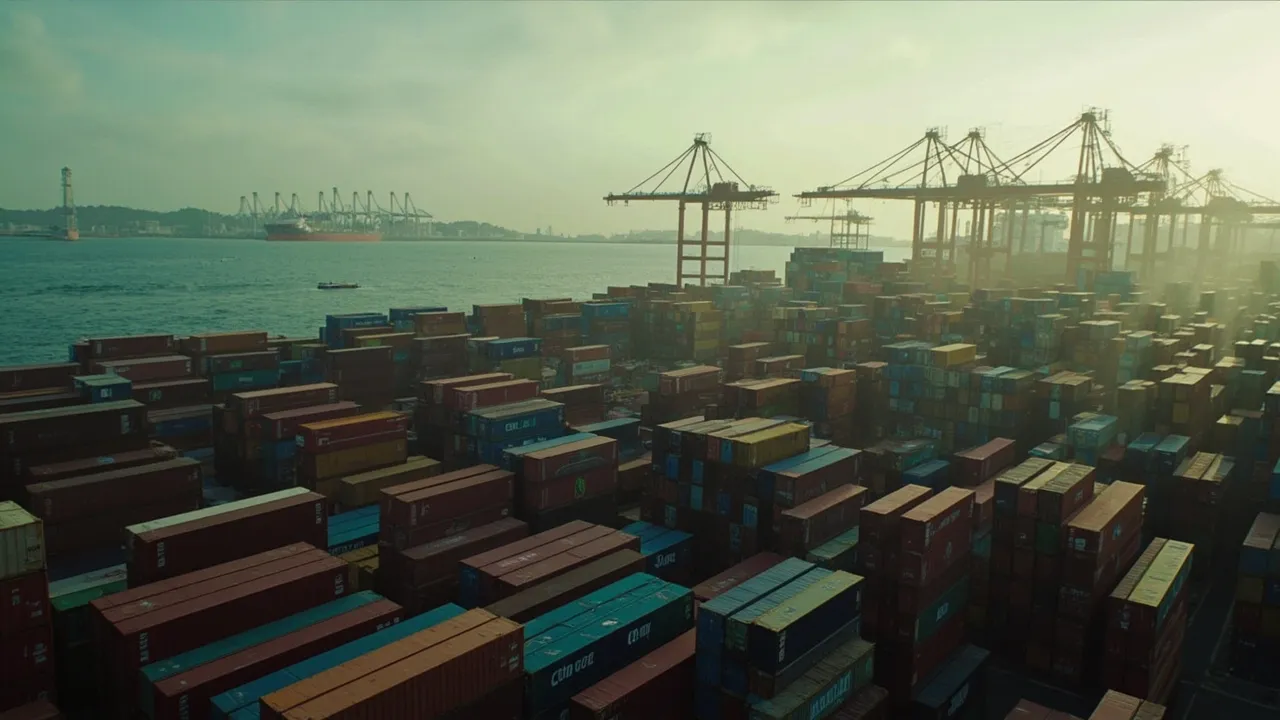
A container can be physically intact, customs-cleared, and still be operationally useless because it is in the wrong port.
That problem has moved to the center of ocean freight planning after disruption around the Strait of Hormuz. Vessel diversions, suspended calls, blank sailings, and congested transshipment hubs have interrupted the normal circulation of loaded and empty equipment. The result is not simply slower freight. It is a mismatch between where boxes accumulate and where exporters need them next.
The scale became visible quickly. Supply Chain Dive reported that more than 700 vessels were backed up during the first week of March, affecting about 10% of the world's container fleet. The same report cited an estimate that roughly 2 million twenty-foot equivalent units, including cargo already aboard vessels or booked from Gulf ports over the following 90 days, would be affected.
For freight forwarders, those numbers translate into a practical question: can the next shipment secure the right container at the right origin, or will the shipper pay for the network imbalance?
The Cost Is Bigger Than the Repositioning Invoice
Container repositioning has always been part of liner economics. Import-heavy markets generate empties; export-heavy markets consume them. Carriers use vessel slots, feeder services, rail, and trucks to restore the balance.
Conflict-driven disruption makes that cycle less predictable. A sailing omitted from one Gulf port may leave imports at an alternate gateway while the empties needed for export bookings remain somewhere else. A diverted vessel can discharge at a transshipment hub already managing its own backlog. When schedules are revised repeatedly, equipment-control teams cannot rely on the usual return loops.
The direct expense may appear as an equipment imbalance charge, emergency surcharge, congestion fee, or higher base rate. The indirect costs can be larger:
- Export cargo waits while an empty container is sourced.
- Truckers make longer trips to collect or return equipment.
- A carrier nominates a return depot that changes after dispatch.
- Free-time windows expire while ports and yards are congested.
- A missed sailing turns one delay into another full schedule cycle.
This is why forwarders should avoid treating every new line item as a generic “war surcharge.” Each charge needs an operational cause, a contractual basis, and a shipment-level audit trail.
Disruption Is Repricing Uncertainty Worldwide
The impact is not confined to Gulf trades. FreightWaves reported a 29% increase in Far East-to-U.S. West Coast spot rates during the five weeks after the closure began. Far East-to-North Europe rates rose 31%, while Far East-to-Mediterranean rates increased 30%.
As of April 1, the cited market averages were $2,430 per 40-foot container from Asia to the U.S. West Coast and $3,382 to the U.S. East Coast. The same analysis linked the wider effect to congestion at Singapore, Port Klang, and Tanjung Pelepas—transshipment hubs that serve cargo far beyond the Middle East.
Those figures illustrate the new economics better than an unverified universal price for moving an empty box. Repositioning costs vary by location, equipment type, carrier, inland distance, and urgency. What is consistent is the premium attached to uncertainty. Carriers must preserve equipment and vessel capacity before they know precisely when normal rotations will resume, and shippers pay to secure scarce options.
Fuel adds another layer. FreightWaves reported that bunker fuel remained available in Singapore but cost roughly twice its pre-crisis level after an initial spike of about 200%. Even when a shipment never approaches Hormuz, its ocean rate can absorb higher fuel expense and network recovery costs.
Blank Sailings Have Become an Equipment Signal
Forwarders often read a blank sailing as a capacity event: one departure disappears, so cargo rolls to the next vessel. That interpretation is incomplete.
Every canceled call also changes where containers will be unloaded, returned, inspected, and made available. Repeated blanks can create a local surplus and an origin shortage at the same time. They also reduce the vessel space available to reposition empties, because revenue-generating loaded containers compete for the same slots.
The useful planning horizon therefore starts before vessel arrival. Operations teams should monitor equipment availability, empty-release dates, return depots, and alternative port pairs while a booking is still being quoted. A “confirmed” booking without confirmed equipment is only half a plan.
A Four-Part Playbook for Forwarders
1. Map equipment exposure by location
Track each shipment's container type, release depot, pickup window, discharge port, empty-return location, and last free day. Aggregate this information by port and carrier. A dashboard should reveal where the company has concentrated exposure before detention invoices reveal it later.
2. Price alternatives before the exception
Build approved routing options through regional and transshipment gateways where service is operating, including Salalah and Jeddah when commercially and legally appropriate. Compare the full landed cost: feeder or inland leg, extra handling, customs implications, insurance, free time, and the cost of returning the empty. A cheaper ocean rate can be a false economy when the return instruction adds hundreds of inland miles.
3. Put equipment terms into carrier negotiations
Ask for named pickup and return locations, minimum free-time commitments, rules for depot changes, and responsibility for merchant-haulage costs caused by a carrier-directed change. Also request advance notice for equipment substitutions. A 40-foot high-cube and a standard 40-foot container are not interchangeable for every load plan.
4. Manage by exception, not email
Equipment events belong beside booking, vessel, milestone, and cost data. Set alerts for a changed return depot, delayed empty release, rollover, port omission, and approaching free-time expiration. Assign an owner and deadline to each exception so it does not disappear in a shared inbox.
Visibility Turns Shared Risk Into a Managed Decision
No forwarder can control a geopolitical conflict or a carrier's vessel deployment. It can control how early it sees the consequences, how consistently it compares alternatives, and whether surcharges are captured against the shipment that created them.
CXTMS brings bookings, milestones, equipment details, documents, and shipment costs into one operational record. Teams can identify exceptions earlier, coordinate alternative routings, and protect margin with a clear history of what changed and why.
Request a CXTMS demo to see how better freight visibility can help your team manage ocean disruption and equipment risk.