Kimberly-Clark's Productivity Gains Show Why Supply Chain Simplification Beats Tool Sprawl

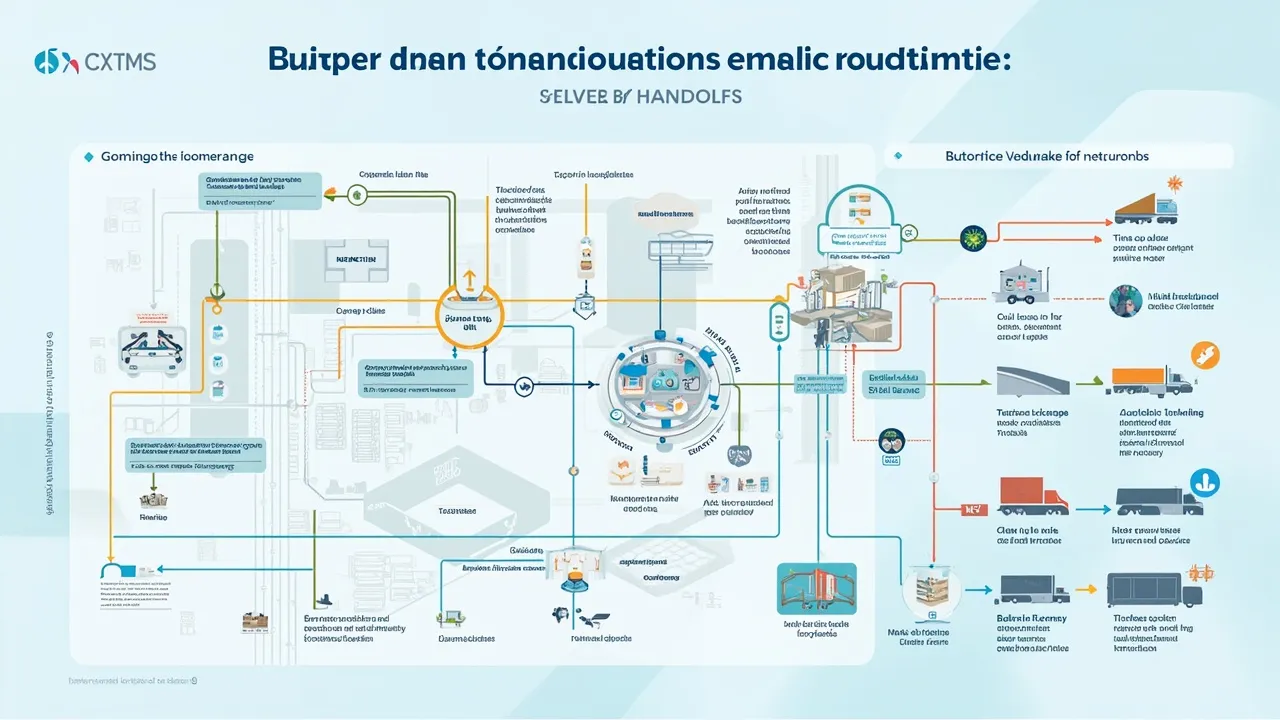
Kimberly-Clark is more than halfway through a five-year, $3 billion productivity enhancement program launched in 2024. At the 2026 dbAccess Global Consumer Conference, CFO Nelson Urdaneta credited supply chain transformation as a primary driver of results so far — specifically pointing to three disciplines: simplifying the value stream, optimizing the network, and scaling automation.
The message should land with any logistics leader who's spent the last five years chasing the next platform, the next integration, or the next AI pilot. More tools have not automatically meant more productivity. In fact, the opposite is often true.
Why Simplification Comes Before Automation
The instinct when productivity stalls is to add capability. A TMS here. A visibility platform there. A freight audit module. A tender optimization tool. Before long, the operations team is managing a stack of disconnected systems, spending more time on integration maintenance than transportation execution.
Kimberly-Clark's approach went the other direction. Simplify the value stream first — remove unnecessary handoffs, reduce the number of entities a shipment passes through — then automate what remains. The company invested $1 billion in a single greenfield automated distribution center inside its existing factory in Beech Island, South Carolina. That facility will handle robotics, AI-powered logistics systems, and optimized storage. The payback is operational, not technical: fewer exceptions, cleaner milestone completion, lower cost per unit shipped.
The lesson is direct. Productivity gains from automation depend on having something worth automating. If your current freight flow involves excessive touchpoints, manual data re-entry, or redundant approval loops, automating that mess just makes the mess faster.
Network Optimization Is a Transportation Problem Before It's a Real Estate Problem
Kimberly-Clark is also accelerating network optimization as part of its plan, with plans to increase capital investments this year and next. That means rethinking facility roles, lane density, and inventory positioning — all of which are fundamentally transportation decisions.
According to Supply Chain Dive, the company sees freight density gains from its pending merger with Kenvue. The opportunity: Kenvue products "cube out" trucks at around 50% utilization; Kimberly-Clark products "weigh out" at roughly the same rate. The companies ship to many of the same drop-off points. Combining those networks doesn't require new software — it requires cleaner network design and execution discipline.
For shippers reviewing their own networks, the audit question is simple: where is freight density low enough that transportation cost is absorbing margin that shouldn't be there? Urban consolidation points, cross-dock locations, and milk-run routes only work if volume supports them. The network has to be designed before the TMS can optimize it.
Scaling Automation Means Picking the Right First Step
Kimberly-Clark's South Carolina facility is its largest in the world, manufacturing almost every product the company offers. The decision to put next-generation automation at that site — not a pilot location, not a secondary DC — signals a philosophy worth copying: automation should be deployed where it has the most operational leverage, not where it's easiest to implement.
For most freight operations, that leverage point is inbound freight and production feeding, not finished-goods outbound. Get the materials to the line faster and with fewer errors, and the outbound side often takes care of itself. The challenge is that most TMS implementations start on the outbound side because that's where users are visible and invoices are loud.
The Checklist for Shippers Auditing Process Complexity
If you're evaluating where supply chain simplification would have the most impact, work through these questions:
- How many systems touch a single shipment from order to delivery? More than three is a simplification opportunity.
- Where are handoffs requiring manual data re-entry? That's a process problem, not a data problem.
- What's your freight density by lane? Lanes below 60% of trailer capacity in both directions are network design problems.
- Are your automation investments reducing exceptions or just processing them faster? Faster exception processing without reducing exception volume is cost escalation in disguise.
- When was your network design last stress-tested against actual operational data? Annual reviews are not enough when freight markets shift mid-year.
Execution Discipline Is the Unsung Enabler
None of what Kimberly-Clark described is technically novel. Value-stream mapping, network optimization, robotics deployment — these are decades-old disciplines. What's harder is maintaining execution discipline while the organization is also managing a major merger, a facility rebuild, and ongoing supply disruption from a California distribution center fire that executives expect to create a 70-to-80 basis-point headwind on shipments.
That kind of operational pressure is exactly when simplification discipline breaks down and tool sprawl takes over. Teams add point solutions to address specific pain points. The stack gets more complex. Exceptions multiply. And the cycle continues.
The alternative is to treat simplification as a prerequisite — something you do before adding capability, not after accumulating problems. It's a harder sell to leadership because the ROI is less visible. But the results, as Kimberly-Clark's five-year plan is showing, are real and measurable.
Source: Supply Chain Dive
Ready to audit your freight execution complexity? See how CXTMS helps logistics teams reduce handoffs, improve milestone visibility, and make better transportation decisions across the network. Request a demo →