Industrial Robots Are Rebounding Because AI Factories Need Physical Flow

For two years, the industrial robot market struggled. Post-pandemic spending surges faded, interest rates pinched capital budgets, and supply chains for precision components stayed tangled longer than expected. Robowars headlines gave way to hard questions about ROI. But a new wave is building—and the logistics implications are different from the last one.
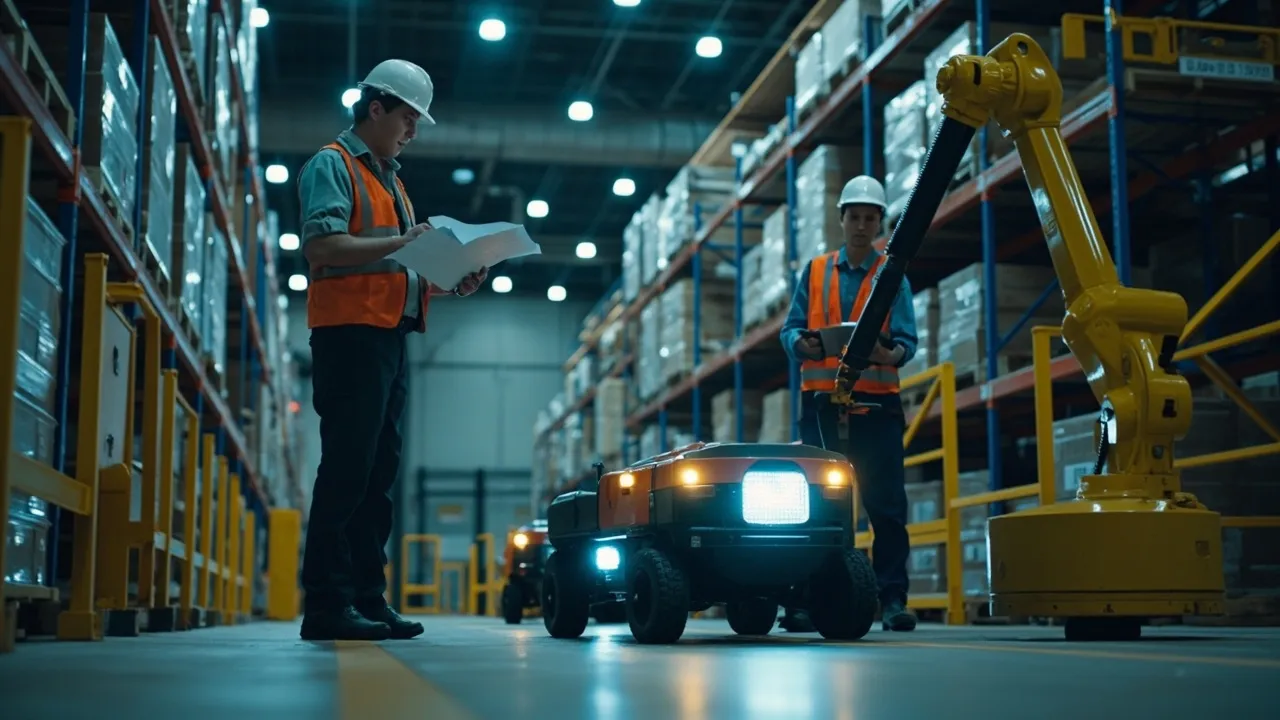
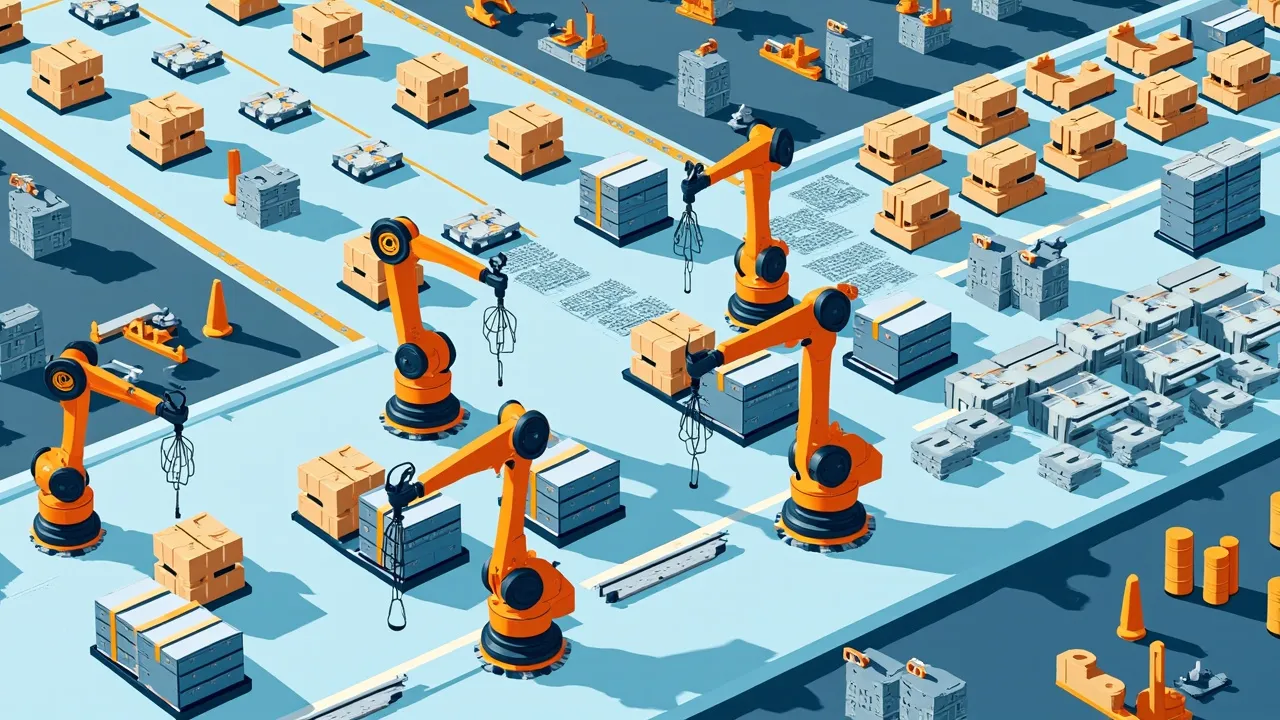
According to a June 2026 report by Interact Analysis covered by Modern Materials Handling, industrial robot demand is rebounding. The drivers this time aren't e-commerce fulfillment centers or collaborative robot arms doing pick-and-pack. They're AI chip fabs, EV battery plants, and general manufacturing lines where easier-to-configure software is collapsing the barrier between automation investment and operational deployment.
Why AI Factories Are Different for Logistics
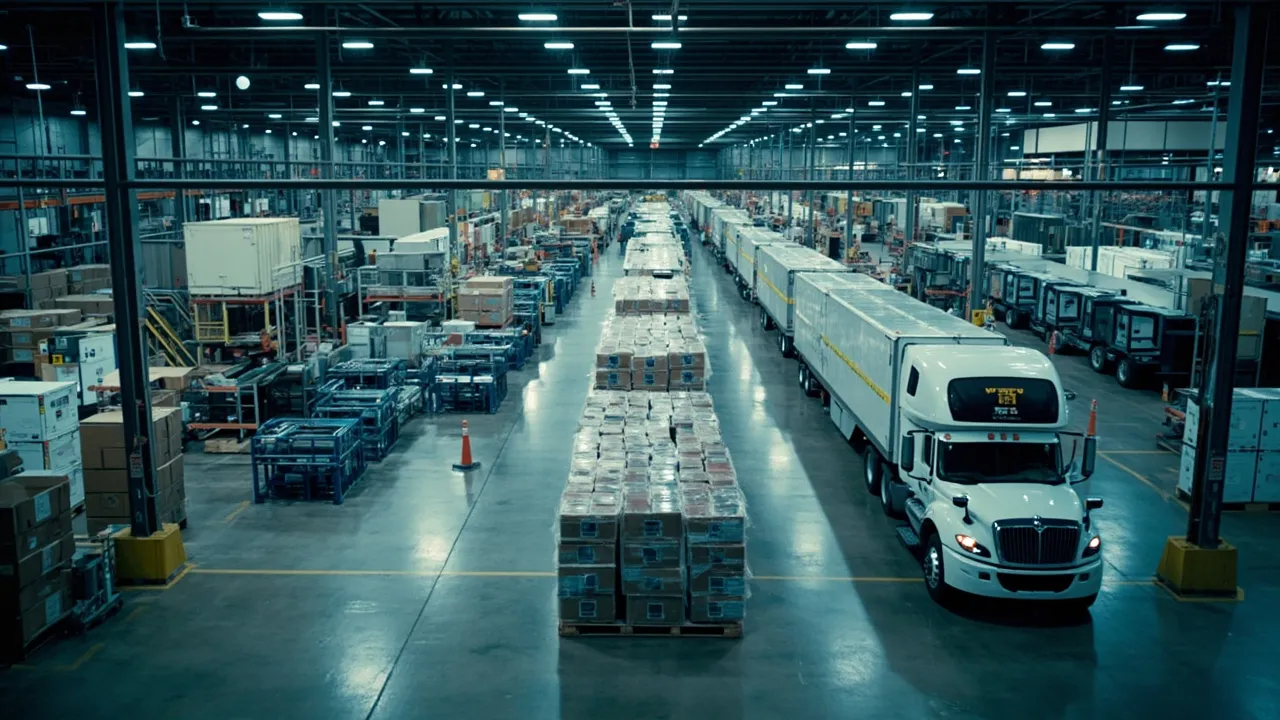
The last robotics wave was about throughput—moving more packages per hour through a warehouse. AI factories change the geometry of the problem. When a semiconductor fab or EV battery gigafactory scales robotized production, the constraint shifts from the robot cells themselves to everything surrounding them: parts feeding, WIP movement between stations, packaging materials staging, and outbound staging before a single finished good leaves the building.
A robot cell that runs 24/7 with 98% uptime sounds like a logistics solved problem. It isn't. The real load shows up in the peripheral flows: the subcomponents that must arrive at the station with micron-level precision, the consumables that need replenishing mid-cycle, the packaging materials that must be ready exactly when the finished part clears quality. Get any of those wrong and a $2 million cell sits idle for $8,000 worth of missing parts.
This is the material flow problem that AI-driven production acceleration creates. And most manufacturers haven't had to think about it at this scale before.
The Software Barrier Came Down
One key structural change: robot programming and integration software has gotten dramatically simpler. Modern robot cells ship with pre-configured simulation environments, drag-and-drop path planning, and plug-and-play peripheral interfaces. A production line that used to require 6-9 months of integration engineering can now be specified and deployed in 8-12 weeks.
That's a meaningful shift. It means robot cells are no longer a multi-year capital commitment with long payback periods. They can be added, reconfigured, or redeployed as production demand changes. But it also means the logistics supporting those cells—the inbound parts pipelines, the consumables supply chains, the packaging material cadence—must move at the same speed.
What CSCMP's State of Logistics Report Confirms
The Council of Supply Chain Management Professionals' 2026 State of Logistics Report, authored by Kearney and presented by Penske Logistics, put hard numbers around the shift toward automation. U.S. total logistics spending reached $2.4 trillion in 2025—7.8% of GDP. That's down slightly from $2.6 trillion (8.7% of GDP) in 2024, but the composition of that spending is changing. Labor constraints are accelerating automation investment across warehousing and manufacturing alike.
"We've reached a genuine turning point in the autonomous era," said Korhan Acar, Kearney partner and lead author of the report. "AI, robotics, and autonomous trucking are moving rapidly from pilots to scaled deployment."
The logistics implication: the companies deploying these technologies aren't just automating production. They're building new material flow requirements into their supply chains—and passing those requirements to their logistics partners and freight carriers.
The Manufacturing Logistics-Readiness Checklist
When robotized production accelerates, here's what logistics teams need to audit:
Inbound parts timing. Robot cells with high utilization rates have no buffer for late deliveries. Shift inbound delivery windows earlier and build receiving capacity to match production cell consumption rates—not historical averages.
Consumables and MRO replenishment. Lubricants,焊接耗材, grippers, sensors—these become critical-path items at scale. Treat MRO replenishment like production parts, not facilities maintenance.
Packaging material cadence. Robotized cells often produce at rates that differ from manual lines. Packaging material consumption rates change accordingly. Revalidate packaging specs and supplier volumes against new cell output rates.
WIP movement timing. When one cell completes a stage faster, the downstream cell must be ready sooner. Map WIP buffer capacity between stages and flag where accelerated production creates downstream exposure.
Finished goods staging. Faster production beats faster shipping. Make sure outbound staging and carrier pickup scheduling matches new production peak rates—not yesterday's average.
The Logistics Play
CXTMS connects production consumption signals to inbound freight planning, giving logistics teams the real-time visibility they need to keep robotized cells running at target utilization. When production accelerates, CXTMS ensures the parts, consumables, and packaging materials arrive on the schedule the cells require—not the schedule that worked six months ago.
The robot rebound is real. The question is whether your logistics infrastructure can keep up with the physical flow those robots need.
Ready to see how CXTMS handles high-utilization production environments? Schedule a demo and let's walk through your specific setup.
Source: Modern Materials Handling