Harley-Davidson's Reshoring Move Shows Production Geography Is Now a Freight Planning Variable


Production geography used to sit upstream from freight planning. Manufacturing leaders decided where products would be built, then transportation teams figured out how to move the parts, engines, finished goods, and service inventory afterward. That order is breaking down.
Harley-Davidson's latest reshoring announcement is a useful case study because it is specific, operational, and large enough to matter. The company plans to bring production of its Revolution Max engine back to the United States, along with the Pan America, Sportster S, and Nightster models powered by that engine. According to Supply Chain Dive, Harley-Davidson said the shift will bring machining, powertrain assembly, painting, and final vehicle assembly work into facilities in Pennsylvania and Wisconsin.
The timeline is equally important. The transition is expected to be complete before model year 2028 motorcycle production begins in 2027, and Harley-Davidson anticipates manufacturing more than 100,000 motorcycles at its York, Pennsylvania, facility in 2027.
For freight planners, the lesson is blunt: reshoring does not automatically mean simpler logistics. It changes the map, but it does not remove complexity. Supplier qualification, inbound sequencing, domestic carrier exposure, plant labor, dealer replenishment, packaging flows, and parts availability all have to be redesigned around the new production footprint.
Shorter distance is not the same as lower risk
The lazy reshoring story says domestic production shortens supply chains and therefore lowers freight cost. Sometimes it does. But the better question is whether the new network is more executable.
Moving engine work and motorcycle assembly into Pennsylvania and Wisconsin changes the center of gravity for inbound components, production materials, packaging, aftermarket parts, and outbound finished vehicles. Imported parts may still be part of the bill of materials. Domestic suppliers may need new pickup frequencies. Plants may require tighter appointment control because engine assembly, painting, and final assembly have different takt-time sensitivities.
The freight plan therefore has to start before the first domestic production milestone. Transportation teams need to know which parts are being localized, which remain offshore, which suppliers can meet new quality and lead-time requirements, and which lanes become critical-path constraints. Otherwise, reshoring simply moves volatility from ocean bookings and customs clearance into less visible domestic handoffs.
That is why production geography now belongs inside transportation planning. A TMS cannot treat plant location as a static master-data field when trade policy, tariff exposure, supplier capacity, and domestic labor availability are actively reshaping where goods are made.
Policy certainty can still create operating volatility
Harley-Davidson framed the move partly around changes in U.S. trade policy and a volatile global trade environment creating new opportunities for domestic manufacturing. Deloitte's 2026 Manufacturing Industry Outlook makes the broader point: manufacturers are weighing policy, incentives, technology, and workforce availability together as they decide where to invest.
Deloitte cited a survey of more than 500 manufacturers by the Reshoring Initiative in early 2025 showing that factors such as a larger pool of highly skilled U.S. workers, a weaker dollar, lower corporate tax rates, regulatory reform, and additional tariffs on imports could encourage further reshoring to the United States. It also noted that more than US$500 billion in private-sector commitments had been announced to revitalize the U.S. chipmaking ecosystem as of July 2025, with domestic capacity projected to triple by 2032.
Those figures matter because reshoring decisions rarely happen in isolation. Semiconductor capacity, data-center construction, machinery demand, and skilled-labor constraints all compete for the same industrial real estate, equipment, trucking capacity, project freight, and regional warehousing.
A manufacturer may bring production home for sound strategic reasons and still face near-term logistics friction. Domestic less-than-truckload networks may be more expensive than expected. Specialized carriers may be thin in a region. Supplier deliveries may be reliable on paper but fragile during ramp-up. Packaging loops may not be designed for higher-frequency domestic moves. Finished-goods transportation may need more damage controls than standard truckload operations can provide.
In other words, geographic expansion is not just a site-selection problem. It is a freight execution problem.
The inbound network becomes the first stress test
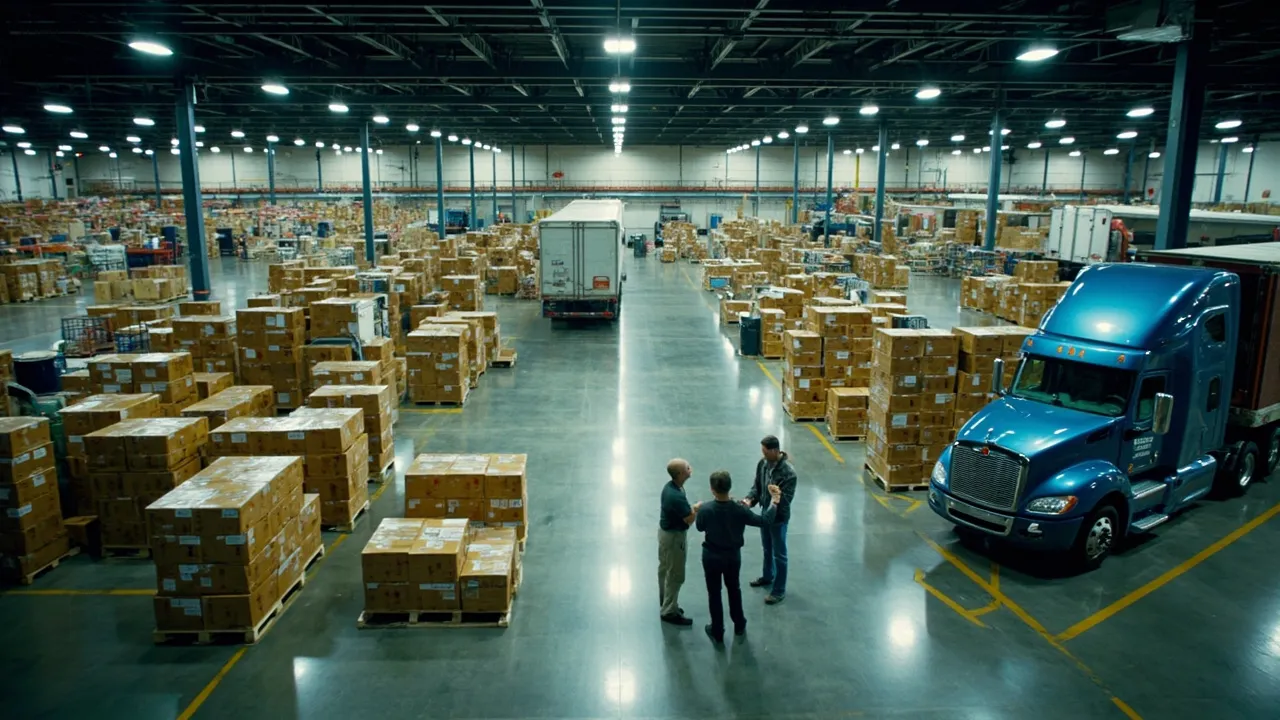
The first place reshoring usually strains is inbound supply. If a plant is taking on machining, powertrain assembly, painting, and final assembly, it needs a disciplined flow of castings, electronics, fasteners, packaging, coatings, replacement parts, and production consumables. Some of that may come from established suppliers. Some may come from newly qualified domestic vendors. Some may still cross borders.
That mix creates planning risk. Cross-border components still need customs visibility and contingency routing. Domestic suppliers need pickup compliance and milestone data. High-value or damage-sensitive components need packaging controls and carrier qualification. Sequenced production parts need appointment windows that match actual plant consumption, not generic delivery dates.
Freight teams should not wait for shortages to discover which inbound lanes are critical. They should classify lanes by production impact: parts that stop a line, parts that can be buffered, parts with alternate suppliers, and parts with long qualification cycles. Then they should attach different transportation rules to each class.
For critical-path parts, that may mean tighter milestone capture, preferred carriers, dynamic ETA monitoring, and automatic escalation when dwell or pickup delay crosses a threshold. For still-imported components, it means connecting customs release, drayage, domestic linehaul, and plant appointment data before the shipment becomes urgent.
The outbound network also changes
Finished motorcycles are not generic freight. They require damage prevention, dealer coordination, predictable handoffs, and clean exception records. If production shifts more volume into York, Pennsylvania, and Wisconsin facilities, outbound planning has to revisit dealer replenishment patterns, regional inventory buffers, claims handling, and carrier performance by lane.
This is where CXTMS-style transportation orchestration earns its keep. The value is not just booking trucks. It is tying production geography to supplier milestones, plant appointments, carrier scorecards, inventory signals, dealer commitments, and exception workflows in one operating layer.
Three questions before calling reshoring a cost win
Freight planners should ask three questions before treating a reshoring move as an automatic savings case.
First: which lanes become more fragile after the move? A shorter lane can still be fragile if it depends on one qualified supplier, one specialized carrier, one constrained labor pool, or one congested plant gate.
Second: what new domestic costs replace international costs? Ocean freight, duty exposure, and long lead times may decline, but domestic premium freight, expedited parts, packaging rework, regional warehousing, and dealer service failures can eat the savings quickly.
Third: what data will prove the new network is working? The answer should include pickup compliance, inbound dwell, appointment adherence, line-stop exposure, claims rates, carrier performance, supplier lead-time variance, and dealer fill-rate impact.
Reshoring is not good or bad by default. It is a network redesign. Harley-Davidson's move shows why logistics teams need to be in the room early, while production geography is still being decided. Once the plant is chosen and the launch clock starts, freight planners are no longer optimizing a map. They are protecting the production plan.
CXTMS helps shippers turn those geography decisions into executable transportation workflows: supplier visibility, carrier controls, shipment milestones, exception alerts, and performance data in one place. If your production footprint is changing, schedule a CXTMS demo and see how to make the freight plan move with it.