Warehouse Pedestrian Safety Is Becoming a Data Problem, Not Just a Training Problem

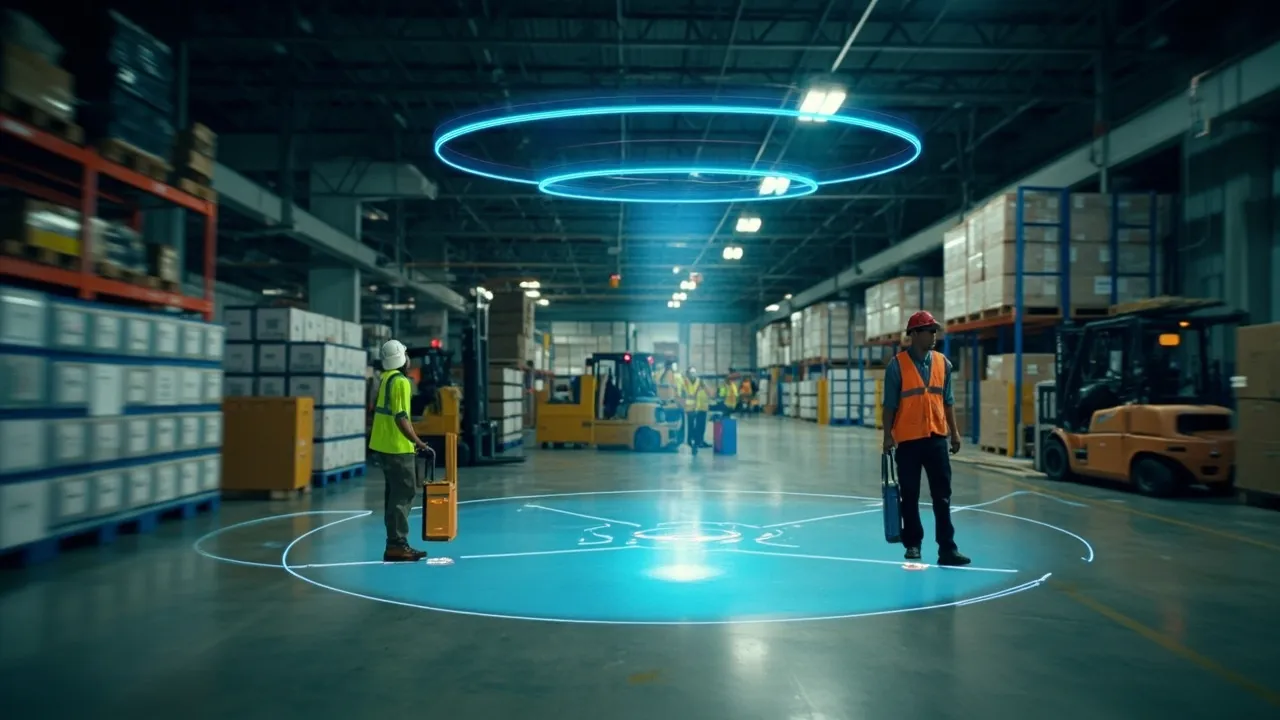
Warehouse pedestrian safety has always started with training. Operators need to know how to handle powered industrial trucks. Pedestrians need to know where to walk, where not to pause, and how to behave around equipment. Supervisors need to enforce the rules.
But training alone is a fragile control in a modern warehouse.
Facilities are busier, layouts change faster, automation is mixing with manual work, and labor turnover keeps putting inexperienced people into complex environments. The result is a risk profile that cannot be managed by posters, annual refreshers, and reminders to "be careful."
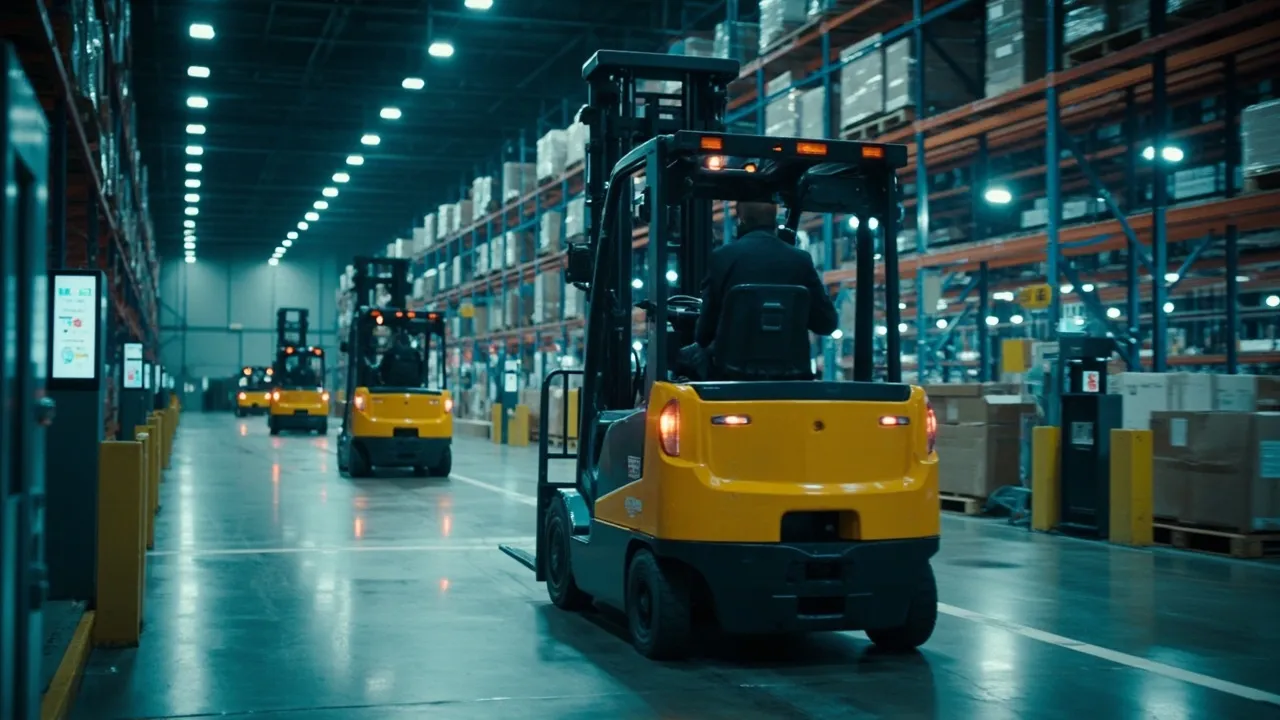
According to Modern Materials Handling, OSHA estimates roughly 85 forklift fatalities each year, plus 34,900 serious injuries and 61,800 non-serious injuries. MMH's reporting frames pedestrian safety as a layered problem: training matters, but so do site design, traffic separation, speed control, sensors, alert systems, cameras, telematics, and dashboards.
That is the real shift. Forklift safety is becoming an operational data layer.
The dangerous spots are not mysterious
Most warehouses already know where the close calls happen. Blind corners. Dock approaches. Battery charging areas. Pick modules that spill into travel paths. Crosswalks between break rooms and production zones. High-velocity aisles where operators are trying to hit throughput targets.
MMH's article highlights the same pattern: mixed traffic, dynamic stock movement, compromised separation between machines and pedestrians, and uneven levels of training and compliance. Speed control is especially important because it determines how much time both the operator and pedestrian have to react.
The problem is not that managers are unaware of the hazards. The problem is that many facilities still treat those hazards as static. They do a walk-through, paint lines, install mirrors, add a barrier, train the shift, and move on.
Then the business changes. A new customer gets onboarded. A slotting change moves fast movers closer to the dock. Temporary labor arrives for peak season. Autonomous mobile robots enter the same space as forklifts and pallet jacks. A rush order turns a quiet aisle into a choke point.
A safety plan that does not update with the operation becomes stale fast.
Passive controls still matter, but they are not enough
The first layer of protection should still be physical and procedural. Separate pedestrians from equipment wherever possible. Use guardrails, gates, marked walkways, lighting, crosswalk systems, speed limits, and facility designs that reduce unnecessary interaction.
These controls are valuable because they remove ambiguity. A guardrail does not rely on someone remembering a policy. A gate creates hesitation before a pedestrian steps into a travel lane. A redesigned flow can eliminate a crossing entirely.
But passive controls have limits. They cannot account for every exception. They cannot tell a supervisor that severe impacts are increasing on second shift. They cannot detect whether pedestrians are repeatedly entering a forklift zone near a temporary staging area. They cannot distinguish a one-off mistake from a pattern that should trigger a layout change.
That is where active safety technology starts to earn its keep.
Sensors turn near misses into evidence
Proximity sensors, pedestrian-detection cameras, AI vision systems, zone alerts, impact sensors, and forklift telematics all add something that old safety programs lacked: evidence.
MMH describes systems that can detect pedestrians, provide audible and visual alerts, use haptic feedback, or even trigger truck deceleration in defined situations. It also points to smart guardrail sensors that report the intensity, frequency, and time of day when impacts occur. Dashboards can then show how many proximity events happened, how severe impacts were, and whether risk is concentrated by site, shift, aisle, vehicle, or workflow.
That matters because near misses are usually underreported. People keep working. Nobody wants paperwork. A supervisor hears about the dramatic incidents but misses the quiet patterns.
Data changes the conversation. Instead of asking, "Did people follow the training?" managers can ask sharper questions:
- Which intersections generate the most proximity alerts?
- Are impacts clustered around a specific shift or equipment type?
- Did a slotting change increase pedestrian exposure?
- Are new employees involved in more zone violations?
- Is a productivity push creating unsafe travel behavior?
Those are operational questions, not just safety questions.
Warehouse automation raises the stakes
The timing is important because warehouses are getting more automated, not less. Supply Chain Brain recently described the next phase of warehouse automation as an orchestration challenge, where humans, robots, mobility systems, sensing, documentation, and software need to operate together rather than as isolated tools.
That point applies directly to safety. A facility with forklifts, pedestrians, conveyors, AMRs, robotic picking, and manual exception handling is not a simple traffic environment. It is a live operating system.
If automation only moves a bottleneck from one zone to another, safety risk can move with it. A robotic picking project may increase replenishment traffic. A new goods-to-person system may change pedestrian flow. A dock scheduling change may compress forklift activity into shorter windows. A labor shortage may push supervisors to cross-train workers faster than the safety program can absorb.
Safety data needs to be part of orchestration. Otherwise, the facility optimizes throughput in one system while creating risk in another.
The insurance and labor angles are getting stronger
Safety data also has business value beyond incident prevention. It can support insurance conversations, workers' compensation reviews, labor planning, and capital requests.
A warehouse manager asking for new barriers, more sensors, or a layout redesign has a stronger case when they can show event frequency, impact severity, time-of-day patterns, and improvement after prior interventions. A site leader can compare facilities more fairly when metrics are standardized. HR and operations can target refresher training to the roles, shifts, and zones where behavior is actually breaking down.
This is also a retention issue. Warehouses that feel chaotic burn people out. Facilities that visibly separate traffic, respond to hazards, and use data to fix problems send a different message: management is paying attention.
That is not soft. It affects output, absenteeism, claims, hiring, and peak-season resilience.
The CXTMS takeaway
Pedestrian safety does not stop at the warehouse wall. When an incident shuts down a dock door, takes a lift truck out of service, delays loading, or forces a supervisor into investigation mode, the transportation plan feels it. Appointments slip. Carriers wait. Orders miss cutoffs. Customer service starts explaining delays that began as an internal safety event.
CXTMS sees this as part of operational visibility. Transportation teams need more than shipment status; they need context from the facilities that make shipment execution possible. Safety events, equipment availability, dock congestion, labor constraints, and exception patterns all influence whether freight moves on time.
The best warehouse safety programs will still train people well. But the next level is connecting training with sensor data, telematics, facility design, automation orchestration, and transportation execution.
If your warehouse safety program still lives mostly in binders and after-the-fact incident reports, it is time to build the data layer. Schedule a CXTMS demo to see how connected operational visibility helps logistics teams turn facility events into faster, smarter execution decisions.