Warehouse Unitizing Is Back in the Spotlight as Load Stability Becomes a Throughput Constraint

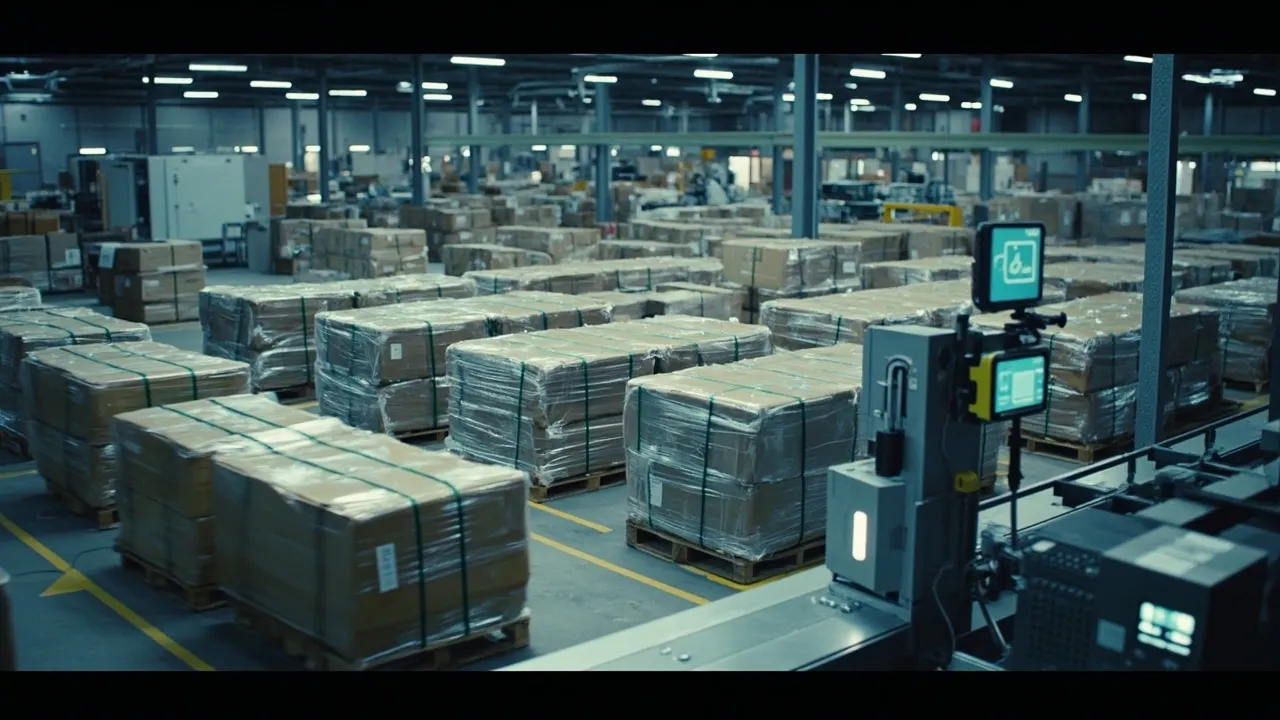
Warehouse automation gets the headlines. Robots, AS/RS, goods-to-person systems, vision tools, and AI-driven orchestration sound more exciting than stretch wrap.
But every advanced warehouse still has to answer a very old question: will the load stay together?
Unitizing—the process of consolidating cartons, cases, or items into a stable load for storage and transportation—is becoming a bigger operational lever because instability now shows up everywhere. It slows palletizers. It creates rework at the dock. It damages freight in transit. It wastes trailer cube. It forces workers to intervene in automated flows that were supposed to reduce labor dependency.
Modern Materials Handling recently put it plainly: automation does not operate in a vacuum. In its equipment report on warehouse unitizing trends, MMH notes that robotic palletizers, automated storage and retrieval systems, and goods-to-person technology all depend on stable, consistent unit loads. If the pallet is poorly built, the downstream system inherits the problem.
That makes unitizing less of a back-room packaging decision and more of a throughput constraint.
The pallet is where packaging becomes operations
For years, many companies treated load containment as a consumable-cost problem: buy film, wrap pallets, reduce damage where possible, and move on. That mindset is too narrow now.
The pallet sits at the intersection of packaging, labor, automation, transportation, claims, sustainability, and customer experience. A weak load can jam automation, require manual restacking, miss a dock appointment, or trigger a carrier damage claim.
MMH's reporting shows how much the category has changed. Traditional stretch film was commonly available in 60- or 80-gauge formats, but newer formulations have pushed thinner, stronger film down to 43 gauge. That matters because thinner film can reduce material use, but only if the wrapping equipment can handle it without sacrificing containment.
One equipment example in the report is especially concrete: Orion Stretch Wrappers redesigned its carriage after thinner film began slipping past pre-stretch rollers. A standard 20-inch application that previously yielded about 16 inches of coverage after neck-down now averages 18.5 inches. In plain English: more useful coverage from the same nominal film width, with less waste around the pallet.
That is not just a packaging improvement. It affects cost per load, film consumption, uptime, and whether operators can keep the line moving.
Labor pressure is changing unitizing equipment design
The labor story is just as important. Unitizing stations often sit near the end of a high-pressure workflow, where delays ripple straight into shipping. If a film change stops an entire line, the impact is bigger than the seconds someone spends at the wrapper.
MMH reports that newer equipment designs are addressing this directly. Orion built zoned emergency stops into its machines so one film change does not have to shut down everything upstream and downstream. The wrapping zone can stop while the rest of the line keeps moving, turning what used to halt production back to the palletizer into a roughly 30-second interruption.
Facilities cannot assume experienced operators will always be available to nurse equipment through exceptions. They need machines that are easier to maintain, easier to diagnose, and less likely to make one minor task a systemwide bottleneck. MMH describes human-machine interfaces that flag issues, guide users toward fixes, and reduce reliance on specialized troubleshooting knowledge.
Right-sized packaging improves both cube and stability
Unitizing also starts before the pallet is wrapped. If cartons are poorly sized or loosely packed, the pallet has inherited movement before film ever touches it.
MMH quotes Ranpak's Bryan Boatner making the cube-utilization point directly: the more densely companies can pack cartons and pallets, the more they can optimize for shipping savings. Dimensional weight rules and rising transportation costs make wasted air expensive. But density is not only about freight rates. Better-packed cartons create more stable pallet patterns, reduce shifting, and make the load easier to contain.
That is where packaging choices become transportation data. If a shipper changes cartonization logic, void fill, pallet pattern, stretch-wrap settings, or load height, the transportation team should know before transportation only sees the symptom: a claim, rejected delivery, late departure, or carrier note about unstable freight.
Connected unitizing makes the invisible visible
Unitizing equipment is starting to produce operational data instead of just wrapped pallets.
MMH reports that Beumer Group equips its machines with IoT gateways that provide live performance insights, operating status, alerts, pallet counts, and uptime data through dashboards or mobile devices. That moves unitizing off the floor and into the same management conversation as other warehouse systems.
Instead of judging load stability only after a pallet leans, wrap tears, freight shifts, or a customer files a claim, connected equipment lets teams manage earlier indicators: film usage, cycle counts, stoppages, maintenance alerts, operating status, and exception frequency. Even basic trends can help supervisors answer practical questions:
- Which lines generate the most wrapping interruptions?
- Are certain SKUs or carton sizes driving unstable loads?
- Did a packaging change reduce film consumption but increase damage?
- Are dock delays tied to restacking or rewrapping work?
- Do certain customers require different containment standards?
That is the level where packaging stops being tribal knowledge and becomes operational control.
Tracking data should follow the load
Load stability also connects to item and shipment visibility. Inbound Logistics' comparison of RFID and barcode technologies highlights a key distinction: RFID can scan multiple items without line-of-sight, while barcodes typically require individual visual scanning. The article also notes RFID's value in high-volume environments because it supports faster data capture, real-time tracking, and automation integration.
That distinction matters for unitized freight. A stable pallet is physically consolidated, but logistics systems still need digital clarity about what is inside it, how it was built, and where it is going. The best future state is a wrapped pallet with useful data attached: contents, handling requirements, pallet pattern, weight, cube, customer, carrier, appointment, and exception history.
The CXTMS takeaway
Unitizing is becoming part of execution quality. A shipment is not ready just because an order was picked and a carrier was tendered. It is ready when the load can move through the warehouse, onto the dock, into the trailer, and to the customer without avoidable instability.
For logistics teams, that means packaging and load data should not stay trapped in the warehouse. Transportation planners need visibility into the upstream conditions that affect damage, dwell, trailer utilization, and service reliability.
CXTMS helps connect those execution signals so teams can see more than shipment status. When packaging changes, load exceptions, dock delays, and transportation performance live in separate systems, the business reacts late. When they are connected, teams can spot patterns and fix the process before failures become claims.
If load stability is starting to slow your operation, do not treat it as a stretch-wrap problem. Treat it as an execution visibility problem. Schedule a CXTMS demo to see how better operational data helps logistics teams move freight with fewer surprises.