The 2026 Warehouse Fulfillment Report Shows WMS Buyers Want Labor Relief, Not Feature Lists


The warehouse management system buying conversation has changed. A few years ago, buyers could still sit through a demo and compare receiving screens, wave logic, slotting tools, mobile picking, reporting modules, and integration claims as if a longer checklist meant a better operation. In 2026, that approach looks dangerously thin.
SupplyChainBrain’s AutoStore-backed warehouse management and fulfillment report, based on insights from 336 global warehouse and supply chain leaders, points to a sharper reality: fulfillment leaders are not buying software for feature inventory. They are buying operational relief. The report frames modern fulfillment around instant data, faster decisions, automation, workforce pressure, throughput, efficiency, and resilience.
That is the right lens. WMS buyers do not wake up worried that their vendor’s brochure has fewer modules than a competitor’s. They worry that the second shift is short-staffed, order cutoffs are slipping, automation is underused, exception queues are growing, and customer commitments are being protected by supervisor heroics instead of repeatable process.
Labor pressure is now a system requirement
Labor used to be treated as a warehouse staffing issue. Now it is a system design issue. If a WMS cannot help managers sequence work around available labor, rebalance tasks when absences hit, and expose bottlenecks before the dock goes sideways, it is mostly recording activity after the hard decisions have already happened.
Modern Materials Handling’s 2026 intralogistics robotics survey reinforces the point. MMH reported that 52% of respondents currently use one or more types of robots, while another 32% plan to deploy robotics within three years. The share with no robotics plans fell from 9% to 3%. That does not mean every warehouse is becoming lights-out. It means almost every operation is being forced to consider how people, robots, conveyors, storage systems, and software will work together.
The same survey found that labor remains central to robotics decisions: when asked for the single most important factor, 67% pointed to labor costs and 33% cited labor availability. Reduced labor costs ranked as the top motivator, followed by warehouse productivity and throughput.
Those numbers should reshape WMS selection. Buyers should not ask only whether a system can assign tasks. They should ask whether it can make a smaller or more variable workforce productive without burning out supervisors.
Throughput stability beats peak-demo performance
The best warehouse software demo is usually a lie by omission. It shows clean orders, clean inventory, clean labor assumptions, clean automation status, and a clean day. Fulfillment operations are not clean.
The SupplyChainBrain report highlights throughput as a critical competitive issue and notes that many operations still struggle to meet rising demands. Throughput is not just speed; it is stability under pressure.
A warehouse can hit attractive pick rates for two hours and still fail the day if replenishment starves forward pick locations, cartonization creates packing congestion, or the parcel manifesting station backs up. A useful WMS has to show how one decision affects the next constraint.
Ask vendors to prove how the system handles late inbound receipts, short labor, order prioritization, putaway congestion, carrier cutoff changes, substitutions, exception approvals, and mixed automation status. Ask what a supervisor sees at 2:30 p.m. when the plan created at 8 a.m. is no longer true.
If the answer is “run a report,” keep shopping.
Automation readiness is more than integration
Every WMS vendor says it integrates with automation. That is table stakes. The harder question is whether the system can orchestrate work across humans and machines when reality changes.
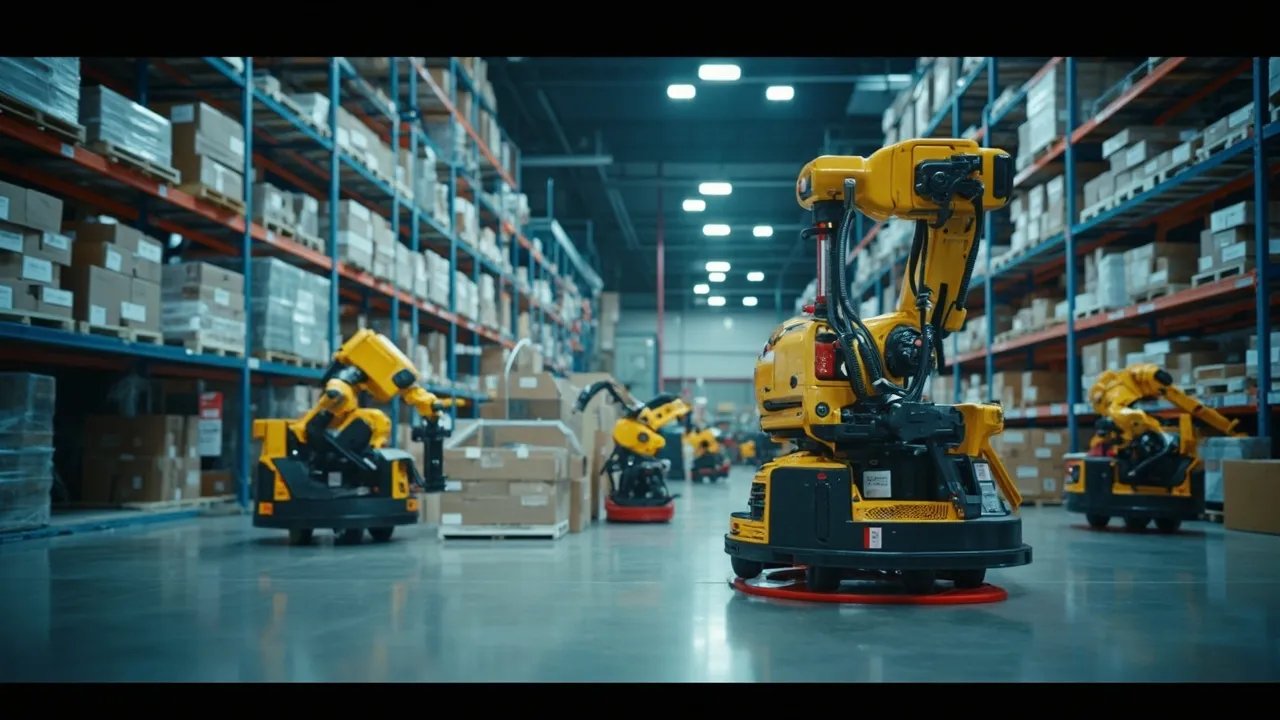
MMH’s robotics survey shows why this matters. Beyond robotics, 58% of respondents use or are considering other intralogistics automation such as conveyors, sortation, AS/RS, and shuttle systems, up from 46% last year. Order or case picking leads planned robotics deployment at 57%, followed by heavy payload forked or tugger transport robots at 32%, sortation robots at 31%, and collaborative in-aisle picking at 30%.
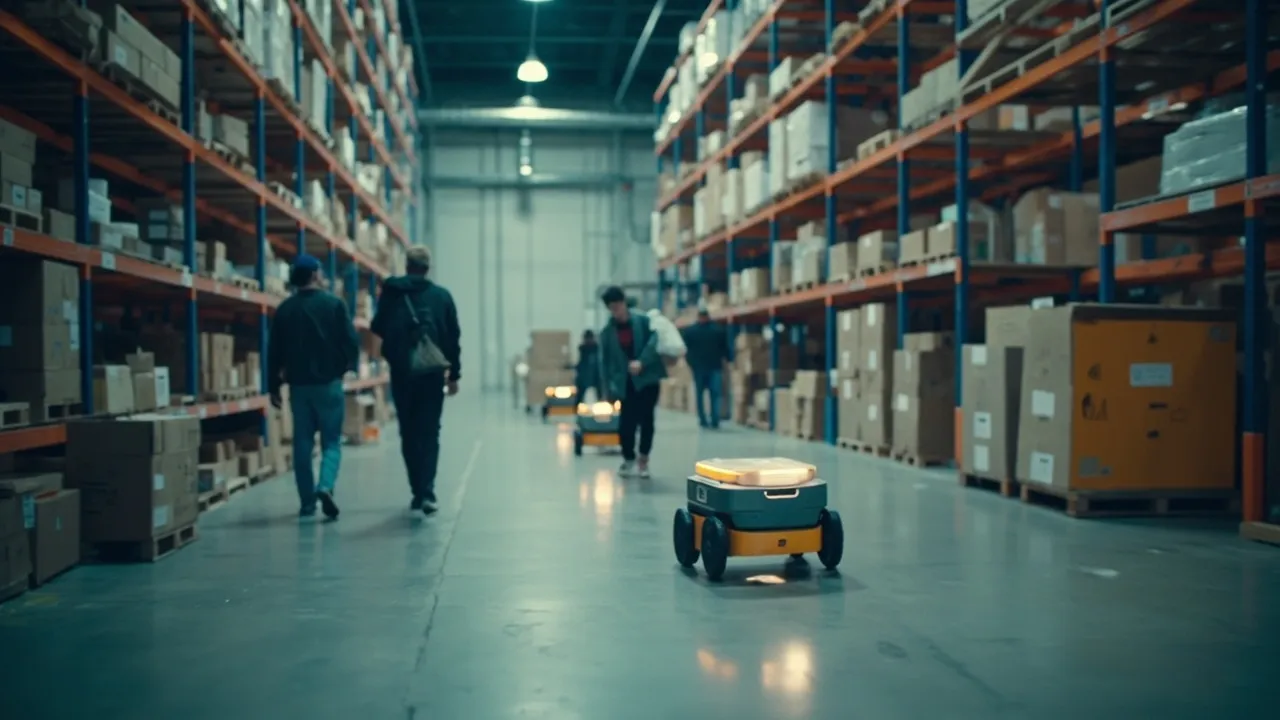
That creates a messy, hybrid warehouse. Some zones may be manual. Some may be robot-assisted. Some may depend on fixed automation. Some may still run on lift trucks and paper backups during disruption. WMS buyers need to know whether the platform can coordinate this mixed environment without turning every exception into a custom integration ticket.
Inbound Logistics’ 2026 technology trends coverage describes this shift well: AI is moving from standalone feature to “system of action,” while the labor crunch has accelerated robotics and workforce coordination. It also notes that warehouse investment is shifting toward brownfield modernization: extracting more capacity, uptime, and flexibility from installed assets instead of funding full network resets.
That is exactly where WMS decisions get real. Most companies are not building perfect greenfield facilities. They are modernizing around legacy layouts, existing material handling equipment, imperfect master data, and budget limits. The winning WMS is the one that helps the operation improve in stages.
What WMS buyers should require in 2026
A practical WMS evaluation should start with operating proof, not feature count. Shippers and 3PLs should require vendors to demonstrate five capabilities.
First, labor-aware task orchestration. The system should dynamically prioritize work by labor availability, order promise, zone congestion, equipment status, and carrier cutoff risk.
Second, exception visibility that supervisors can act on. A dashboard is not enough if it simply displays problems. The WMS should identify likely misses, recommend recovery actions, and preserve a record of who approved service or cost tradeoffs.
Third, automation flexibility. Buyers should test how the platform handles robot downtime, partial automation coverage, manual fallback, and phased rollout across sites.
Fourth, transportation handoff discipline. Fulfillment is not complete when an order is picked. The WMS has to support clean parcel, LTL, and carrier cutoff workflows, especially when order priority changes late in the day.
Fifth, measurable time to value. MMH found that companies evaluating robotics put ROI at the top of the business-case list at 63%, followed by payback time at 52%, total cost of ownership at 47%, and process performance at 41%. WMS buyers should apply the same discipline. If the vendor cannot define the first 90 days of operational improvement, the roadmap is probably theater.
The real test is not whether the software can manage inventory. It is whether it helps the operation absorb volatility without losing margin, service, or employee trust.
CXTMS sits on the transportation side of that same execution problem. CXTMS helps freight forwarders and logistics teams connect shipments, carrier decisions, exceptions, customer commitments, and cost visibility in one operating workflow. When warehouse fulfillment and transportation execution are aligned, teams stop discovering service failures at the dock door and start managing them earlier.
WMS buyers in 2026 should be ruthless. Do not reward the longest demo. Reward the platform that reduces labor firefighting, stabilizes throughput, supports real-world automation, and hands freight cleanly into transportation execution.
Ready to connect fulfillment decisions with transportation execution? Request a CXTMS demo to see how CXTMS helps logistics teams manage visibility, exceptions, carrier workflows, and cost control before warehouse pressure turns into customer pain.