UPS’s $50M Automotive and Industrial Push Is Really a Service-Parts Logistics Signal

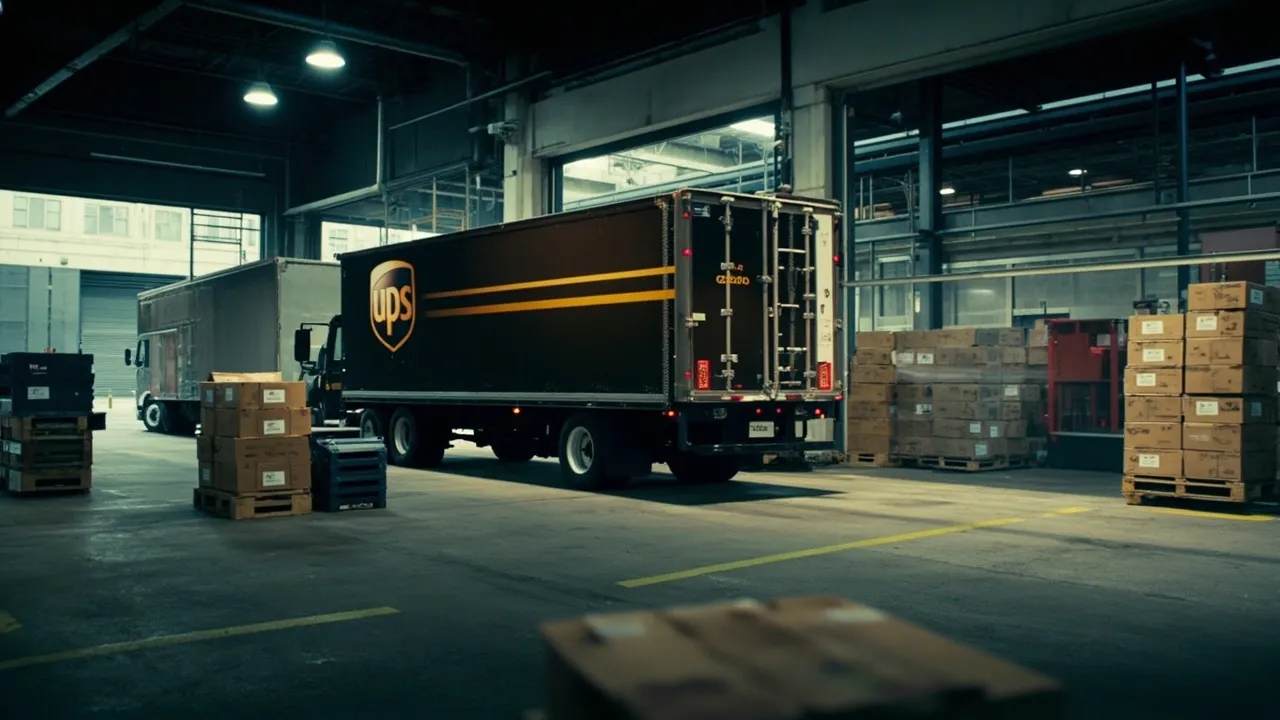
UPS’s newest automotive and industrial logistics investment is easy to read as a carrier product announcement. That undersells it. The nearly $50 million push is really a signal that service-parts logistics is becoming a more specialized, higher-stakes operating discipline.
Supply Chain Dive reported that UPS is expanding heavy air freight options for automotive and industrial supply chains, including one-day, two-day, and three-day North American Air Freight services to and from Mexico starting in August. UPS is also adding ground capacity in Mexico and positioning the service as an end-to-end air and ground freight solution for high-value, time-sensitive parts.
The investment goes beyond air freight. UPS highlighted RFID visibility, UPS Ground with Freight Pricing for shipments over 150 pounds, same-day delivery through Roadie to dealerships and repair shops, and a team of more than 300 automotive and industrial subject-matter experts. That combination matters because service-parts networks do not behave like ordinary parcel, ordinary LTL, or ordinary replenishment freight.
They sit in the awkward middle: urgent enough to justify premium service, fragmented enough to strain transportation planning, and operationally sensitive enough that a missed shipment can turn into a stranded vehicle, idle technician, stopped production line, or angry dealer.
Service parts are not normal freight
A finished-goods distribution model can often tolerate batch planning. Service-parts logistics cannot. Demand is lumpy, SKU breadth is punishing, and urgency changes by the hour.
Inbound Logistics’ automotive service-parts reporting shows the scale. Ford’s U.S. service parts operation has included roughly 250,000 part numbers, equal to about 1.5 million SKUs, supported by about 1,500 suppliers and 4,000 dealerships. The service goal is equally demanding: if a U.S. dealer orders a fast-moving part by 4 p.m., Ford targets delivery by 10 a.m. the next day for 98% of those shipments.
That is the reality UPS is chasing. The network has to handle spark plugs, filters, sheet metal, electronics, assemblies, odd-shaped industrial components, and slow-moving parts for aging equipment. Some orders can move economically through planned replenishment. Others need same-day recovery.
The problem is not simply “ship faster.” It is knowing when speed is worth paying for.
Visibility becomes part of the service promise
RFID visibility is not a cosmetic upgrade in service-parts logistics. It helps close the gap between physical movement and customer commitment.
When the part is production-critical or repair-critical, “in transit” is not enough. A dealer wants to know whether the part missed the sort. A plant wants to know whether the replacement component will arrive before the next maintenance window. A field-service manager wants confidence before dispatching a technician.
That is why the mix of RFID, heavy-shipment pricing, air freight, ground capacity, and Roadie same-day delivery is more interesting than any single capability. UPS is trying to turn transport options into a service-parts orchestration layer: identify the item, classify urgency, choose the service level, maintain visibility, and get the part to the operating point that needs it.
The economics are changing, too
UPS has a commercial reason to pursue this market. Supply Chain Dive noted that the carrier is leaning toward more profitable verticals as it reduces exposure to lower-yield home e-commerce volume. UPS executives said U.S. average daily volume from small and medium-sized businesses rose 1.6% year over year in the first quarter, driven by automotive, healthcare, and high-tech shippers, while overall U.S. average daily volume fell 8% year over year.
That divergence says a lot about where parcel and freight networks are headed. The strongest opportunities are not just more packages. They are higher-value logistics problems with tighter service requirements and more complex handoffs.
At the same time, the broader freight market is showing less spare room. Logistics Management reported that trucking executives see a market with “fundamentally less slack” than prior cycles. ArcBest’s LTL contract renewals came in 6.3% higher, the strongest renewal rate since the third quarter of 2022, while analysts pointed to tightening truckload conditions pushing more freight toward LTL.
That matters for service parts because urgency does not wait for cheap capacity. If LTL pricing firms, truckload capacity tightens, and same-day networks get busier, companies need sharper rules for which parts deserve premium movement and which should be positioned closer to demand before the emergency happens.
Regional stocking is the real strategy
The smarter response is not to expedite everything. It is to redesign regional stocking and transportation rules around actual service risk.
Inbound Logistics described how Ford shifted from a traditional hub-and-depot model to a more distributed service-parts network, including 26 smaller warehouses, 19 high-velocity centers for smaller fast-moving parts, and dedicated bulk-parts facilities for second-day delivery. The operating logic was simple: move closer to customers, segment parts by velocity and size, and reduce wasteful transfers.
That logic applies well beyond automotive OEMs. Industrial distributors, equipment manufacturers, aftermarket suppliers, and field-service organizations all need to segment inventory by criticality, demand variability, value, size, and penalty of failure.
A $40 sensor that stops a machine may deserve better positioning than a bulky part with predictable seasonal demand. A slow-moving replacement component may not justify local stock everywhere, but it may require a preapproved premium transport rule. A dealer network may need multiple daily delivery options in dense regions and a different recovery model in rural markets.
This is where transportation management and inventory planning have to talk to each other. Service-parts logistics is not solved inside the warehouse alone, and it is not solved by a carrier portal alone. It requires connected rules across stocking locations, order cutoffs, service commitments, carrier options, accessorial approvals, customer communication, and reverse logistics.
Returns cannot be an afterthought
Service parts also create return loops that standard outbound planning often ignores: wrong parts, warranty returns, cores, repairable components, reusable packaging, and dealer transfers. If the outbound network is fast but returns are sloppy, inventory accuracy collapses and planners start expediting parts that may already exist elsewhere.
UPS’s investment should prompt shippers and forwarders to review their own operating model. Which SKUs create the highest downtime risk? Where do emergency shipments originate? Which freight options are preapproved by urgency, weight, value, and customer commitment? Are returns visible in the same workflow as outbound orders?
If those answers live in separate spreadsheets, emails, carrier portals, and warehouse systems, the network will keep reacting late.
CXTMS helps freight forwarders and logistics teams coordinate shipments, carrier options, exception workflows, customer commitments, and cost visibility in one transportation operating system. For service-parts networks, that connected view is the difference between expensive firefighting and deliberate orchestration.
UPS is betting that automotive and industrial customers want an easier logistics button. They do. But the companies that benefit most will be the ones that define when to press it, when to stock closer, when to use same-day delivery, and when to let standard freight do its job.
Ready to make service-parts freight less chaotic? Request a CXTMS demo to see how connected transportation workflows help teams manage urgent shipments, visibility, exceptions, and cost control without losing the plot.