USPS Goes 100% Electric on New Deliveries in 2026: What the $9.6 Billion Fleet Overhaul Means for Last-Mile Logistics

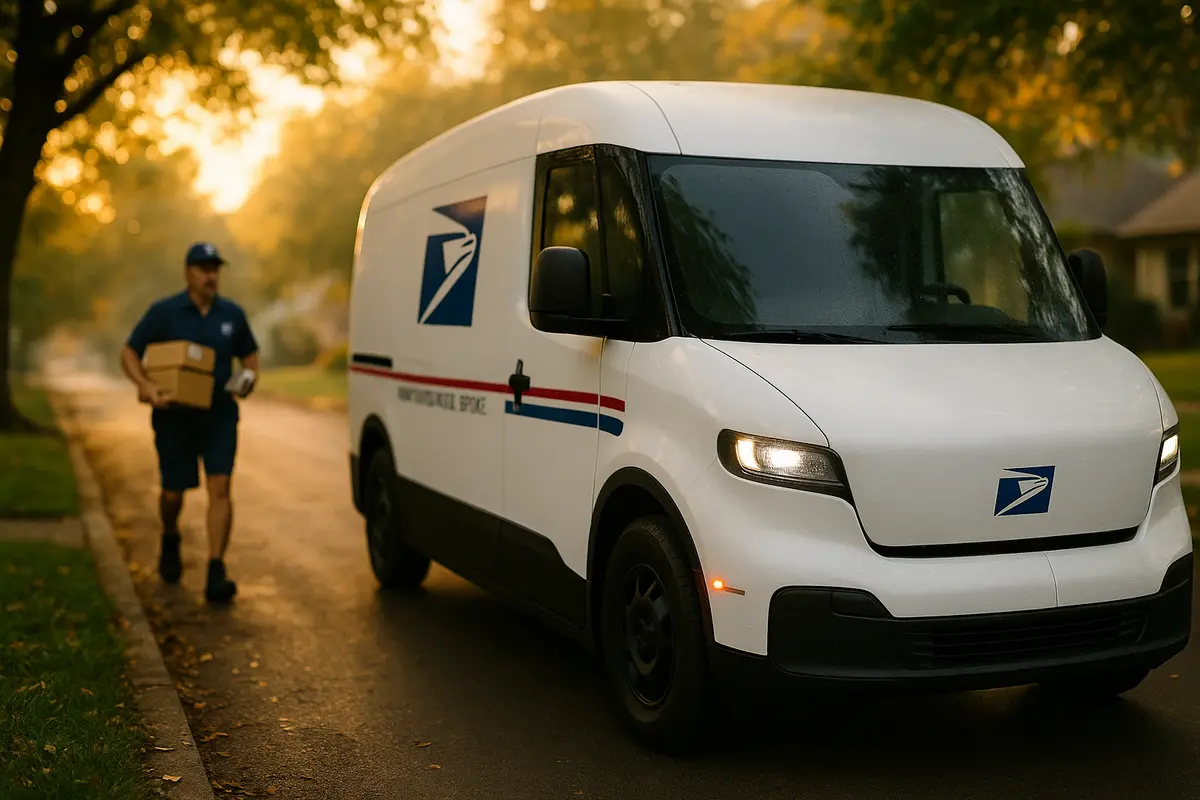
The United States Postal Service just hit a milestone that will ripple across every corner of last-mile logistics: as of 2026, every new delivery vehicle USPS orders is 100% battery electric. It's the most aggressive fleet electrification commitment by any delivery organization in the country — and it's backed by $9.6 billion in real spending.
The Scale of the USPS Fleet Overhaul
The numbers behind USPS's "Delivering for America" plan are staggering. The agency is deploying 106,000 new vehicles by 2028, including 45,000 battery-electric Next Generation Delivery Vehicles (NGDVs) built by Oshkosh Defense and another 21,000 commercial off-the-shelf battery-electric vehicles, many of them Ford E-Transit vans. That's 66,000 electric vehicles joining the nation's largest civilian fleet.
The NGDV program alone represents one of the largest single EV procurement contracts in history. Each vehicle is purpose-built for mail and package delivery with a 70-cubic-foot cargo area — roughly double the capacity of the aging Grumman Long Life Vehicles they're replacing. The electric variants offer an estimated range of 70 miles per charge, more than sufficient for the average 24-mile daily postal route.
But the rollout hasn't been without bumps. As of late 2025, only 612 battery-electric NGDVs were on the road across 15 delivery sites, well behind the original schedule. Oshkosh Defense has faced production ramp-up challenges at its new South Carolina manufacturing facility. Still, USPS maintains its 2028 target, and production is expected to accelerate significantly through 2026 and 2027.
Why 2026 Is the Inflection Point
The significance of 2026 isn't just about vehicle counts — it's about a policy threshold. USPS announced in December 2022 that 100% of new vehicle acquisitions delivered in 2026 and beyond will be battery electric. This was made possible by $3 billion in Inflation Reduction Act funding earmarked specifically for EV procurement and charging infrastructure.
That commitment means every postal facility receiving new vehicles in 2026 is also getting charging infrastructure — thousands of Level 2 and DC fast chargers installed at post offices and distribution centers nationwide. USPS is effectively building one of the largest distributed EV charging networks in the country, embedded within communities that private charging companies often overlook.
For the broader logistics industry, this creates an interesting precedent. When the nation's largest delivery fleet commits to full electrification, it normalizes the technology for every shipper, carrier, and 3PL evaluating their own fleet strategy.
Competitive Pressure on FedEx, UPS, and Amazon
USPS's electrification push doesn't exist in a vacuum. It accelerates an arms race that's already reshaping last-mile economics.
UPS has committed to purchasing 10,000 electric delivery vehicles and operates one of the largest private alternative fuel fleets in the country. Amazon has ordered 100,000 custom electric delivery vans from Rivian, with tens of thousands already in service. FedEx has pledged to achieve carbon-neutral operations by 2040, with ongoing EV pilot programs across its Express and Ground networks.
What makes USPS's move different is its combination of scale and universal coverage. Private carriers optimize routes for profitability — they serve dense urban corridors first and rural areas reluctantly. USPS delivers to every address in America, six days a week. Electrifying that network means EVs will operate on rural routes, suburban cul-de-sacs, and dense city blocks alike — proving the technology works everywhere, not just in ideal conditions.
This matters for shippers evaluating last-mile partners. As USPS simultaneously opens its DDU last-mile network to competitive bidding — with service launching as early as Q3 2026 — brands will gain access to an electrified last-mile network at postal rates. That's a compelling value proposition for sustainability-conscious retailers.
The Environmental Impact at Scale
Transportation accounts for the largest share of U.S. greenhouse gas emissions, and last-mile delivery is one of the fastest-growing segments within that category. Research published in Sustainability found that electrifying last-mile delivery fleets can reduce carbon emissions by up to 54% compared to conventional vehicles, even when accounting for grid electricity sources.
At USPS's scale, the impact compounds. The agency's existing fleet of 230,000+ vehicles — many of them 30-year-old Grumman LLVs with no air conditioning and poor fuel efficiency — represents a massive emissions footprint. Replacing even a portion of those vehicles with BEVs eliminates tailpipe emissions in residential neighborhoods where mail carriers spend hours each day, directly improving local air quality.
Beyond emissions, electric delivery vehicles reduce noise pollution significantly. For carriers making hundreds of stops per day in residential areas, the difference between an idling diesel engine and a silent electric motor is meaningful for community quality of life.
What This Means for Shippers and TMS Strategy
USPS's fleet transformation has practical implications for logistics technology strategy:
Multi-carrier rate optimization becomes more complex. As USPS's operational costs shift from fuel to electricity (at roughly one-third the per-mile cost), their pricing structure will evolve. TMS platforms need to model total landed cost across carriers with different energy economics.
Sustainability reporting gets easier. Shippers routing volume through USPS's electric fleet can claim Scope 3 emissions reductions with verified data. Modern TMS platforms should capture carrier fleet composition as part of shipment-level carbon accounting.
Last-mile network design needs updating. With USPS opening DDU access and operating an increasingly electric fleet, the optimal carrier mix for many shippers will shift. Network modeling tools within TMS platforms should factor in USPS's expanded capabilities alongside traditional carriers.
Rural delivery economics change. Electric vehicles have lower per-mile operating costs but higher upfront investment. For shippers with significant rural delivery volume, USPS's willingness to absorb that capital cost and pass through lower operating expenses makes them increasingly competitive against private carriers on non-urban routes.
Looking Ahead
The USPS fleet overhaul is more than a sustainability initiative — it's a structural shift in last-mile logistics infrastructure. When 66,000 electric delivery vehicles are operating across every ZIP code in America, it changes the competitive calculus for every player in the parcel ecosystem.
For logistics leaders, the question isn't whether electric last-mile delivery will become standard — USPS just made that inevitable. The question is how quickly your TMS and carrier management systems can adapt to a world where fleet energy source, charging infrastructure, and emissions data are as important as transit time and cost per package.
Need to optimize your carrier mix for the electric last-mile era? Contact CXTMS for a demo of our multi-carrier TMS platform.