Terrain-Adaptive Mobile Robots Break Free From Smooth Floors: How Multi-Surface AMRs Are Entering Factory-Warehouse Hybrid Environments

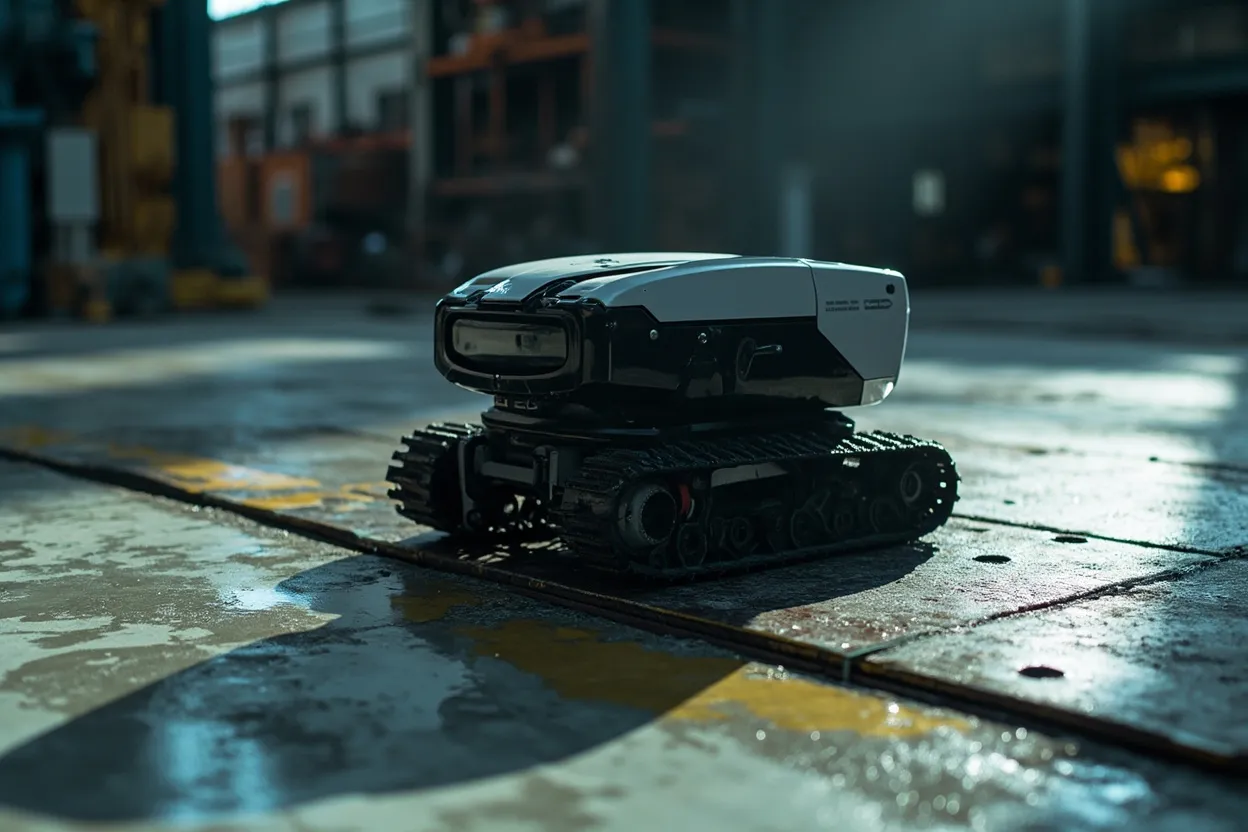
The autonomous mobile robot revolution has transformed warehousing — but it has a dirty secret. The vast majority of AMRs deployed today only work on pristine, smooth, flat floors. Step outside the polished concrete of a modern distribution center and into the real world of manufacturing plants, outdoor staging yards, and factory-warehouse hybrid facilities, and most robots simply stop.
That limitation is finally cracking open. A new generation of terrain-adaptive AMRs is entering the market, purpose-built to navigate uneven surfaces, dock plate transitions, outdoor environments, and the rough industrial floors that define real-world manufacturing logistics. At MODEX 2026 in Atlanta (April 13–16), several companies are showcasing robots that blur the line between warehouse automation and factory-floor material handling — and the implications for supply chain operators are enormous.
The Smooth-Floor Problem Is Bigger Than You Think
Here is the uncomfortable math: while warehouse automation has exploded, an estimated 80% or more of industrial facilities worldwide still operate with floor conditions that defeat conventional AMRs. Traditional autonomous mobile robots rely on precision navigation systems calibrated for flat, consistent surfaces. Introduce expansion joints, dock plates, outdoor asphalt transitions, metal grating, or the oil-stained concrete typical of manufacturing plants, and navigation degrades rapidly.
This means the addressable market for AMR automation has been artificially constrained. According to MarketsandMarkets, the global AMR market is projected to grow from USD 2.75 billion in 2026 to USD 7.07 billion by 2032 at a 14.4% CAGR. But that growth has been concentrated almost exclusively in purpose-built distribution centers. Manufacturing plants, food processing facilities, lumber yards, outdoor staging areas, and hybrid factory-warehouse operations have been largely left out.
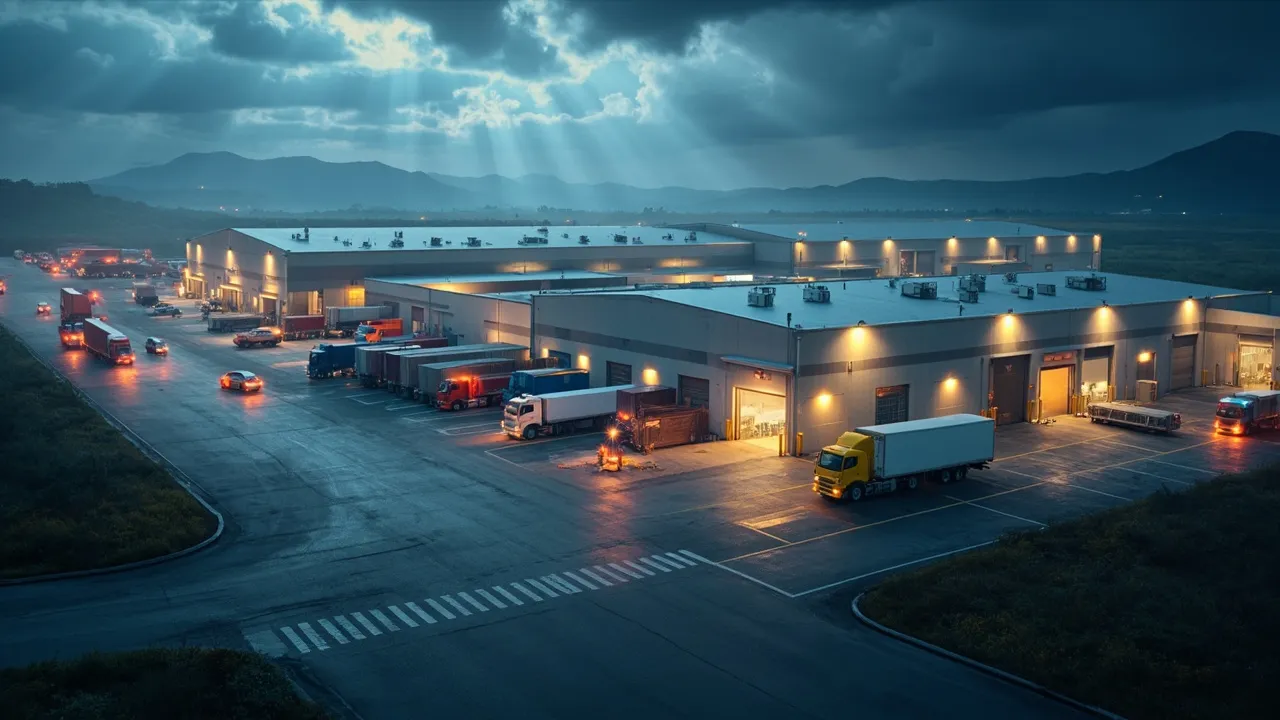
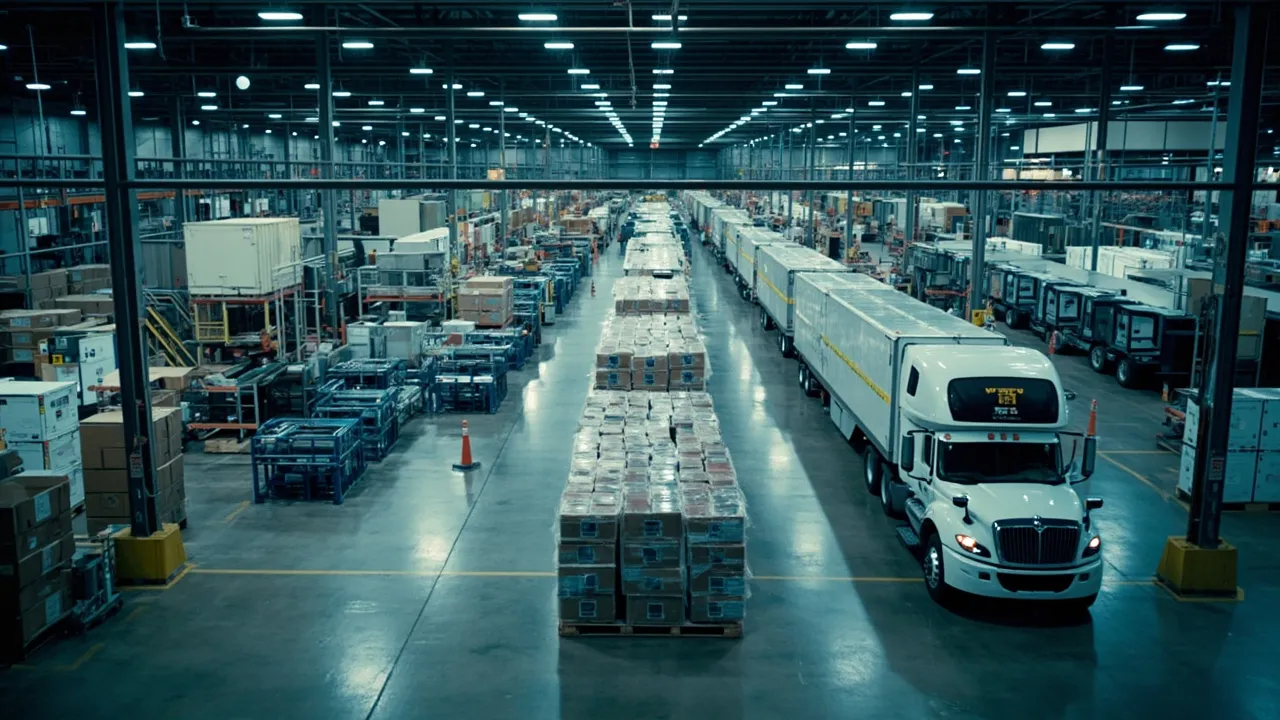
The factory-warehouse convergence trend makes this gap even more urgent. Modern lean manufacturing increasingly co-locates production lines with finished-goods warehousing. Materials need to move seamlessly from a rough-floored stamping shop to a smooth-floored packing area to an outdoor loading dock — and traditional AMRs cannot make that journey.
SEER Robotics and the Terrain-Adaptive Breakthrough
At MODEX 2026, SEER Robotics is making its case for a fundamentally different approach. The Chinese automation company — whose intelligent robot controllers have ranked No. 1 globally in shipment volume for three consecutive years — is debuting terrain-adaptive mobile robots designed specifically for factory and warehouse hybrid environments.
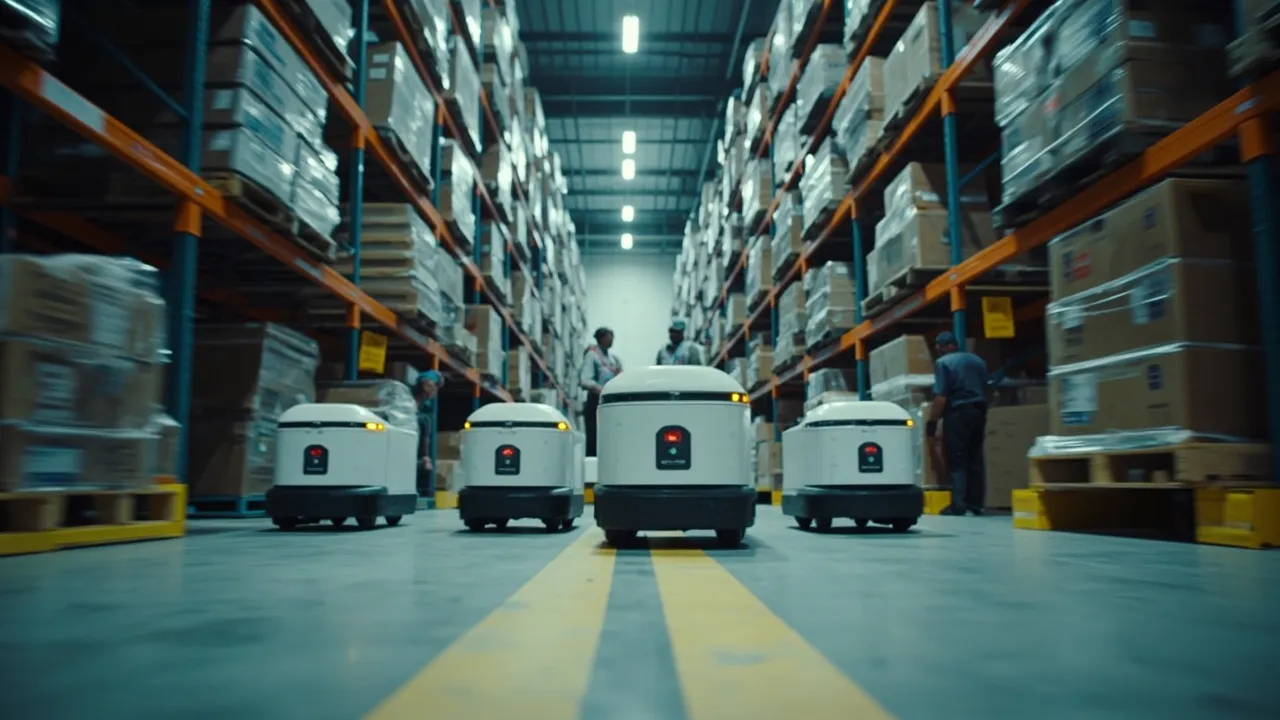
Two products stand out. The SPT-1500UL is a space-saving autonomous pallet truck featuring a patented E-type fork structure that handles open pallets, closed pallets, cages, and customized racks. More critically, it uses AI-powered perception to adapt to challenging conditions including misaligned, stacked, damaged, or deformed pallets — even under poor lighting. The SCT-50UL is a compact tote robot built for high-density storage environments where conventional AMRs cannot fit.
What makes SEER Robotics' approach notable is the platform philosophy underneath. Rather than building single-purpose robots, the company provides a unified "robotics brain" — a control architecture that allows multiple robot types to share the same navigation, orchestration, and fleet management layer. The platform supports plug-and-play integration with over 400 types of robotic components and more than 2,000 pre-validated robot models, from AMRs and picking robots to AGVs and mobile forklifts. This means integrators can deploy terrain-adaptive robots alongside conventional warehouse AMRs under a single management system.
"We believe we have found a better way to automate," said SEER Robotics Founder and CEO Zhao Yue. "Our highly-adaptable multi-robot platform brings everything together, providing a foundation to meet the varied, complex demands of different industries."
Why Factory-Warehouse Convergence Changes Everything
The demand signal for multi-surface robots comes from a structural shift in how facilities are designed. According to Supply Chain Dive, dock operations remain one of the final areas tapping into viable automated technology. Loading and unloading — where robots must navigate between trailer interiors, dock plates, and warehouse floors — has been considered "impossible or impractical" by many companies. But as robotic unloading technology matures (DHL has committed to deploying over 1,000 Boston Dynamics Stretch robots globally), the terrain gap between the dock and the warehouse interior becomes the critical bottleneck.
The robotics-ready fulfillment center design market underscores the scale of this shift. Valued at USD 5.70 billion in 2026, the market for automation-ready facility design and integration services is projected to reach USD 14.70 billion by 2036 at a 9.9% CAGR, according to Future Market Insights. Increasingly, those designs must account for hybrid environments where robots transition between different surface types.
Consider the typical scenarios where terrain-adaptive AMRs unlock new automation potential:
- Manufacturing plants where raw materials arrive at a rough-floored receiving area and finished goods ship from a polished warehouse section
- Cold storage facilities where condensation creates slippery surfaces and frost heave produces uneven floors
- Outdoor staging yards where pallets move between asphalt, gravel, and indoor concrete
- Multi-building campuses where robots must cross covered walkways, dock plates, and ramps between structures
- Food and beverage plants where wet floors and drain channels interrupt smooth navigation paths
The Market Expands Beyond Traditional DCs
The implications for logistics operators are significant. When AMRs could only work on smooth floors, automation was effectively limited to greenfield distribution centers built to robot-friendly specifications. Terrain-adaptive AMRs crack open the much larger brownfield market — existing manufacturing plants, aging warehouses, and hybrid facilities that were never designed for automation.
Vision guidance technology is expected to record the highest CAGR in the AMR market through 2032, precisely because vision-based navigation adapts better to variable environments than legacy laser or magnetic-tape guidance systems. SEER Robotics' AI-powered perception for handling deformed pallets and poor lighting conditions is an early example of this trend in production hardware.
For shippers and 3PLs managing multi-facility networks, terrain-adaptive AMRs also mean more consistent automation across heterogeneous facility portfolios. Instead of automating only the newest, smoothest warehouses and leaving older facilities manual, operators can deploy robots across their entire network — dramatically changing the ROI calculation for fleet-wide automation investments.
What This Means for Your Supply Chain
The terrain-adaptive AMR category is still emerging, but the trajectory is clear: the walls between "warehouse robots" and "factory robots" are coming down. Multi-surface capability will become a baseline expectation rather than a premium feature within the next few years.
For supply chain leaders evaluating automation strategies, the key takeaway is to stop designing robot deployments around a single facility type. The most forward-thinking operations are already planning for unified robot fleets that span production floors, warehouses, dock areas, and outdoor transitions — managed through a single orchestration platform.
See How CXTMS Supports Automated Facility Operations
As warehouse and factory automation converge, transportation management must keep pace. CXTMS provides real-time visibility across your entire logistics network — connecting automated fulfillment operations with carrier management, dock scheduling, and shipment tracking in a single platform. Whether your facilities run terrain-adaptive AMRs, conventional warehouse robots, or a hybrid mix, CXTMS ensures your transportation layer stays synchronized with your automation investments.
Request a CXTMS demo today → and see how intelligent TMS integrates with the next generation of automated facilities.