Amazon Project Kobe: How 225,000 Sq Ft Robot-Powered Supercenters Are Redefining Grocery Fulfillment Strategy

Amazon has never been shy about reinventing retail. But with Project Kobe, the company is attempting something it has never successfully pulled off: beating Walmart at its own game — the physical supercenter — while embedding the kind of robotic fulfillment infrastructure that only Amazon could build.
Internal documents first reported by Business Insider reveal a plan for massive 225,000-square-foot hybrid stores that combine a full-service supercenter with an integrated robotic warehouse in the back. The first location is confirmed for Orland Park, Illinois, with additional sites planned in Cherry Hill and Edison, New Jersey and Oak Brook, Illinois — and internal references to dozens more if pilots succeed.
This isn't just another Amazon experiment. It's a direct assault on a $1.5 trillion U.S. grocery market where Amazon holds just 3% share compared to Walmart's dominant 21%, according to Numerator data.
What Project Kobe Actually Looks Like
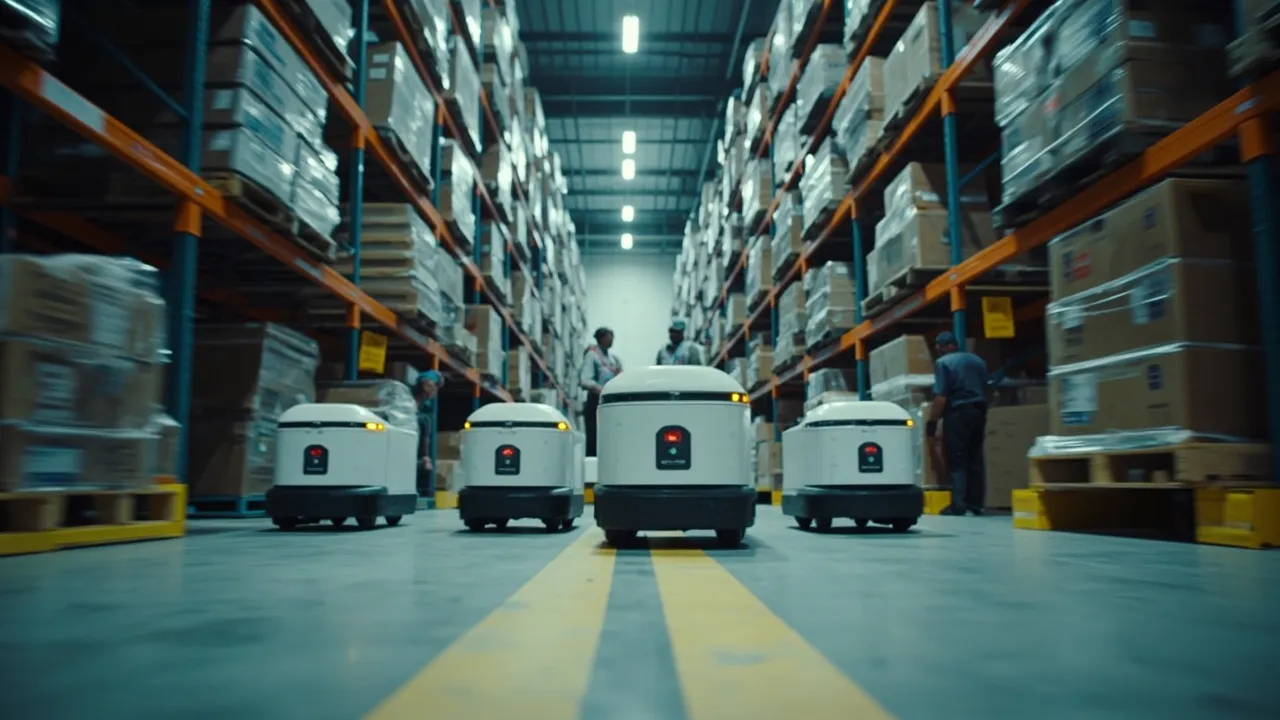
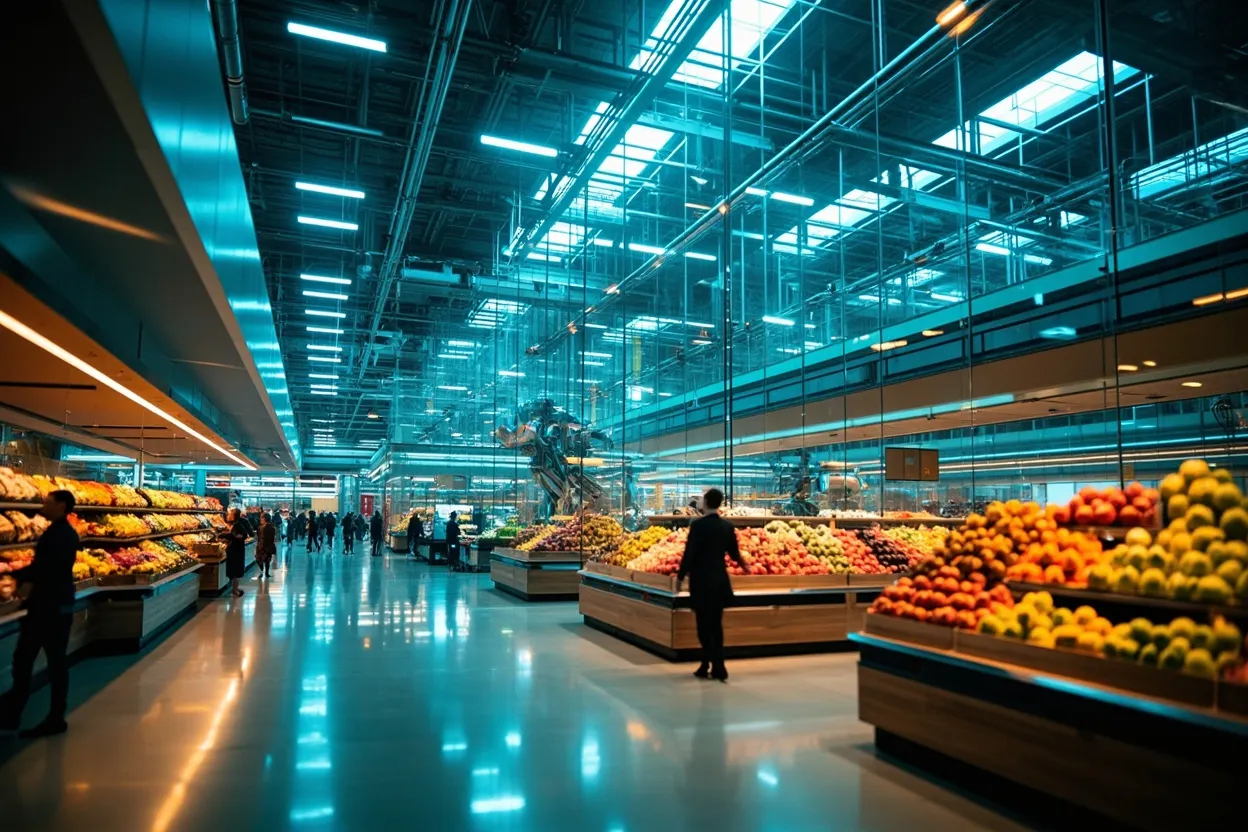
Each Kobe store is designed to carry approximately 250,000 items — nearly double the roughly 120,000 SKUs stocked in a typical Walmart Supercenter. The front of the store functions as a traditional supercenter for in-store shoppers. The back houses an AutoStore robotic fulfillment system that handles picking, packing, and staging for both curbside pickup and delivery orders.
The result is a single building that serves three fulfillment channels simultaneously:
- In-store shopping for walk-in customers browsing grocery, general merchandise, and electronics
- Curbside pickup with orders assembled by robots and staged for scheduled retrieval
- Same-day delivery fulfilled from the integrated warehouse and dispatched to local addresses
This triple-channel approach eliminates the need for separate dark stores or micro-fulfillment centers, consolidating inventory and labor under one roof.
The AI Layer: Meet "Frida"
Beyond the physical robotics, Amazon is deploying an AI assistant codenamed "Frida" to help category managers automate inventory decisions. Frida is designed to analyze sales velocity, seasonal demand shifts, and local purchasing patterns to optimize what gets stocked, reordered, and promoted — reducing the human decision load that traditionally makes grocery retail so labor-intensive.
This is significant because grocery inventory management is notoriously complex. A typical supercenter manages thousands of perishable SKUs with shelf lives measured in days, not weeks. Automating these decisions with AI could dramatically reduce spoilage — which the USDA estimates accounts for 30–40% of the U.S. food supply wasted annually — while keeping shelves consistently stocked.
The Cost Trade-Off
Project Kobe isn't cheap. According to internal projections, each item fulfilled through a Kobe store costs approximately 12% more than Amazon's existing sub-same-day fulfillment network, which typically delivers within four hours from highly automated distribution centers.
That premium buys something Amazon's current network can't provide: physical retail presence. Amazon's online grocery operation, including Amazon Fresh and Whole Foods, hasn't been able to crack mainstream grocery shopping behavior. Most American families still buy their groceries in a physical store, and Walmart's 4,700+ U.S. locations give it an unassailable distribution advantage — unless Amazon builds comparable physical infrastructure.
The 12% cost premium is essentially Amazon's price for gaining a physical footprint in communities where it currently has zero grocery presence.
Why This Matters for the Broader Logistics Industry
The warehouse robotics market is surging. According to Mordor Intelligence, the sector is expected to grow from $10.96 billion in 2026 to $24.55 billion by 2031, a 17.5% CAGR. E-grocery automation specifically is outpacing the broader market at an 18.3% CAGR, driven by players like Kroger-Ocado, Walmart, and now Amazon's Kobe initiative.
For third-party logistics providers and mid-market shippers, Project Kobe signals several important shifts:
1. Hybrid fulfillment is the new standard. The era of single-purpose buildings — a store is a store, a warehouse is a warehouse — is ending. Retailers are embedding fulfillment capabilities directly into retail footprints, and 3PLs that can support hybrid operations will have a competitive advantage.
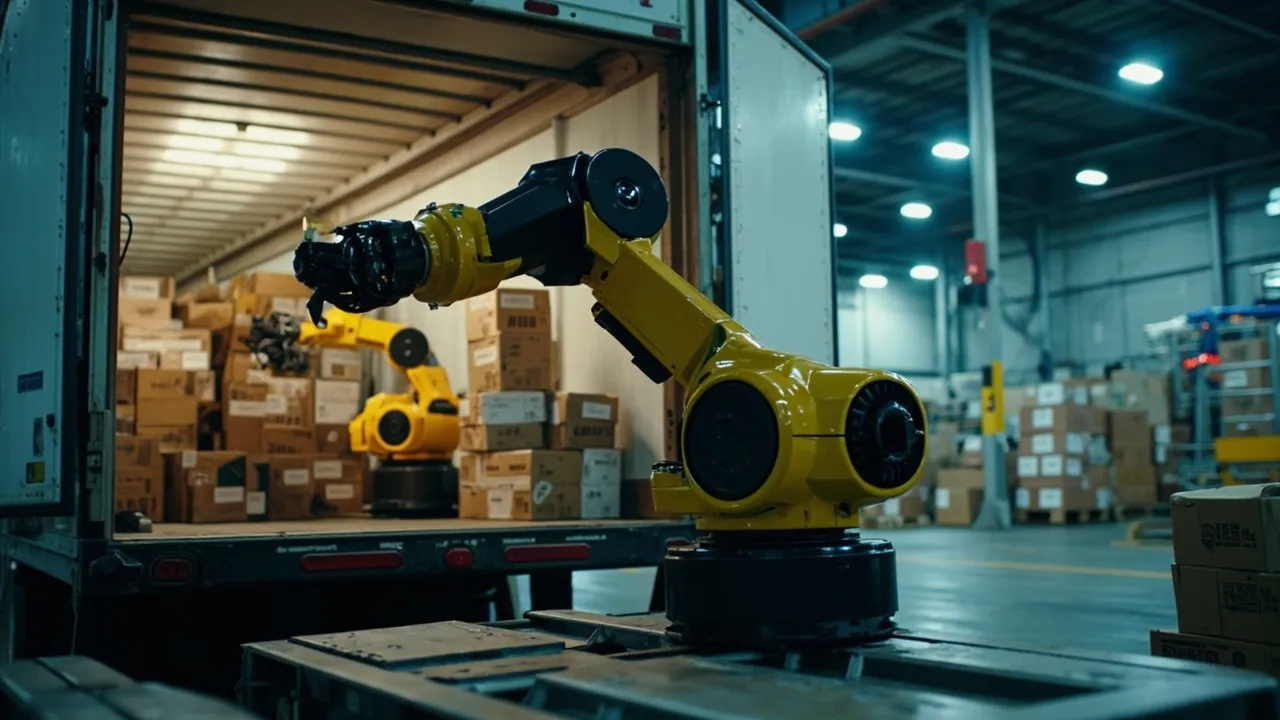
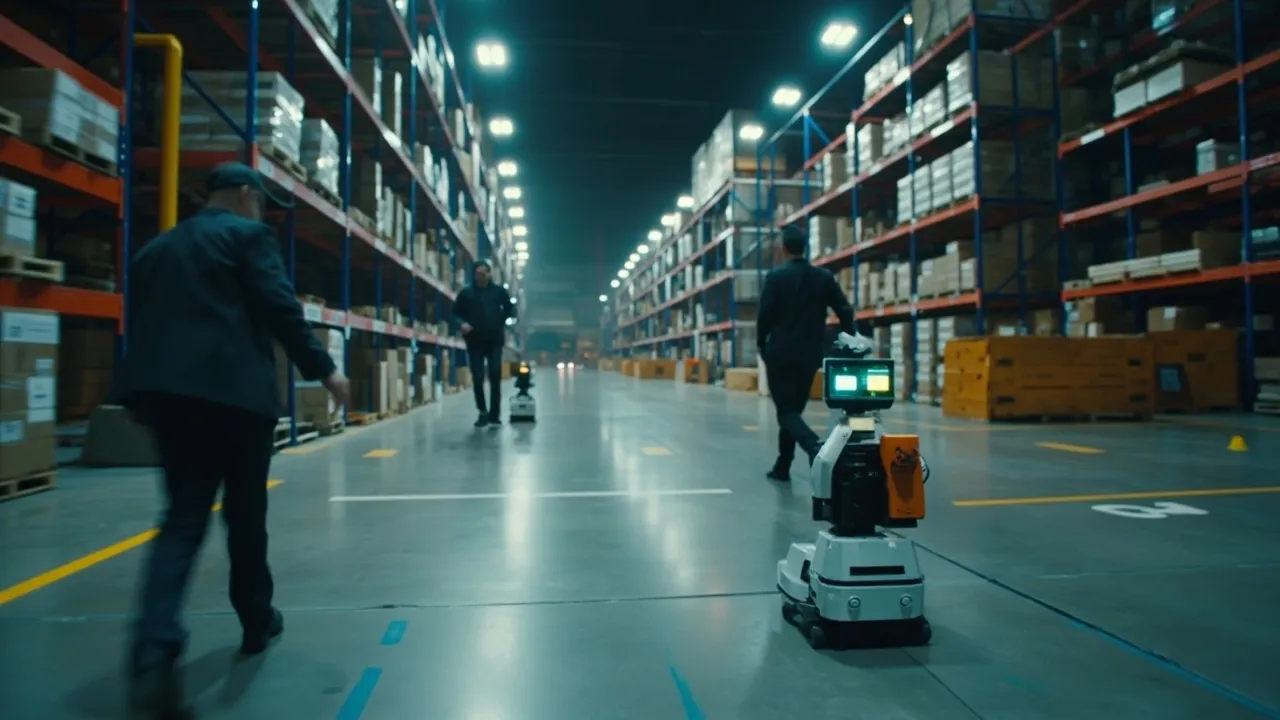
2. Robotics density is increasing. AutoStore systems in Kobe represent the high end of goods-to-person automation. As these systems prove out in retail environments, expect adoption to cascade into mid-market distribution centers and 3PL operations.
3. AI-driven inventory management becomes table stakes. Frida may be Amazon's proprietary tool, but the concept — AI making real-time stocking and replenishment decisions — will quickly become an expectation across the industry. Shippers and distributors that still rely on manual demand planning will find themselves at a structural disadvantage.
Implications for Distribution Network Design
If Amazon successfully scales Project Kobe beyond its initial pilot locations, the ripple effects on regional distribution networks could be substantial. Each Kobe supercenter essentially functions as both a retail destination and a local fulfillment node, potentially reducing Amazon's reliance on standalone last-mile delivery stations in those markets.
For shippers managing complex distribution networks, this kind of convergence requires real-time visibility across multiple fulfillment channels — tracking inventory whether it's on a store shelf, in a robotic buffer, or staged for delivery. The ability to model and optimize across hybrid nodes becomes critical.
How CXTMS Supports Multi-Channel Fulfillment Visibility
As retail and fulfillment continue to converge, shippers need transportation management systems that can handle the complexity of multi-channel operations. CXTMS provides real-time shipment visibility, carrier rate optimization, and network modeling tools that help logistics teams manage freight across traditional distribution centers, retail locations, and hybrid fulfillment nodes.
Whether you're a 3PL adapting to retailer demands for embedded fulfillment or a shipper navigating the evolving landscape of grocery logistics, having a unified view of your transportation network is no longer optional.
Request a CXTMS demo → to see how our platform helps shippers optimize across complex, multi-channel distribution networks.