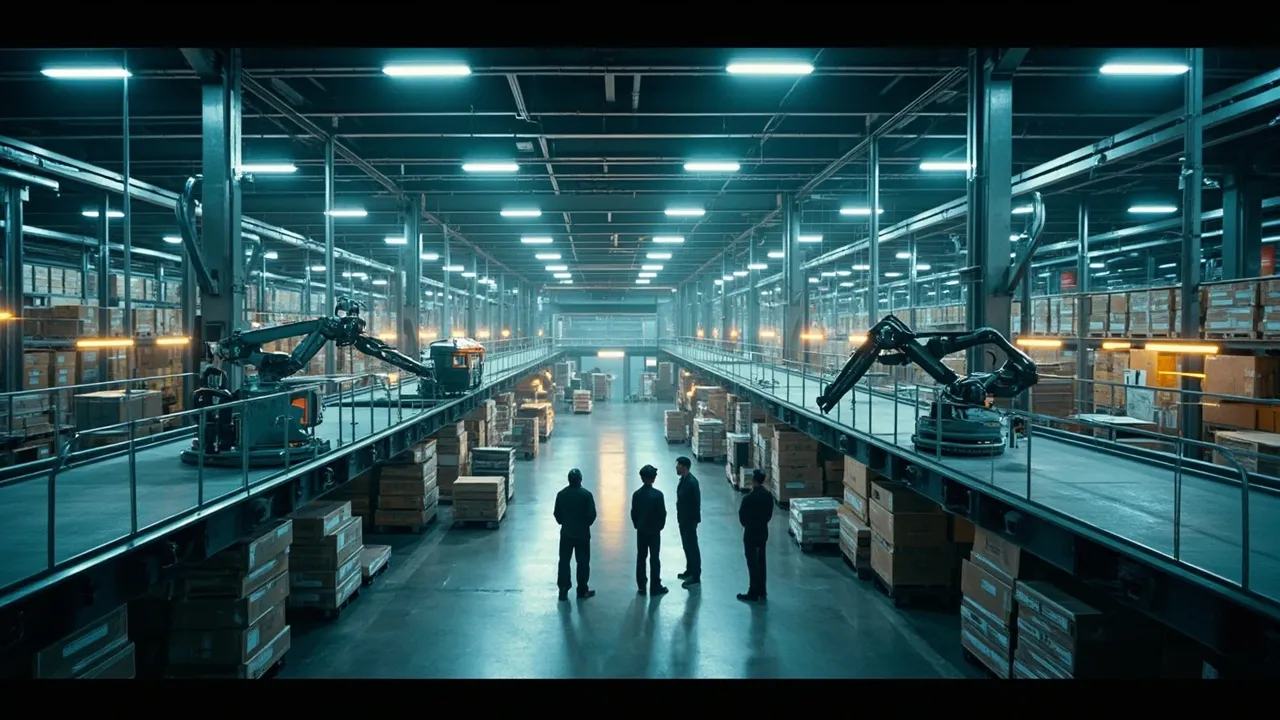
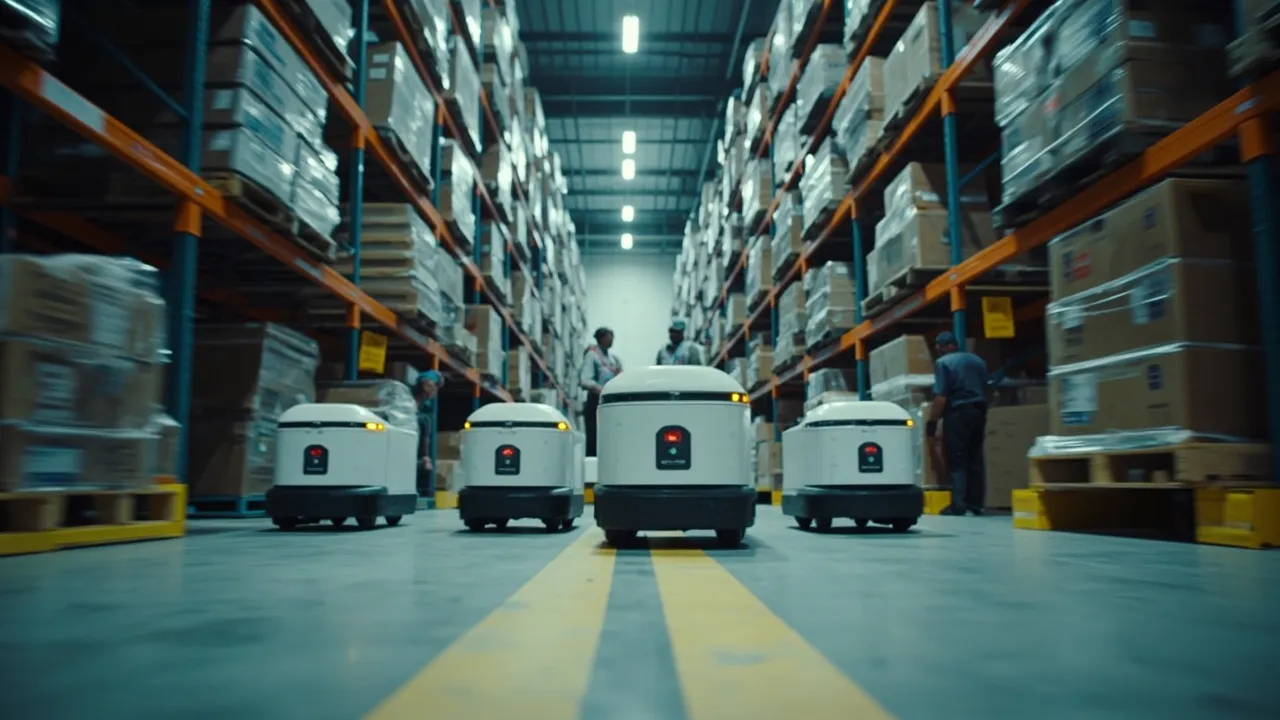
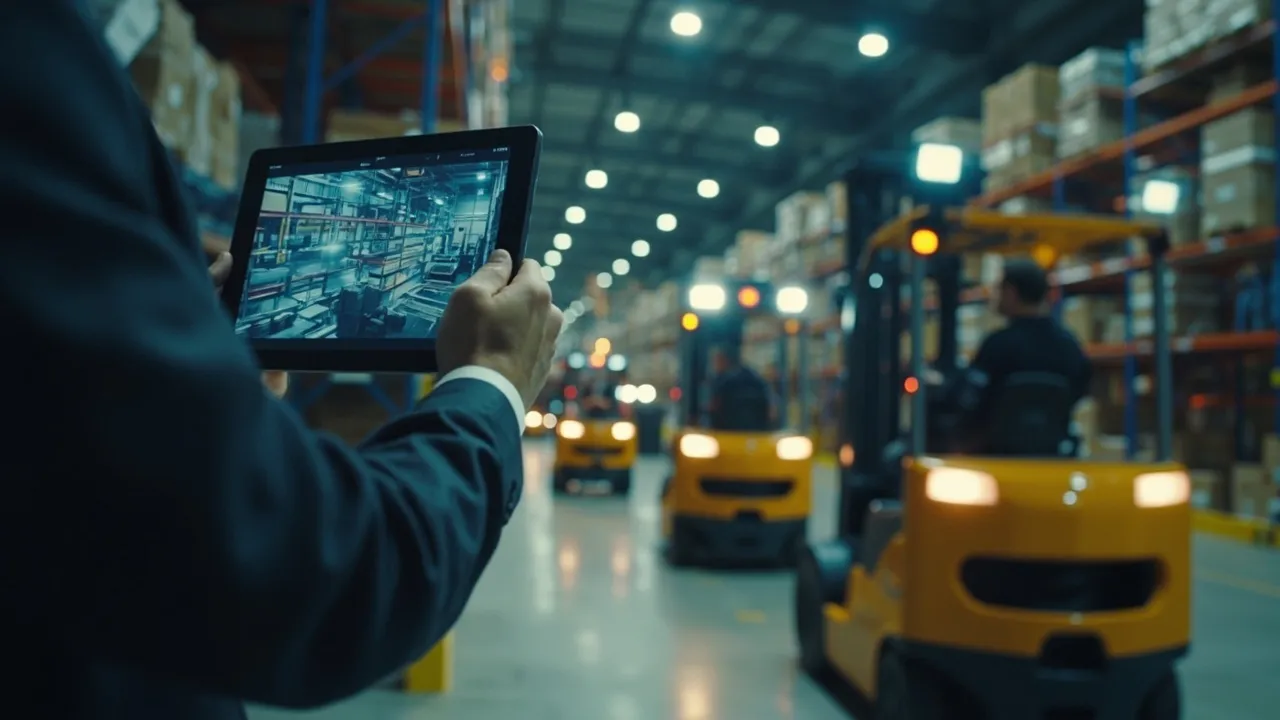
Real-Time Multi-Robot Orchestration Arrives: How Unified Platforms Are Coordinating AMRs, Forklifts, and Tuggers in a Single Warehouse

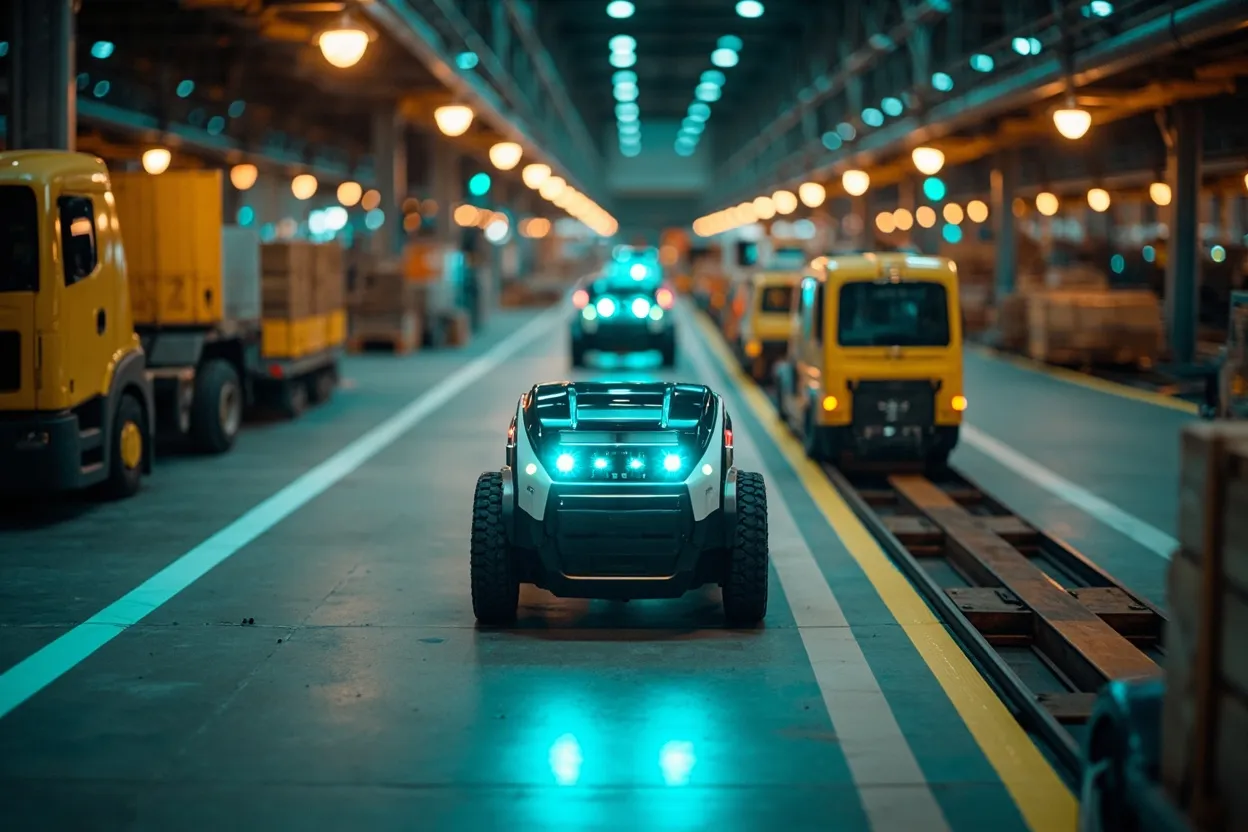
The modern warehouse doesn't have a robot problem — it has a coordination problem.
As the warehouse robotics fleet orchestration market surges to an estimated $2.89 billion in 2026, growing at a 22.1% CAGR, facilities are deploying three, four, even five different robot types from multiple vendors. AMRs handle goods-to-person picking. Autonomous forklifts move pallets. Tugger trains haul between zones. Pallet jacks shuttle loads at dock level. Each comes with its own software, its own navigation stack, its own language.
The result? Robotic traffic jams, duplicated tasks, and hardware utilization stuck at 60-65%. The industry's answer is emerging now — and it was on full display at MODEX 2026 in Atlanta this week.
The Multi-Vendor Chaos Problem
Here's the reality most warehouse operators face today: 74% of large enterprises have deployed automation software to manage internal logistics, according to recent industry research. But "deployed" doesn't mean "coordinated."
A typical distribution center might run Locus Robotics AMRs for piece picking, an autonomous forklift fleet for pallet put-away, and manual tuggers for cross-dock movement. Each system operates in its own silo. The AMRs don't know the forklifts exist. The forklifts don't yield to the tuggers. And the warehouse management system sees none of it in real time.
The consequence is predictable: robots queue behind each other in narrow aisles, replenishment tasks go unassigned because no system "owns" the handoff between picking and staging, and operators spend their time managing robot conflicts instead of managing throughput.
This is the coordination gap that orchestration platforms are built to close.
Numina Group + Anantak Robotics: End-to-End Vehicle Orchestration
At MODEX 2026 — where automation is finding its stride as an industry-defining theme — warehouse automation integrator Numina Group unveiled a partnership with Anantak Robotics that represents the new model for multi-robot coordination. Their demo showcased something that would have been science fiction five years ago: AMRs, autonomous pallet jacks, forklifts, and tuggers — all orchestrated in real time through a single software layer.
Numina's Batchbot 2.0 enhances the company's RDS Warehouse Execution System (WES) Dispatcher Module to enable seamless orchestration of autonomous vehicles alongside traditional warehouse automation technologies. The system integrates real-time picking, put-away, replenishment, and material movement into one end-to-end workflow.
"Next-generation warehouse automation is about end-to-end integration of the right blend of AMRs and autonomous technologies," said Dan Hanrahan, CEO of Numina Group. "We continuously evaluate best-of-breed technologies and enhance our RDS WES automation platform to orchestrate these solutions in real time."
Anantak Robotics brings the autonomous vehicle hardware to the equation — including autonomous forklifts and high-capacity tuggers rated at 10,000 and 50,000 pounds. Their Gen 4 onboard 3D vision system enables fleet navigation without costly infrastructure modifications to existing facilities.
The key breakthrough? A single orchestration layer that assigns tasks across heterogeneous vehicle types based on real-time demand, not pre-programmed routes. When a pallet needs to move from receiving to a pick zone, the system dynamically selects whether an autonomous forklift, pallet jack, or tugger handles it — based on current traffic, vehicle availability, and priority.
SEER Robotics: "All Robots, One Platform"
The orchestration trend isn't limited to integrators. SEER Robotics, which has ranked No. 1 globally in intelligent robot controller shipment volume for three consecutive years, brought its "all robots, one platform" vision to MODEX 2026.
SEER's approach tackles the coordination problem at the controller level. Rather than adding an orchestration layer on top of vendor-specific systems, SEER provides a unified robot control architecture — the same "robotics brain" — across multiple robot types. Their platform supports plug-and-play integration with more than 400 types of robotic components and over 2,000 pre-validated robot models, from AMRs and picking robots to AGVs and mobile forklifts.
The company also debuted terrain-adaptive mobile robots designed for factory-warehouse hybrid environments, including the SPT-1500UL space-saving pallet truck and the SCT-50UL Tote Robot for high-density storage. With customers including Intel, Philips, Schneider Electric, Siemens, Foxconn, and Walmart across 70+ countries, SEER's platform-first approach represents a credible path to solving multi-vendor robot coordination at scale.
"We believe we have found a better way to automate," said SEER Robotics Founder and CEO Zhao Yue. "The one-size-fits-all approach wasn't sustainable. Our highly-adaptable multi-robot platform brings everything together."
Why the Orchestration Layer Is the Real Value
The warehouse robotics market data tells a revealing story about where value is shifting. While hardware claimed 70% of warehouse robotics spending in 2025, software revenues are projected to outpace all other layers at an 18.4% CAGR through 2031.
The reason is straightforward: without intelligent orchestration, hardware utilization stalls. A $200,000 autonomous forklift sitting idle while an AMR blocks an aisle isn't an automation success story — it's an expensive traffic jam.
Effective orchestration platforms deliver measurable results:
- Reduced non-value-added travel — robots are assigned tasks that minimize deadhead movement across the facility
- Eliminated forklift congestion — centralized traffic management prevents bottlenecks in high-traffic zones
- Improved safety — collision avoidance across vehicle types, not just within a single vendor's fleet
- Higher throughput — dynamic task allocation matches the right vehicle type to each job in real time
- Unified visibility — operators see all autonomous activity on one screen, not four separate dashboards
The TMS-WMS-Orchestration Stack
For warehouse and logistics operations, multi-robot orchestration creates an important new integration point. The emerging technology stack looks like this: a TMS handles transportation planning and execution, a WMS manages inventory and order fulfillment logic, and an orchestration platform coordinates the physical movement of goods within the four walls.
When these layers communicate in real time, the entire inbound-to-outbound cycle accelerates. Inbound shipment data from the TMS triggers put-away task assignment in the orchestration layer. Pick waves generated by the WMS automatically dispatch the right mix of AMRs and autonomous forklifts. Outbound staging coordinates with dock scheduling to ensure loaded pallets arrive at the right door at the right time.
This is the stack that CXTMS-compatible warehouse systems are building toward — where transportation visibility extends seamlessly into warehouse execution, and robot coordination becomes another connected layer rather than an isolated automation island.
What This Means for Mid-Market Operations
Multi-robot orchestration isn't just for mega-DCs running 500+ robots. The shift toward open, vendor-agnostic platforms means mid-market warehouses can start with a small AMR fleet, add autonomous forklifts as volume grows, and trust that a unified orchestration layer will coordinate everything without ripping and replacing software with each new robot vendor.
The MODEX 2026 message is clear: the differentiator in warehouse automation is no longer the robot. It's the orchestration layer that makes every robot smarter by making them work together.
Navigating multi-vendor warehouse automation alongside transportation management? Request a CXTMS demo to see how unified visibility across your entire supply chain — from carrier selection to warehouse execution — keeps your operation running at full speed.