Smart Factory MES-TMS Convergence: How Unified Manufacturing-Logistics Platforms Eliminate the Production-to-Shipment Gap

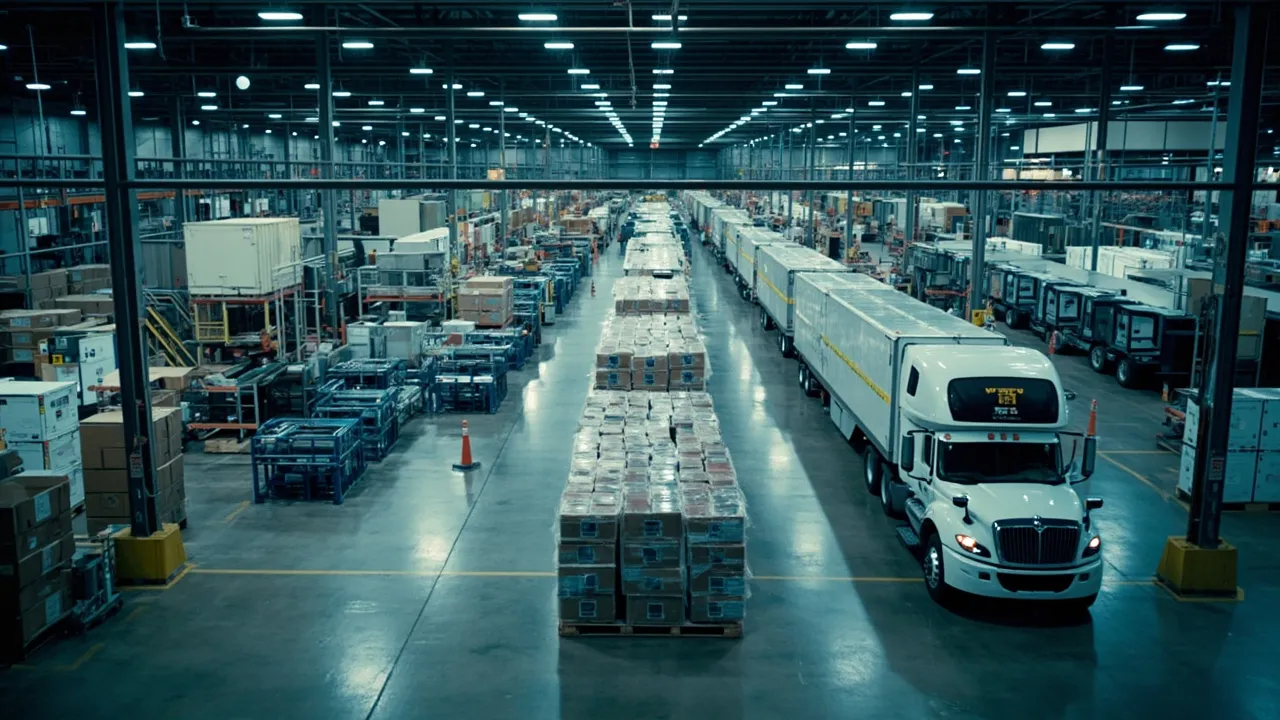
In most manufacturing facilities, a finished product sits on a dock for hours before anyone books a truck. Production completes at 2:14 PM, but the logistics team doesn't learn about it until the next planning cycle—sometimes not until the following morning. That 4-to-8-hour dead zone between the last production step and the first transportation action is one of the most expensive inefficiencies in modern supply chains. And in 2026, the convergence of Manufacturing Execution Systems (MES) and Transportation Management Systems (TMS) is finally closing it.
The Hidden Cost of the Production-to-Shipment Gap
The disconnect between manufacturing and logistics isn't a technology problem—it's an architecture problem. MES platforms track every second of production: cycle times, quality checks, packaging completion. TMS platforms optimize every mile of transportation: carrier selection, rate shopping, route planning. But historically, these two systems operate in separate silos, connected by manual handoffs, spreadsheets, or batch file transfers that run once or twice a day.
The consequences compound quickly. Detention charges accumulate when carriers arrive before freight is staged. Premium freight costs spike when shipments miss planned pickup windows. Inventory carrying costs inflate as finished goods occupy warehouse space waiting for transportation coordination. McKinsey's research on Industry 4.0 digital transformation found that manufacturers implementing integrated digital solutions achieve 30 to 50 percent reductions in machine downtime and 15 to 30 percent improvements in labor productivity—yet the production-to-shipment handoff remains a persistent blind spot in most digital transformation programs.
Why 2026 Is the Convergence Tipping Point
Three forces are driving MES-TMS integration from concept to reality this year.
First, the MES market has reached critical mass. According to Mordor Intelligence, the global MES market reached $17.19 billion in 2025 and is growing at a 10.23% CAGR toward $27.98 billion by 2030. Industry 4.0 and smart-factory rollouts are the single largest growth driver, adding an estimated 2.1 percentage points to the market's compound annual growth rate. Real-time production visibility—once a differentiator—is now table stakes, with sensor costs falling below $5 per node in 2025, enabling even high-mix job shops to justify continuous monitoring.
Second, TMS platforms are expanding beyond outbound transportation. As Logistics Management reported in their 2026 TMS trends analysis, modern transportation management systems are evolving past their traditional role. Gartner's Brock Johns noted that "cost management is still front and center," but the real shift is that TMS platforms now pull from larger data sets and integrate with upstream systems to support broader decisions. More integrated dashboards and early learning tools are helping teams make quicker, data-driven choices about when and how to move freight.
Third, platform consolidation is accelerating. KPMG's 2026 supply chain trends report highlighted the growing integration of supply chain functions into Global Business Services (GBS) models, following earlier consolidation of finance, HR, and IT. Centralizing supply chain operations—including manufacturing execution and transportation management—drives cost efficiencies, scales analytics, and improves end-to-end visibility. AI is moving beyond pilot projects, becoming embedded in core platforms like source-to-pay, planning, and logistics management.
How MES-TMS Integration Works in Practice
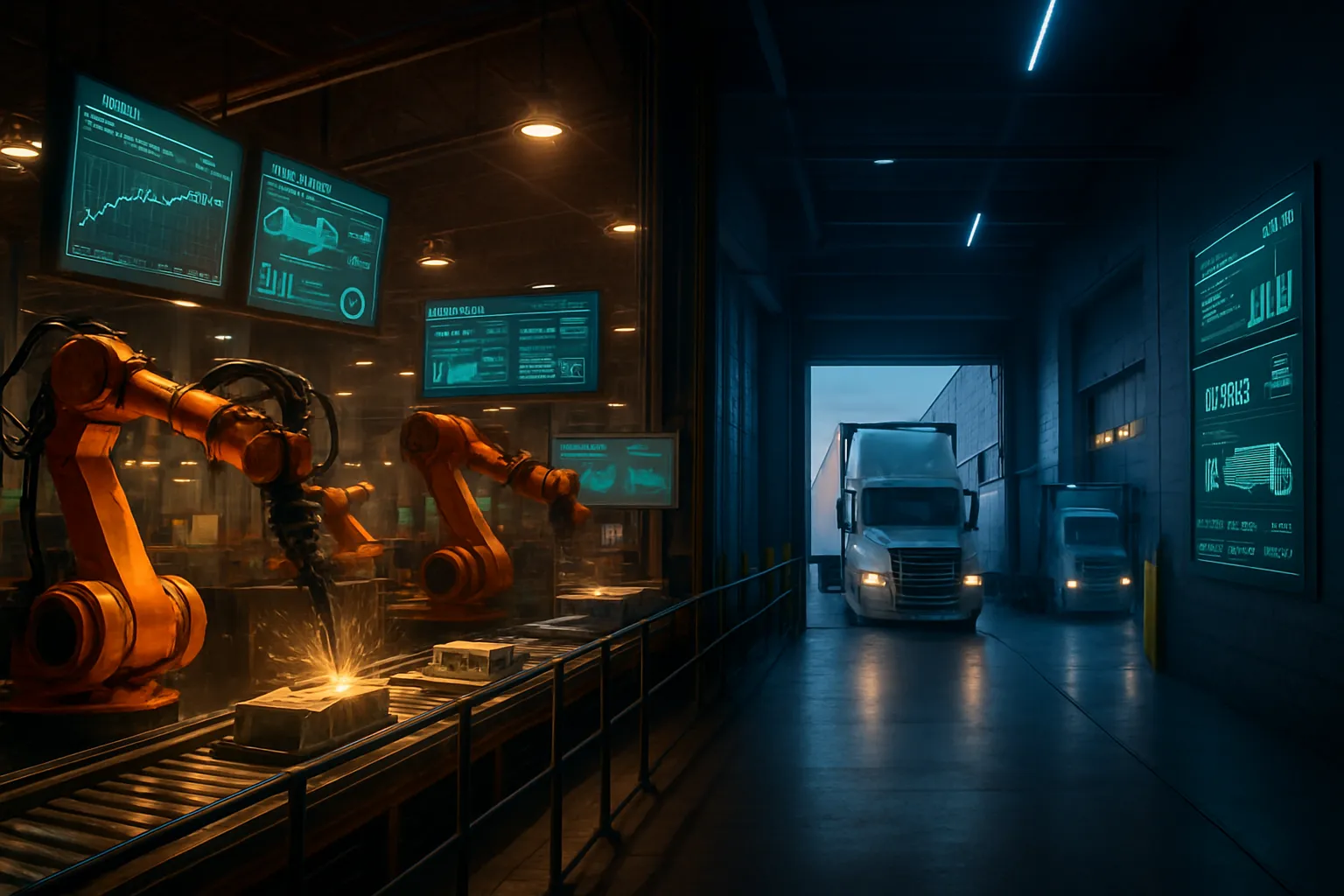
The technical architecture of MES-TMS convergence relies on event-driven APIs that trigger transportation actions from shop-floor signals. Here's what that looks like operationally:
1. Production Completion Event: The MES registers that the final quality check has passed and packaging is complete. Instead of updating a database that someone reviews later, the system fires a real-time event containing order details, dimensions, weight, hazmat classification, and required delivery date.
2. Automatic Carrier Selection: The TMS receives the event and instantly runs rate shopping against contracted carriers, evaluating price, transit time, and service performance. For an automotive tier-1 supplier producing just-in-time components, this means carrier selection happens within minutes of production completion—not hours.
3. Dynamic Dock Scheduling: The integrated system coordinates dock door assignments based on actual production output rather than forecasted schedules. When a production run finishes early, the system pulls forward the carrier appointment. When a quality hold delays output, it automatically reschedules without human intervention.
4. Consolidated Shipment Optimization: By knowing precisely what's being produced and when, the system can consolidate multiple production orders into optimal shipments. A CPG manufacturer running three production lines for the same distribution center can build full truckloads in real time rather than shipping partial loads on separate schedules.
Real-World ROI: Automotive and CPG Lead the Way
The industries with the tightest production-to-delivery windows are seeing the most dramatic results from MES-TMS convergence.
In automotive manufacturing, where just-in-time delivery windows can be as narrow as two hours, the production-to-shipment gap is existential. A missed window doesn't just mean a late delivery—it can halt an entire assembly line. Tier-1 suppliers implementing event-driven freight booking from MES signals report reducing dock-to-departure times by 60% or more, effectively eliminating the manual coordination that previously created buffer delays.
In consumer packaged goods, where product freshness and shelf-life management drive transportation urgency, integrated platforms enable "produce-and-ship" workflows. A food manufacturer can trigger refrigerated carrier booking the moment a batch passes final quality inspection, cutting hours off the cold chain timeline and extending effective shelf life for retailers.
Deloitte's 2025 Smart Manufacturing and Operations Survey found that 52% of manufacturers have developed central teams tasked with researching, developing, and deploying smart manufacturing initiatives—a clear organizational signal that cross-functional platform integration, including manufacturing-to-logistics convergence, is becoming a strategic priority rather than an IT project.
The SaaS Catalyst: Lowering the Integration Barrier
One reason MES-TMS convergence stalled in prior years was cost. Traditional on-premise MES deployments carried $500,000 to $2 million in upfront licensing fees, making integration projects prohibitively expensive for mid-market manufacturers. That barrier is collapsing. Cloud-native MES platforms now offer monthly subscription tiers starting below $100 per user, with automatic version upgrades that deliver new integration capabilities without contract renegotiation.
This SaaS shift means a tier-2 automotive supplier in Mexico or a mid-size food processor in the Midwest can deploy core MES modules in 8-12 weeks and connect them to their TMS through standard APIs—a project that would have taken 18 months and seven figures just five years ago.
What This Means for Shippers
For logistics leaders, MES-TMS convergence changes the planning paradigm. Transportation is no longer a reactive function that responds to production output—it becomes a synchronized extension of the manufacturing process. This shift creates three immediate advantages:
- Carrier compliance improves because pickup requests align with actual production timing rather than estimated schedules
- Freight spend decreases as real-time consolidation replaces fragmented, schedule-based shipping
- Customer service levels rise because delivery commitments reflect actual production status, not best-guess forecasts
How CXTMS Enables the Manufacturing-Logistics Bridge
CXTMS was built with an API-first architecture specifically designed for this kind of system integration. Our platform accepts real-time event triggers from any MES, ERP, or shop-floor system, automatically executing carrier selection, rate optimization, and shipment booking without manual intervention.
Whether you're a tier-1 automotive supplier needing sub-hour freight response times or a CPG manufacturer looking to eliminate dock dwell time, CXTMS bridges the gap between production completion and transportation execution.
Ready to close the production-to-shipment gap? Schedule a demo to see how CXTMS integrates with your manufacturing systems and turns production events into optimized shipments—automatically.