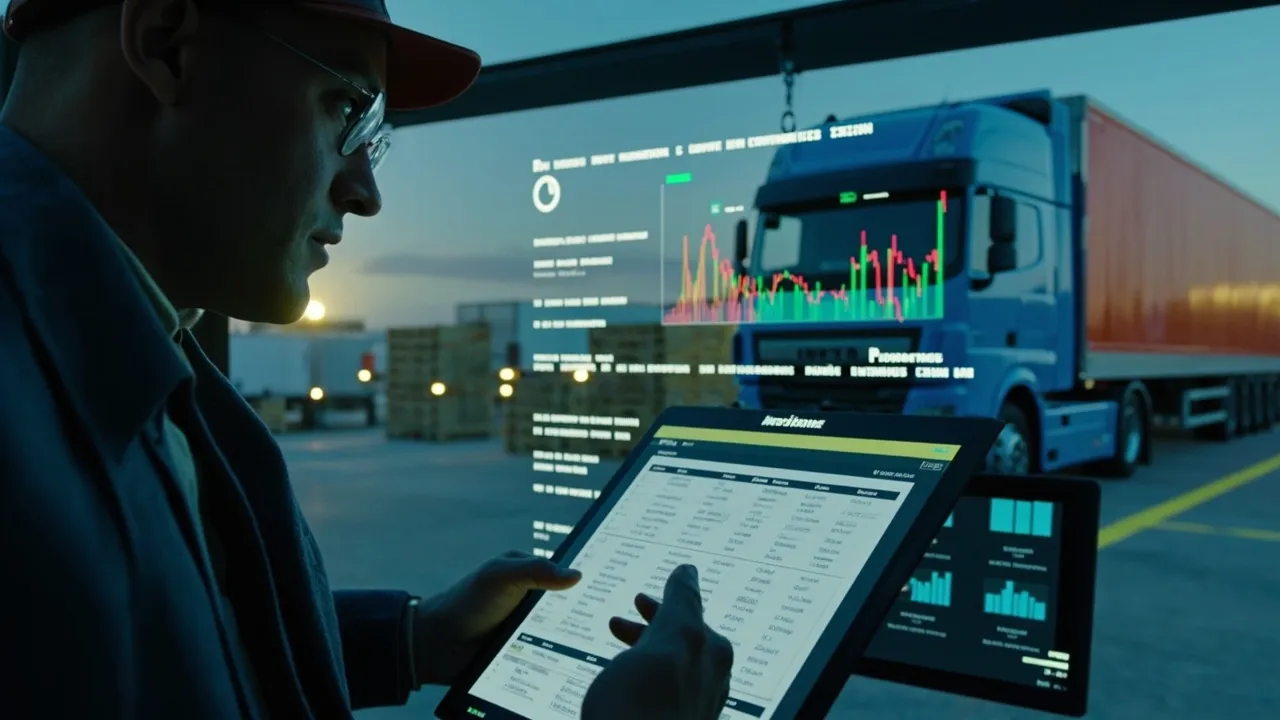
Same-Day LTL Is Moving From Emergency Option to Network Design Requirement


Same-day LTL used to live in the emergency drawer. A shipment missed cutoff, a production line needed parts, a retailer had a local replenishment failure, or a customer escalation got expensive enough that someone approved a special truck without asking too many questions.
That is changing. Same-day LTL is starting to look less like a rescue option and more like a network design requirement for shippers that operate tight regional supply chains.
The signal is not subtle. Inbound Logistics reported that Warp expanded availability for a same-day LTL service aimed at transportation teams moving freight when traditional LTL networks are closed. The service lets teams dispatch a cargo van or box truck within one hour of booking for same-day pickup and delivery of palletized freight, including after late cutoffs.
That one-hour dispatch promise matters because it attacks a real gap in freight execution. Standard LTL networks are excellent at scheduled, terminal-based consolidation. They are less useful when the problem appears at 4:30 p.m., the delivery is 80 miles away, the freight is already palletized, and tomorrow morning is too late.
Why the timing matters
Same-day LTL is expanding at the same moment the broader trucking market is getting less forgiving.
FreightWaves' June 2026 State of the Industry report described a volatile and capacity-sensitive market where disruptions such as Roadcheck quickly pushed tender rejections and spot rates higher. The report also noted that spot rates are outpacing contract rates, demand is stable but not strong, elevated fuel and input costs are pressuring freight rates, and shippers are using intermodal and LTL to secure capacity even at higher unit costs.
Logistics Management reported a similar shift in the motor carrier market. After three weak earnings years, carriers are seeing signs of "fundamentally less slack" in the system. The article cited shipper movement from truckload into LTL as capacity changes affect the truckload market, and noted that LTL volumes should continue to build. ArcBest's LTL contract renewals came in 6.3% higher, the strongest renewal rate since the third quarter of 2022, while ABF posted a 97.3% operating ratio despite first-quarter winter weather.
Those numbers are not just carrier-finance trivia. They tell shippers that cheap backup capacity is getting harder to assume. If truckload tightens, LTL absorbs more freight. If LTL absorbs more freight, terminal capacity, pickup windows, and service reliability become more important. If a shipment falls outside those windows, the recovery premium can get painful.
That is where same-day LTL earns a place in the operating plan.
The use cases are predictable
The mistake is treating every same-day move as a one-off exception. In most networks, the reasons repeat.
Missed appointments are the obvious case. A warehouse delay, production hold, inventory mismatch, or customer receiving change can push freight past a normal LTL pickup window. If the delivery still has to happen today, the transportation team needs an approved recovery path.
Line-down parts are another. Manufacturers cannot always wait for a standard LTL cycle when a replacement component protects production uptime. A few pallets moved locally or regionally can be far cheaper than idle labor, missed production, and downstream customer penalties.
Retail replenishment also fits. Stores and regional distribution points increasingly operate with lean safety stock. A late inbound pallet of promotional inventory, seasonal product, or high-velocity replenishment can create a sales problem before it creates a transportation problem.
Regional recovery moves may be the most overlooked category. Freight sometimes arrives at the wrong dock, misses a cross-dock transfer, clears inspection late, or gets released from a supplier after the standard network has closed. A same-day LTL option can convert that failure into a controlled premium instead of a next-day service miss.
Speed needs rules, not heroics
Same-day LTL can save a shipment. It can also destroy a budget if every planner uses it differently.
The right question is not, "Can we get this there today?" The right question is, "Under what conditions is same-day speed worth paying for?"
Shippers should define those rules before the shipment fails. A line-down part may justify same-day service automatically. A late replenishment order may require margin, customer priority, or inventory-impact approval. A missed dock appointment may only qualify if the cost of rescheduling exceeds the premium. A low-value replenishment shipment may be better consolidated into standard LTL, even if that means disappointing someone.
Those rules should be lane-specific. A 40-mile metro recovery move is not the same decision as a 240-mile regional run. A single pallet of high-margin parts is not the same as eight pallets of low-margin replenishment freight. The service-level decision has to account for shipment value, customer commitment, delay penalty, carrier availability, and the likelihood that standard LTL can still recover.
Same-day LTL changes TMS requirements
If same-day LTL becomes a planned capability, it needs to be represented in the transportation management system as more than an emergency phone number.
First, tender rules need to include same-day options by lane, time of day, freight profile, and service priority. If a shipment misses the standard LTL cutoff, the system should know whether it can trigger a same-day option, request approval, or hold for consolidation.
Second, exception triggers need to be precise. Late release, missed pickup, appointment failure, carrier rejection, inventory shortfall, and customer escalation are different events. They should not all produce the same recovery workflow.
Third, cost tracking has to separate planned premium service from uncontrolled expedite spend. Same-day LTL may be a smart investment for one customer segment and wasteful for another. Without shipment-level cost codes, the transportation team only sees an ugly monthly expense line.
Fourth, service-level reporting needs to show whether same-day LTL actually protected outcomes. Did it prevent OTIF misses, detention, rescheduling, chargebacks, or production downtime? Or did it merely hide upstream planning problems?
The CXTMS view
Same-day LTL is not replacing traditional LTL networks. It is filling the operational space between standard consolidation and full dedicated expedite.
That space is getting more important as truckload capacity tightens, LTL volumes build, and shippers operate with less tolerance for late freight. The winners will not be the teams that approve speed the fastest. They will be the teams that know when speed is worth buying, when consolidation is smarter, and how each decision affects service cost over time.
CXTMS helps logistics teams turn those decisions into repeatable workflows: tender rules, exception triggers, approval paths, carrier options, and service-level cost tracking in one system. Same-day LTL should be a controlled network capability, not a scramble in someone's inbox.
Ready to make premium freight decisions with more discipline? Request a CXTMS demo and see how connected transportation workflows can help your team control exceptions without losing service.