Pocket Automation: Why Targeted Micro-Automation Is Outperforming Full Warehouse Robotics for Most Shippers

The vision is seductive: a fully autonomous, lights-out warehouse where robots handle every task from receiving to shipping without a single human on the floor. It's also, for the vast majority of logistics operations, a fantasy that burns through capital and delivers questionable returns.
A more pragmatic movement is gaining serious traction in 2026. Zebra Technologies calls it "pocket automation"—the strategy of targeting specific, individual workflows for optimization within existing brownfield operations rather than pursuing monolithic, top-down automation overhauls. And the data increasingly supports this approach as the smarter bet for most shippers.
The Automation Reality Check
The numbers tell a sobering story about where most warehouses actually stand. According to the 2026 Automation Study from Modern Materials Handling, only 12% of operations have fully automated their picking processes, just 11% have fully automated storage, and a mere 3% report fully automated retrieval. Meanwhile, 33% of respondents say their picking operations remain mostly or fully manual with no plans to automate, and 31% say the same about retrieval.
These figures reveal a massive gap between the industry's automation ambitions and its operational reality. Global organizations invested roughly $21 billion in warehouse automation in 2023, and that figure is projected to exceed $90 billion by 2033—a 329% increase. Yet most of that spending isn't going toward the lights-out facilities that dominate trade show keynotes. It's flowing into targeted, incremental upgrades.
What "Pocket Automation" Actually Means
Andre Luecht, global strategy lead for transport and logistics at Zebra Technologies, laid out the pocket automation thesis in stark terms: any automation project requiring a return on investment beyond 24 months now struggles to secure internal funding. Placing a multi-million-dollar bet on a large-scale automated storage and retrieval system with a 12-year payback period introduces a level of risk most companies simply cannot absorb.
Pocket automation flips the model. Instead of replacing human workers with massive robotic installations, it focuses on augmenting frontline workers with smart tools that deliver immediate, measurable productivity gains:
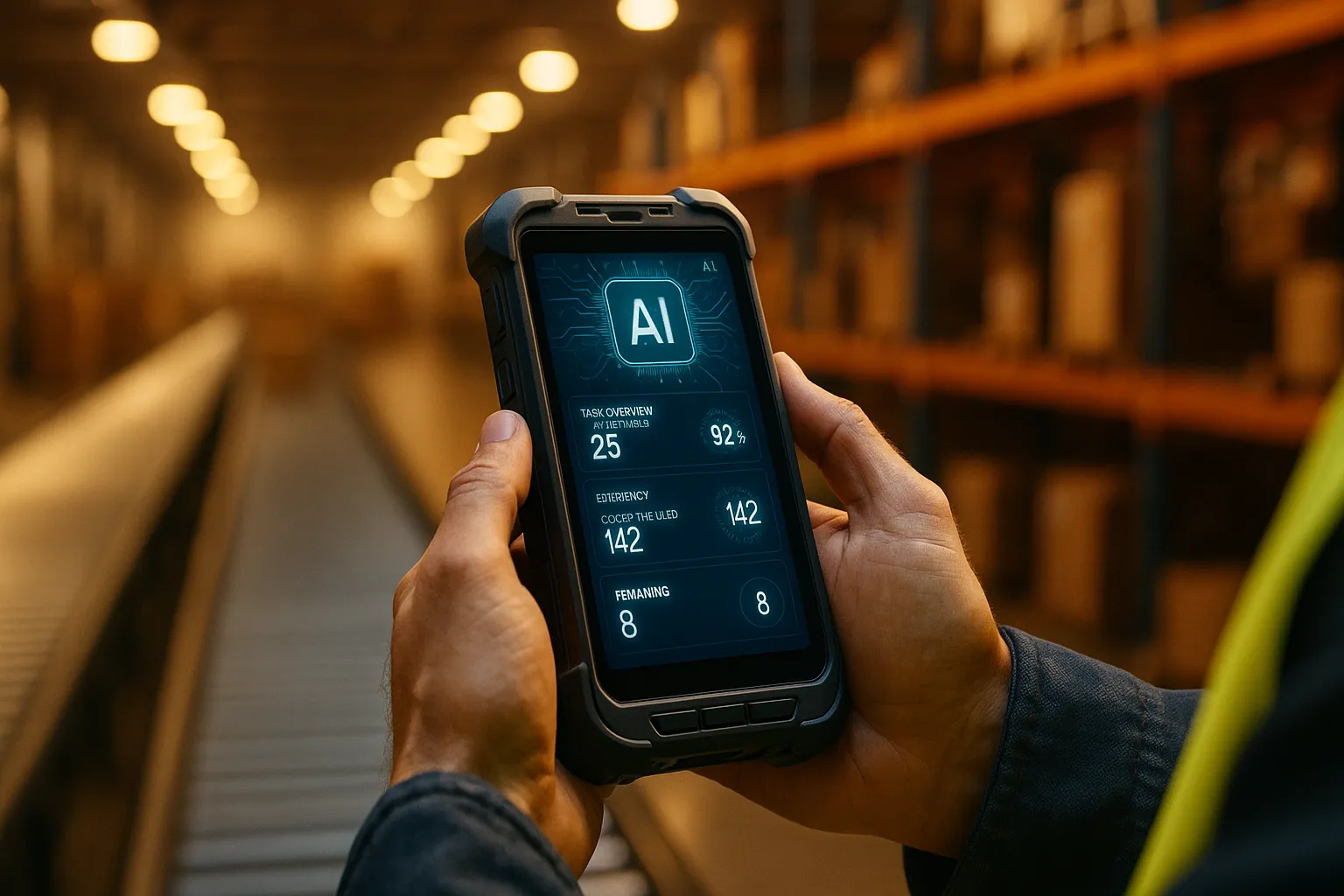
- Enterprise-grade mobile devices and wearables that put real-time data and AI-powered guidance into workers' hands
- Hands-free wearable computers and ring scanners that eliminate wasted motion and boost individual picking productivity
- Machine vision systems with on-device AI that can dimension packages, detect damage, and verify order contents at conveyor speed
- RFID source-tagging for unbroken asset visibility from origin to delivery
The key insight: a worker using a hands-free wearable computer and ring scanner can achieve meaningful productivity improvements at a fraction of the cost of a robotic picking system—and the deployment happens in weeks, not years.
The ROI Math That Changes Everything
Here's where the pocket automation argument becomes compelling. Consider the typical investment comparison:
Full robotic deployment: $500K to $2M+ per facility for automated storage and retrieval, with payback periods stretching 5–12 years. These systems also introduce rigidity—once installed, they're difficult to reconfigure if your product mix or volume patterns shift.
Targeted micro-automation: $30K–$100K per workflow improvement (handheld devices, wearable scanners, vision systems), with payback typically achieved within 6–18 months. These investments are modular, scalable, and adaptable to changing business conditions.
The 2026 Automation Study confirms that buyers are prioritizing this pragmatic approach. A full 92% of survey participants rated durability, reliability, and uptime as very important evaluation criteria. More telling, 95% now say fast response times for service and support are essential—up from 83% the prior year—reflecting the reality that incremental tools need to work flawlessly every shift, not just during the demo.
Scalability has also surged in importance, with 59% rating it very important compared to 42% previously. Companies want automation that grows with them, not automation that locks them into a fixed configuration.
Robotics-as-a-Service: The Middle Ground
The pocket automation philosophy doesn't reject robotics entirely—it reframes how companies should approach it. According to Supply Chain Dive, warehouse robotics adoption has surged from 23% of organizations in 2022 to 48% by 2025, driven largely by Robotics-as-a-Service (RaaS) models that convert massive capital expenditures into manageable operational costs.
In the 2024 MHI robotics survey, 64% of companies reported using RaaS or SaaS systems for their warehouse automation, up from 46% just two years earlier. This subscription-based approach aligns perfectly with the pocket automation mindset: start small, prove value on a single workflow, then expand.
Mobile accessories distributor Superior Communications, for example, is deploying 37 multipurpose autopicker robots through a RaaS model at its Tennessee distribution center. Parcel carrier UniUni automated its two most labor-intensive processes—parcel sorting and sequencing—before considering broader deployment. Both companies chose targeted entry points with clear, rapid ROI rather than attempting full-facility transformation.
The Decision Framework: Right-Sizing Your Automation
Not every operation needs the same automation strategy. Here's a practical framework for determining where your facility falls:
Start with pocket automation if:
- Your facility is under 250,000 square feet (the majority of warehouses)
- You're operating in an existing brownfield facility
- Your product mix or volume patterns change seasonally
- Capital budgets require payback within 24 months
- Your workforce is your primary competitive advantage
Consider broader robotic deployment if:
- You're building a greenfield facility designed around automation
- Your processes are highly repetitive and standardized
- Volume is consistently high and predictable
- You have dedicated automation engineering resources
- Payback periods of 3–5+ years are acceptable
The hybrid approach (increasingly common): Deploy pocket automation across most workflows while introducing targeted robotic solutions—via RaaS—for your highest-volume, most repetitive processes.
Perfecting the Last Mile Through Frontline Tools
The pocket automation strategy extends beyond the four walls of the warehouse. As Zebra Technologies notes, the efficiencies gained inside the DC directly fuel a superior last-mile experience—often the only physical touchpoint between a brand and its customers.
AI-assisted applications on a driver's device can use the camera to instantly locate the correct package in a van, reducing search time at every stop. The same on-device AI guides drivers to capture compliant proof-of-delivery photos on the first attempt. Each second saved per stop enables more deliveries per route, directly addressing rising cost pressures while maintaining service quality.
How CXTMS Helps You Automate Smarter
The pocket automation approach works best when your individual workflow improvements connect to a unified logistics platform. CXTMS integrates with frontline worker systems, warehouse execution platforms, and last-mile tracking tools to provide end-to-end visibility across your operation—whether you're running a mostly manual warehouse with smart handheld devices or a hybrid facility with targeted robotic deployments.
Instead of waiting for the perfect automation solution, start optimizing the workflows that matter most today.
Request a CXTMS demo → and discover how our platform connects your pocket automation investments into a cohesive logistics operation that delivers measurable ROI from day one.