Novelis’ Aluminum Plant Restart Shows Why Industrial Shippers Need Fire-Damage Contingency Playbooks

A plant restart is usually treated as good news. For industrial shippers, it should be treated as a planning audit.
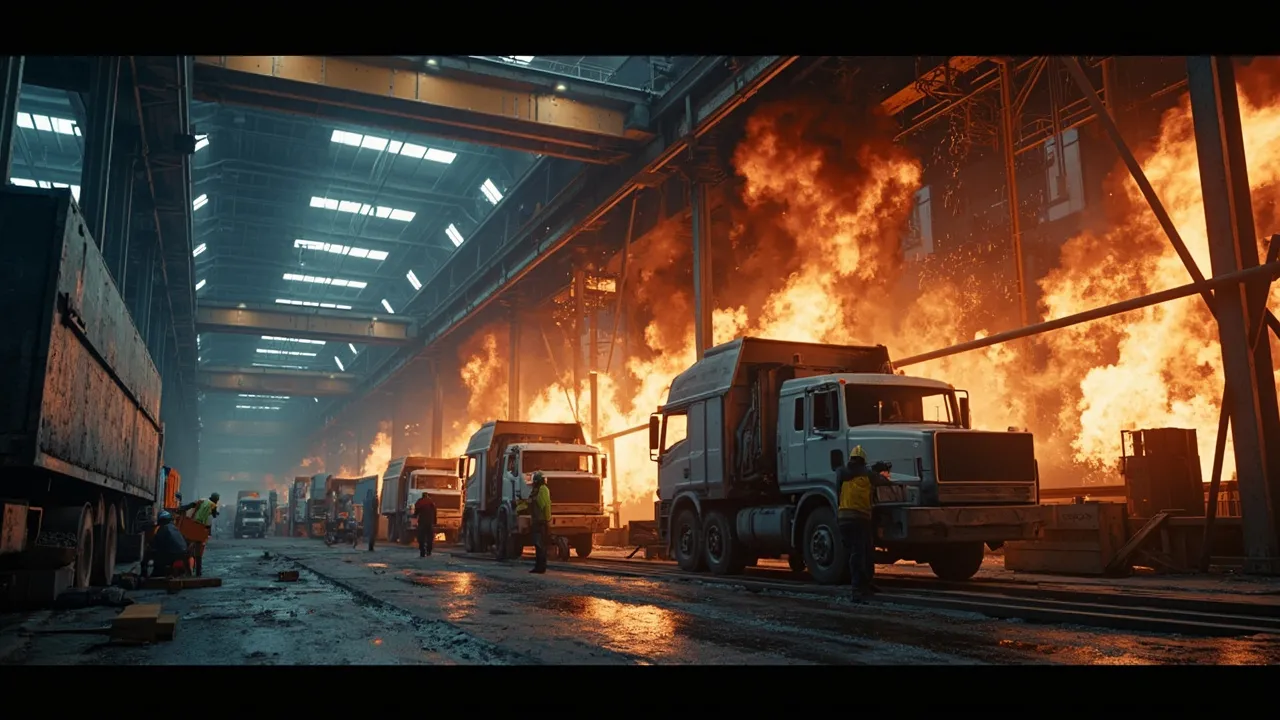
Novelis is preparing to bring hot mill operations back online at its Oswego, New York, aluminum plant after two fires last fall disrupted one of the most important upstream nodes for automotive and beverage packaging supply chains. The restart matters because Oswego is not a small specialty facility. It has annual capacity to produce 1.7 billion pounds of aluminum sheet, and its output feeds customers that do not have much patience for material uncertainty.
The lesson is bigger than one aluminum supplier. A fire at a critical input plant can turn purchasing, inventory, production scheduling, transportation, customer allocation, and cash planning into one connected problem. Companies that wait until the incident happens are not building contingency plans. They are improvising under pressure.
The Novelis restart is a recovery story, but also a stress test
Supply Chain Dive reported that Novelis has started commissioning the Oswego facility and expects coils to come off the mill in the coming weeks. CEO Steven Fisher said the restart is intended to support “pent-up” demand in automotive and beverage packaging.
The operational and financial impact was substantial. Novelis said the September and November fires are expected to create a $1.7 billion total negative cash flow impact, including repairs, cleanup, and idle worker costs before insurance recoveries. The company also reported quarterly net sales of $4.8 billion, up 4% year over year, but posted a net loss of $84 million for the period. North American shipments fell 19% versus last year, while North America adjusted earnings dropped 51%.
Those numbers show how physical disruption becomes logistics reality. A plant fire does not only remove capacity. It changes allocation, creates expedites, complicates production schedules, and forces transportation teams to move material from places that were never the preferred source.
Novelis responded by rerouting shipments globally and using alternative sourcing to support customer demand. That is exactly what a serious industrial contingency program should be able to do. The uncomfortable question for shippers is whether their own systems could absorb the same forced sourcing and transportation change quickly enough.
Fire-damage contingency is a logistics design issue
Many companies treat fire risk as an insurance, safety, or plant-maintenance topic. It is those things, but it is also a logistics design issue.
When a key mill, refinery, chemical plant, component factory, or packaging supplier goes offline, the transportation network has to answer practical questions immediately: which customer orders are tied to the affected material, which suppliers have approved capacity, which lanes need surge capacity, which customers should receive limited inventory first, and which shipments justify premium transportation.
That list crosses procurement, operations, quality, finance, and transportation. If those teams work from different spreadsheets, supplier portals, and assumptions, the response slows down exactly when speed matters most. Industrial shippers need a fire-damage contingency playbook that connects supply decisions to transportation execution and lives inside the operating workflow.
Aluminum-intensive supply chains have thin room for error
Aluminum is a useful example because it sits upstream of demand-sensitive sectors. Automotive production depends on qualified material flows. Beverage packaging relies on high-volume, repeatable supply. Industrial customers often require specific grades, finishes, widths, and delivery windows.
That makes substitution harder than simply buying from the next supplier. Alternate sourcing has to clear quality requirements, contract constraints, capacity limits, import rules, and transportation lead times. A technically available supplier may still be unusable if freight cannot move on time or the alternate origin adds too much volatility to production schedules.
The broader freight market is not giving planners an easy backdrop. Logistics Management reported that April U.S.-bound containerized imports fell for the 12th consecutive month to roughly 2.635 million TEU, down 5.2% year over year. The same report cited sharp annual declines in categories that matter to industrial planning: metals down 12.9%, capital goods down 28.9%, consumer durables down 6.5%, and auto parts down 16.4%.
Lower import volume does not automatically mean easier logistics. It can indicate weaker demand, tariff pull-forwards, sourcing shifts, and uneven capacity positioning. If an industrial shipper suddenly needs alternate aluminum, parts, tooling, or packaging supply, it may be entering lanes where carriers, brokers, and warehouses have already adjusted to a different demand pattern.
Tariffs and demand softness make recovery planning harder
The Novelis situation is also landing in a market where consumer and industrial demand signals are messy. Deloitte’s 2026 consumer products outlook warns that tariffs are likely to lift inflation and reduce consumer purchasing power, while low- and middle-income households face increasing financial stress. At the same time, AI infrastructure investment and upper-income spending may keep parts of the economy moving.
For logistics teams, that means contingency planning cannot assume one clean demand curve. A plant incident in that environment forces a more nuanced response than “find more supply.” The right answer may be to segment inventory by customer priority, margin, service commitment, material criticality, and recovery cost. Transportation should then follow those rules instead of treating every shortage as an emergency shipment.
What a practical contingency playbook should include
Industrial shippers do not need a 200-page disaster manual that nobody opens. They need a short, executable playbook tied to systems and decision rights.
1. Critical-node mapping. Identify the plants, mills, suppliers, warehouses, ports, and lanes that would create disproportionate damage if disrupted. For each node, document affected products, customers, approved alternates, lead times, and transportation options.
2. Inventory segmentation. Separate strategic buffer stock from ordinary safety stock. Know which materials justify extra days of inventory because recovery time is long, qualification is hard, or customer penalties are severe.
3. Alternate sourcing rules. Pre-approve substitute suppliers where possible, but also define what must happen before they are used: quality checks, commercial approvals, customs data, labeling, packaging, and routing guides.
4. Transportation surge capacity. Build lane-level options before disruption hits: backup carriers, premium service rules, cross-dock capacity, appointment flexibility, and escalation contacts.
5. Customer allocation logic. Scarce material should not be allocated by whoever shouts loudest. Define priority rules using service commitments, revenue exposure, production impact, and strategic account status.
6. A single exception record. Capture every reroute, substitute source, premium shipment, missed appointment, and customer promise in one operating record so finance can understand cost impact and leadership can learn from the event.
CXTMS turns contingency plans into transportation execution
CXTMS helps logistics teams connect disruption rules to daily transportation work: supplier readiness, shipment planning, carrier selection, milestone tracking, exception escalation, customer updates, and freight cost visibility. That matters when an upstream incident forces rapid changes across lanes, modes, and customers.
A plant restart like Novelis’ Oswego recovery is encouraging. Capacity returning to the network is always welcome. But the deeper takeaway is that industrial supply chains need recovery muscle before the next incident, not after it.
If your team still manages disruption with emails, spreadsheets, and heroic late-night calls, CXTMS can help turn contingency planning into an executable logistics workflow. Schedule a CXTMS demo to see how better transportation control can protect industrial supply chains when critical nodes go down.