India's Logistics Startup Boom: How $2 Billion in VC Funding and Government-Backed Digitization Are Building Asia's Next Supply Chain Powerhouse

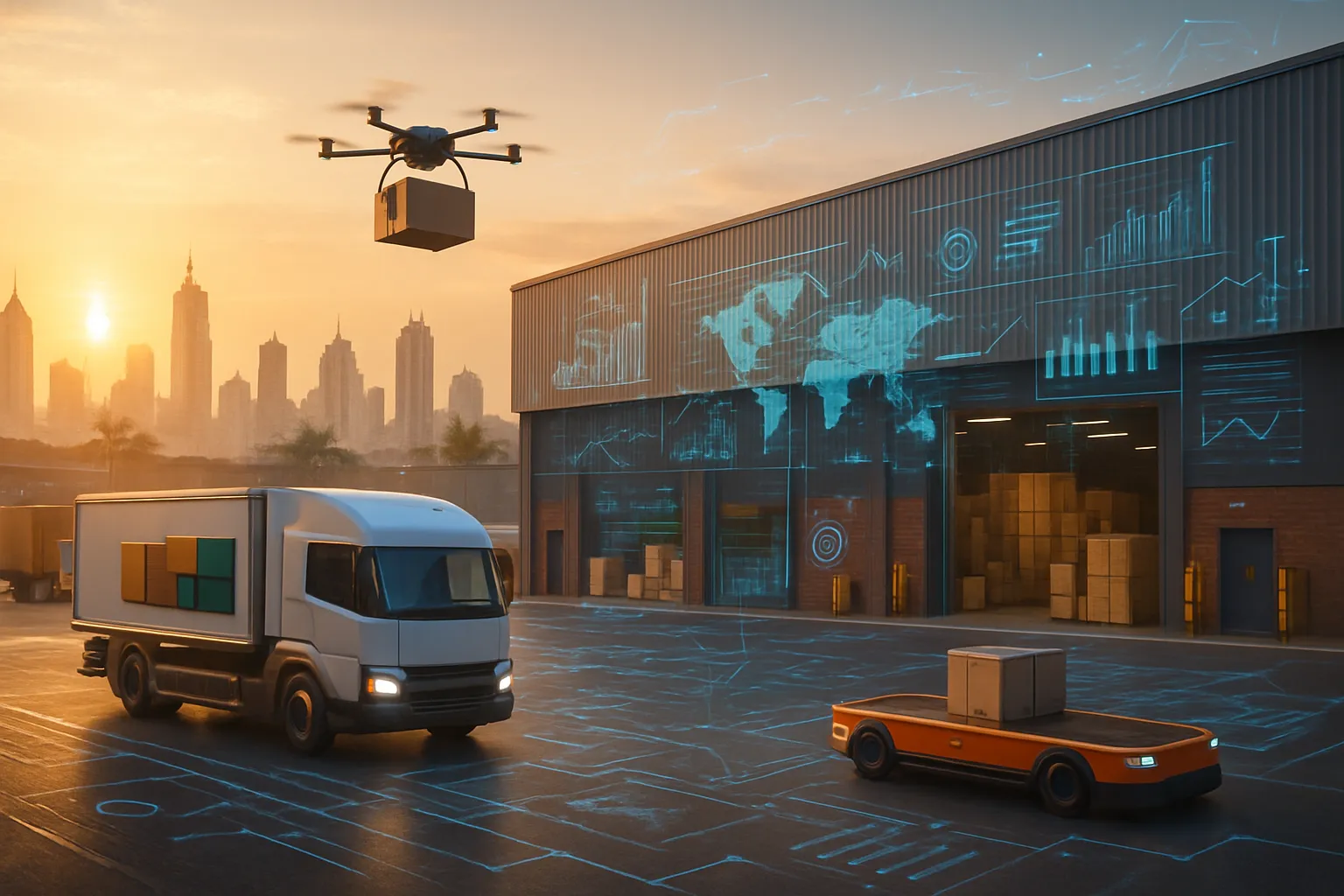
India's logistics sector is undergoing a transformation that global shippers can no longer afford to ignore. A $383.77 billion freight and logistics market growing at 9.07% CAGR through 2031, according to Mordor Intelligence, is attracting a wave of venture capital, IPO-bound startups, and government-backed digitization programs that are collectively reshaping how goods move across the world's most populous country.
What makes India's logistics evolution distinct isn't just the capital pouring in — it's the convergence of startup innovation, government policy mandates, and infrastructure investment happening simultaneously. For shippers with India trade lanes or sourcing operations, this convergence is creating both opportunities and complexity that demand attention.
The Capital Surge: Over $2 Billion in Logistics VC Funding
India's transportation and logistics technology sector raised $1.6 billion in the first half of 2025 alone — a remarkable 104% increase from the second half of 2024. This surge is part of a broader trend that has channeled more than $2 billion into logistics-focused startups between 2021 and 2025, spanning digital freight matching, warehouse automation, last-mile innovation, and B2B supply chain platforms.
The headline story is Udaan, the B2B e-commerce and supply chain platform that has raised over $2.17 billion in total funding from marquee investors including Lightspeed, DST Global, Altimeter Capital, and Tencent. In March 2026, Udaan's CEO confirmed the company is actively pursuing an IPO, positioning it as a bellwether for India's logistics startup ecosystem. Valued at $1.8 billion as of mid-2025, Udaan powers technology-driven supply chain and logistics operations connecting manufacturers, brands, and retailers across India.
But Udaan is far from alone. Delhivery, which went public in 2022, has become a logistics infrastructure company processing millions of daily shipments. Companies like Rivigo (relay trucking), BlackBuck (digital freight marketplace), and Loadshare Networks (shared distribution) represent a startup class that is systematically digitizing India's historically fragmented trucking and warehousing sectors.
Government Recognition: The National Logistics Policy Changes Everything
The Indian government's National Logistics Policy (NLP), launched in September 2022, formally classified logistics as a strategic industry and set an ambitious target: reduce India's logistics cost from 13–14% of GDP to 8%, aligning the country with global standards. According to KPMG's January 2026 analysis, recent government assessments suggest logistics costs have already fallen to approximately 8% of GDP — a dramatic improvement that validates the policy's impact.
The NLP introduced three critical enablers:
- Integration of Digital Systems (IDS): Connecting transport data across seven government departments including road transport, railways, aviation, and commerce ministries to create a unified logistics data layer.
- Unified Logistics Interface Platform (ULIP): A single-window digital platform providing real-time visibility across India's multimodal transport network — think of it as India's national-scale freight visibility system.
- Dedicated Freight Corridors (DFCs): The Eastern and Western DFCs are projected to cut logistics costs by up to 30% on long-haul routes, while the government aims to increase railway freight share from 35–36% to 45% by 2030.
India's Transport Minister Nitin Gadkari stated in October 2025 that logistics costs would reach single-digit GDP percentages by end of 2026 — a target that now appears achievable given the pace of digital and physical infrastructure deployment.
Key Startup Categories Reshaping Indian Logistics
India's logistics startup ecosystem is attacking inefficiency across every node in the supply chain:
Digital Freight Matching and Brokerage
India's road freight market alone is worth $167.51 billion and growing at 8.84% CAGR. Yet the sector remains dominated by small fleet operators — over 75% of Indian truckers own five or fewer vehicles. Digital freight platforms are consolidating this fragmented capacity through technology, offering shippers access to verified carriers, real-time tracking, and digital documentation that replaces paper-heavy manual processes.
Warehouse Automation and Fulfillment
India's e-commerce logistics sector is booming, with the Western region growing at 6.58% CAGR through 2031 as Maharashtra's consumer base and Gujarat's port infrastructure drive demand. Startups are deploying automated sorting systems, robotics-enabled fulfillment centers, and AI-driven inventory management to handle the velocity that India's digital commerce demands.
Last-Mile Innovation
With Indian e-commerce projected to surge through 2026, last-mile delivery startups have attracted significant capital for hyperlocal delivery, dark store networks, and electric vehicle fleets optimized for India's dense urban environments.
Cross-Border and Trade Facilitation
As India positions itself as a manufacturing alternative in the "China+1" diversification trend, startups focused on customs automation, trade compliance, and cross-border freight orchestration are filling critical gaps in India's international logistics capabilities.
What Global Shippers Should Know
For companies shipping to, from, or through India, the logistics transformation creates tangible operational implications:
Declining transit times are real. Port dwell times have fallen from 3.4 days in 2018 to 2.6 days in 2023, and dedicated freight corridor completion is further accelerating surface freight. Highway freight turnaround times on major corridors — North-South, Delhi-Mumbai, Bangalore-Hyderabad — are improving due to fewer bottlenecks, FASTag 2.0 electronic tolling, and dedicated freight lanes.
Digital infrastructure enables visibility. India's ULIP platform and private-sector visibility solutions mean that real-time freight tracking across Indian domestic and cross-border lanes is becoming practically achievable — something that was nearly impossible five years ago.
The IPO pipeline signals maturity. When logistics startups move from VC funding rounds to public market listings, it signals that business models are proven and scalable. India's 2026 IPO pipeline — including logistics-adjacent companies alongside Udaan — suggests the ecosystem has moved past the experimental phase.
Regulatory complexity remains. Despite GST unification and digital documentation progress, India's logistics landscape still requires careful navigation of state-level regulations, infrastructure variability between metro and tier-2/tier-3 cities, and evolving compliance requirements.
How CXTMS Supports India Trade Lane Optimization
For shippers managing India freight operations, CXTMS provides the integration and visibility layer that connects India's evolving digital logistics infrastructure with global supply chain operations:
- Multi-modal rate management across India's road, rail, ocean, and air freight networks with real-time carrier performance benchmarking
- Cross-border documentation automation that adapts to India's customs and regulatory requirements, reducing clearance delays
- Carrier performance analytics that help identify which Indian logistics providers are delivering on the promises of digital transformation — and which still operate with legacy processes
- Real-time visibility integration compatible with India's ULIP-connected platforms, giving global shippers end-to-end tracking across Indian domestic legs
India's logistics startup boom isn't just a local story — it's reshaping global supply chain economics for every company with exposure to one of the world's fastest-growing consumer and manufacturing markets.
Ready to optimize your India trade lanes with real-time visibility and intelligent carrier management? Request a CXTMS demo today and see how our platform connects you to the digital logistics infrastructure powering Asia's next supply chain powerhouse.