Matson and BNSF’s Intermodal Security Program Makes Cargo Protection a Rail Service Feature

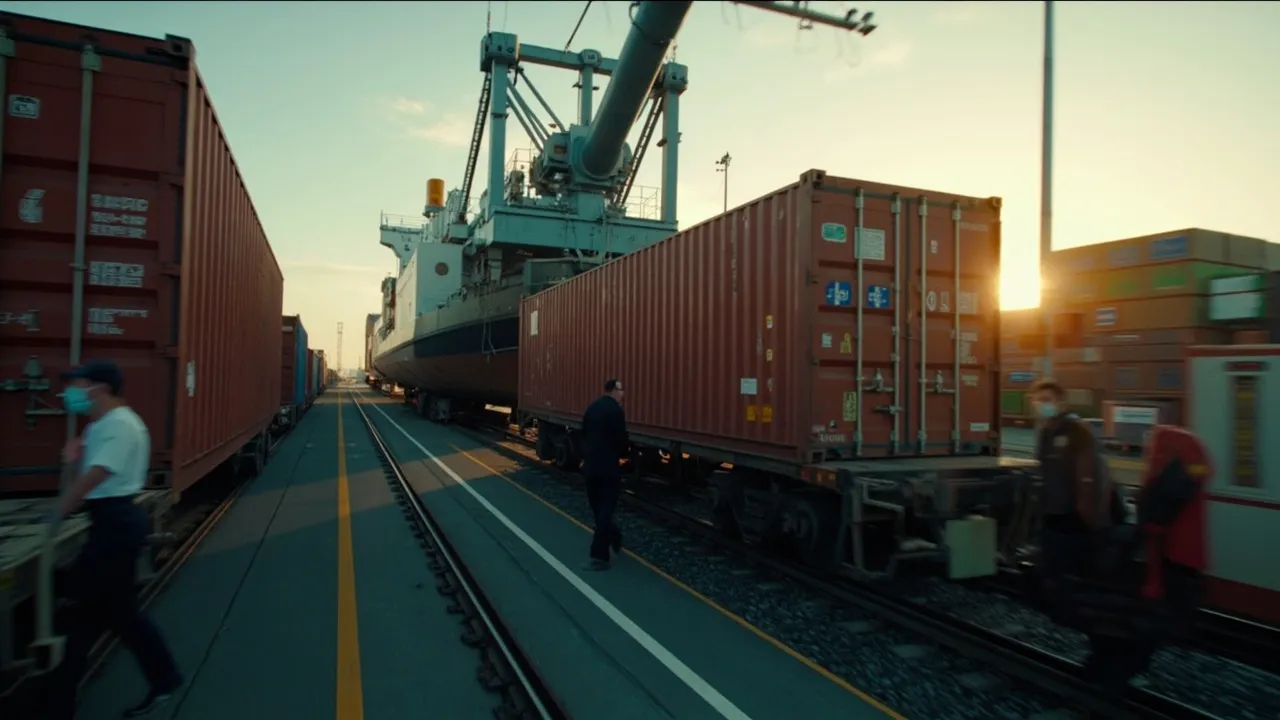
International intermodal freight has always depended on trust at the handoff. A container leaves an ocean terminal, moves into a rail network, passes through ramps and yards, and eventually reaches a consignee that may be hundreds or thousands of miles from the port. Every transfer point creates operational value. It also creates exposure.
That is why Matson’s new security program with BNSF Railway and War-Lok deserves more attention than a routine service announcement. According to Inbound Logistics, Matson is partnering with BNSF and security device maker War-Lok to add two layers of protection to the majority of its international intermodal cargo at no cost to customers, beginning in the second quarter of 2026. The strategic signal is clear: cargo protection is moving upstream from an after-theft investigation function into a designed-in transportation service attribute.
For international shippers, that shift matters. Rail intermodal is not a niche mode; it is a core pressure valve for port, highway, and distribution networks. Logistics Management reported IANA data showing April intermodal volume at 1,568,662 units. Even with total volume down 0.6% year over year, domestic containers rose 8.6%, and all domestic equipment was up 8.2%. International ISO containers fell 6.4%, but still accounted for 762,874 units in April. That is a huge amount of freight moving through high-value, multi-party chains of custody.
Security has to scale with that complexity.
Why layered protection beats reactive investigation
Traditional cargo security has often been treated like a claims workflow. A seal is broken, a shipment is short, a delivery is disputed, and the organization starts piecing together what happened. That approach is too slow for modern intermodal networks. By the time an exception is discovered, the container may have passed through multiple custody points, the physical evidence may be incomplete, and the customer relationship has already taken damage.
A layered program changes the starting point. Instead of asking, “What happened after the loss?” the shipper, carrier, and rail partner can ask, “How do we reduce unauthorized access before the trip begins, and how do we make any exception visible fast enough to act?”
The Matson-BNSF-War-Lok structure points in that direction. While the publicly reported details are intentionally concise, the phrase “two layers of protection” is important. In intermodal security, one layer is rarely enough. A standard seal can show tampering, but it may not physically prevent access. A physical locking device can deter entry, but without exception discipline it can still become a passive control. The operational value comes when physical protection, seal integrity, custody visibility, and exception response operate as one process.
That is the difference between a security product and a security service.
Cargo security is now a network design issue
The U.S. Department of Transportation’s freight agenda reinforces the same point. Logistics Management summarized the 2026 National Freight Strategic Plan as a roadmap for a freight system that moves more than 54 million tons of goods worth more than $68 billion each day across a nearly 7-million-mile network. The plan names six goals for the next five years: safety, efficiency, security, resiliency, innovation, and workforce development.
Security appearing alongside efficiency and resiliency is not accidental. Freight theft, seal compromise, and handoff uncertainty do not just create insurance losses. They also create dwell, rework, missed appointments, customer service failures, and inventory distortion. A stolen or compromised load can force emergency replenishment, expedite spend, customer credits, forensic work, and new routing restrictions. The transportation invoice is only one piece of the cost.
That makes cargo protection a network planning issue. Shippers that rely on international intermodal should know where their highest-risk ramps, lanes, commodities, and handoff points sit. They should also know which carriers and rail partners can support layered controls without turning every move into a custom exception.
The best security program is not the one that looks impressive on a checklist. It is the one that fits standard operations well enough to be used consistently.
What logistics teams should watch
For shippers evaluating international intermodal service in 2026, the Matson program suggests a useful checklist.
First, define the chain of custody in operational terms. Who applies the seal or lock? Where is it verified? What data is captured at the rail handoff? Who receives the exception alert if the seal, lock, container status, or appointment changes? A security process that lives in email threads will not survive a busy peak season.
Second, separate deterrence from visibility. Physical devices reduce opportunistic access, but visibility determines how quickly the organization can respond. A good intermodal security workflow should connect seal events, gate moves, rail milestones, delivery appointment changes, and customer communications.
Third, match protection levels to commodity and lane risk. Not every box needs the same treatment. High-value electronics, apparel, alcohol, temperature-sensitive products, and strategic spare parts may justify tighter controls than low-risk commodities. But the logic should be policy-based, not improvised by whoever is tendering freight that day.
Fourth, include customer trust in the ROI calculation. Security programs are easy to underfund when they are measured only against recovered theft value. The larger benefit is often service credibility: fewer disputes, cleaner delivery records, faster exception handling, and a stronger answer when customers ask how their freight is protected.
The transportation management implication
Layered cargo protection only works when the transportation management process can carry the extra intelligence. A TMS should not merely store a carrier name and tracking number. It should help teams define security requirements by lane, validate whether the selected service can meet them, attach seal and custody data to the shipment record, and escalate exceptions before the customer discovers the problem.
That is where CXTMS fits. For freight forwarders and logistics teams managing international intermodal moves, the goal is not to bolt security onto the process after tendering. The goal is to make security part of execution logic: lane rules, carrier selection, documentation, milestone monitoring, and customer-facing exception management.
Matson, BNSF, and War-Lok are showing where the market is heading. Cargo protection is becoming part of the service promise. Shippers should treat that as a competitive signal, not just a risk control.
Ready to build tighter intermodal visibility and exception control into your forwarding operation? Request a CXTMS demo and see how modern transportation management can turn shipment data into operational trust.