Macy's Supply Chain Overhaul Should Be Governed by Store-Service Exit Criteria

Retail supply chain transformations are often described as construction projects: open a facility, install automation, close an older node, and move on. That framing misses the operational risk. A network overhaul is a staged change to how inventory reaches stores and customers, and every stage can alter availability, transfer speed, fulfillment cost, and markdown exposure.
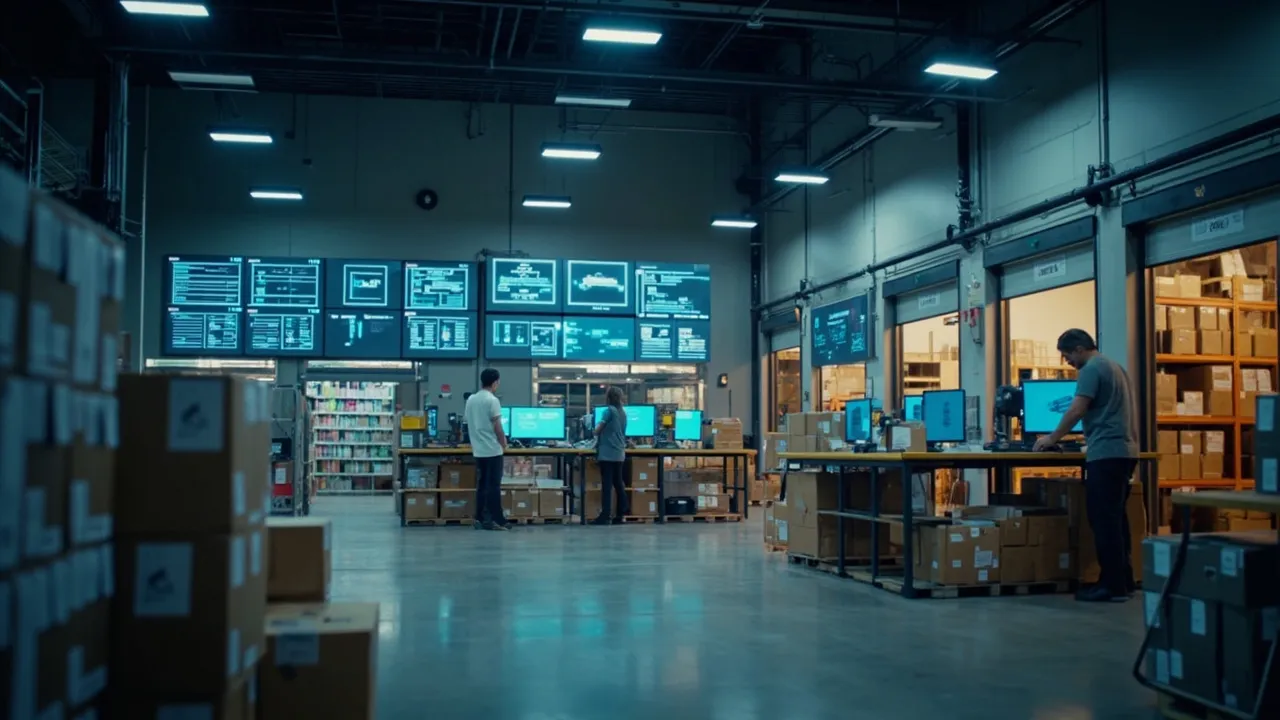
Macy's current transition illustrates the scale. Supply Chain Dive reported that its China Grove, North Carolina, facility spans 1.4 million square feet and was designed for automated direct-to-consumer inventory fulfillment and management across Macy's, Bloomingdale's, and Bluemercury. The same reporting tied the project to a broader effort to simplify the retailer's supply chain.
That is not one cutover. It is a sequence of facility, inventory, process, technology, and carrier migrations. Retailers need explicit exit criteria for each wave so that a successful launch is defined by stable store service—not merely by whether the new building is shipping cartons.
Establish the service baseline before moving volume
Transformation teams cannot prove that a migration worked unless they preserve a credible pre-change baseline. The baseline should cover comparable stores, products, and weeks, with adjustments for promotions and seasonality. Four measures deserve particular attention.
In-stock rate should be measured at the store-SKU-day level, not as an aggregate network average. Category and location views reveal whether a nominally stable result conceals shortages in high-velocity products or priority stores. Teams should record both shelf availability and available-to-promise accuracy because a system can claim inventory that customers cannot actually buy.
Transfer time should run from the initial store or allocation request through receipt and availability for sale. The average is insufficient. The 90th or 95th percentile exposes delayed transfers that create lost sales even when most shipments arrive normally.
Split shipments indicate whether inventory fragmentation is forcing the network to use multiple parcels, cartons, or origin points for one customer demand signal. A rising split rate can make delivery faster on paper while increasing transportation cost, handling, and cancellation risk.
Markdown exposure connects service performance to retail economics. Track units and value likely to miss their full-price selling window because they are stranded, delayed, or allocated to the wrong location. This prevents cost savings at a distribution center from being celebrated while margin deteriorates in stores.
Treat the overhaul as gated waves
Macy's has been reshaping its fulfillment footprint for years. In 2022, Supply Chain Dive reported that the retailer had established mini distribution centers in 35 stores and converted about 1 million square feet of store space for fulfillment services. In 2024, the publication reported that Macy's targeted $100 million in supply chain savings through automation and a right-sized distribution network.
Those figures show why a single go-live milestone is inadequate. Store-based fulfillment, automated centers, legacy-node closures, and new inventory flows interact. Each migration wave should therefore have three gates.
The readiness gate confirms that item, location, carrier, route, labor, and inventory data are complete before volume moves. It also requires capacity tests at expected peak throughput—not just an average-day simulation.
The stability gate requires the new flow to operate within a defined tolerance for several consecutive replenishment cycles. A retailer might require in-stock rate to remain within 0.5 percentage points of baseline, 95th-percentile transfer time to stay below its service promise, and split shipments to remain no more than 3% above baseline for four weeks.
The value gate verifies that projected benefits survive downstream effects. Labor or facility savings should be net of expedites, extra parcel legs, store handling, cancellations, lost sales, and markdowns. Only realized network value should authorize the next migration wave.
Thresholds will vary by category and season, but they must be agreed before launch. Changing a threshold after service deteriorates turns governance into storytelling.
Separate transition noise from structural failure
Every cutover produces exceptions. The useful question is whether they are temporary, contained, and declining—or persistent evidence that the new operating model is unstable.
Transition noise usually has a clear start date, known cause, limited scope, and improving trend. Examples include a short learning curve on a new picking process or a carrier appointment backlog that clears as schedules normalize. Structural deterioration behaves differently: the same exception recurs across cycles, spreads to additional stores or categories, or reappears after manual intervention ends.
A transportation and exception-management system should classify each event by migration wave, origin facility, destination store, SKU class, carrier, promised date, root-cause code, and financial impact. Operations can then compare cohorts rather than argue from anecdotes.
For example, a surge in late store transfers may be acceptable for several days if it is concentrated in one newly activated lane and declines daily. It should block the next wave if the 95th-percentile transfer time remains above threshold for two replenishment cycles, inventory mismatches grow, or expedites are masking the problem.
Exception closure also needs proof. A ticket marked resolved is not evidence of recovery. The affected shipment must arrive, inventory must become available for sale, and the next comparable shipments must flow without the same failure.
Build an operational control tower, not a launch dashboard
An executive launch dashboard often emphasizes throughput, automation uptime, and units shipped. Those are necessary measures, but they do not show whether stores and customers are receiving better service.
The control view should connect each migration wave to service and value outcomes: in-stock variance, transfer-time percentiles, split rate, canceled units, premium freight, labor touches, aged inventory, and markdown risk. It should display baseline, current result, exit threshold, owner, and remediation deadline for every metric.
Governance should be decisive. If all service and value gates pass for the agreed observation period, release the next wave. If one metric misses narrowly but improves, hold volume steady and extend observation. If several measures deteriorate or financial leakage offsets savings, stop expansion and roll affected flows back where practical.
The central lesson extends beyond Macy's. Large automated assets can create capacity and efficiency, but transformation value is realized at the shelf and customer promise. Retailers that govern migrations with store-service exit criteria can modernize without confusing activity for progress.
CXTMS gives logistics teams the shipment visibility, exception workflows, carrier performance data, and cost controls needed to manage phased network change. Request a CXTMS demo to see how measurable migration gates can protect service while your network evolves.