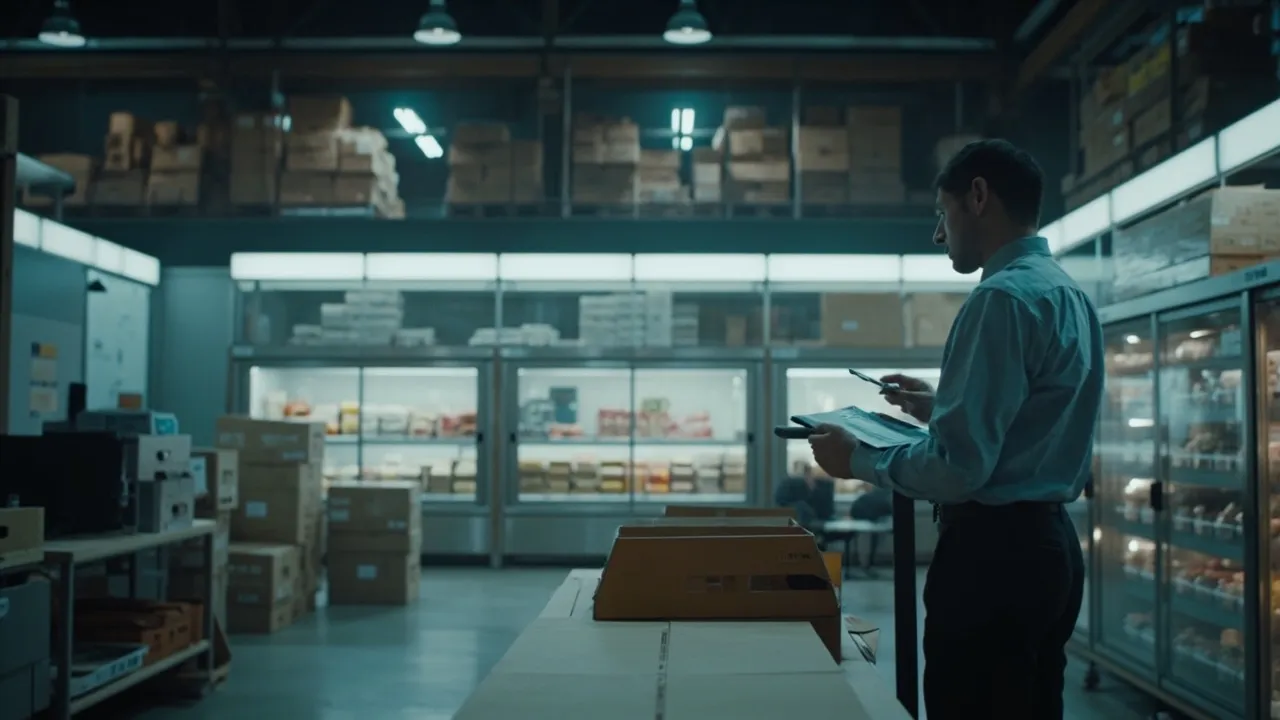
Starbucks' 24-Hour Replenishment Target Needs a Store-Level Recovery Clock


Daily delivery sounds simple until an operator asks when the 24-hour clock starts—and which event proves that a store has actually recovered from a shortage.
Supply Chain Dive reports that Starbucks is testing a 24-hour operating model while scaling daily deliveries. CEO Brian Niccol described an ambition to replenish inventory within 24 hours so stores are not out of stock. The company expects ordering technology to support the strategy in fiscal 2027, while daily replenishment is targeted by the end of calendar 2026.
The objective arrives after a nine-month computer-vision inventory pilot was retired as unreliable. Starbucks also cut menu SKUs by 30% last year. Those facts point to the real operational lesson: replenishment speed depends on a dependable process, a manageable assortment, and precise handoffs—not merely a faster inventory-counting tool.
Define what the 24-hour promise measures
A replenishment clock needs one unambiguous starting event. “Store noticed a shortage,” “order transmitted,” and “distribution center released work” can be hours apart. For store availability, the most useful start is the first system-confirmed demand signal that requires action: a validated count below the reorder threshold, a forecast-triggered order, or an approved store request.
The clock should stop only when replacement stock is received, reconciled, and available for use—not when a truck arrives in the parking lot. A delivery can be physically present yet unavailable because it is short, damaged, misrouted, held for temperature review, or waiting to be checked in.
Capture at least these milestones:
- demand signal created and validated;
- order calculated, approved, and transmitted;
- distribution center allocation confirmed;
- pick started, pick completed, and shortage recorded;
- carrier tender accepted, departed, and arrived;
- store receipt completed and quantity reconciled;
- stock placed in its usable location.
Together, these events turn “24 hours” from a slogan into an auditable cycle time. They also show where recovery time is actually consumed.
Connect the store, distribution center, and carrier
A daily route does not guarantee daily replenishment. The store can miss an order cutoff. The distribution center can allocate less than requested. A carrier can arrive on time with a short shipment. Each failure needs a different owner and recovery action.
At the store, the essential records are count time, on-hand quantity, expected demand, reorder trigger, order submission, and receiving confirmation. At the distribution center, operators need allocation quantity, substitution decision, pick exception, loading completion, and route assignment. Transportation records should include tender acceptance, planned and actual departure, arrival, proof of delivery, and any temperature or damage exception.
This is where decision design matters. SupplyChainBrain argues that visibility alone does not tell an organization what to do next; fragmented data and processes slow action. A replenishment dashboard should therefore pair every exception with a decision deadline, authorized owner, and predefined response.
Use cutoff rules without hiding failure
Cutoffs are necessary for stable warehouse waves and routes, but they can distort the performance measure. If a store identifies a shortage at 2:05 p.m. and the cutoff was 2 p.m., restarting the clock the next morning makes service look better while the shelf remains empty.
Keep the customer-facing recovery clock running continuously. Separately record whether the request arrived before or after cutoff. That preserves operational truth while showing whether the failure originated in store execution, forecast timing, or network design.
Create escalation thresholds inside the 24-hour window. For example, an unconfirmed allocation after two hours should go to inventory control; an order not loaded by the route cutoff should trigger transportation review; and an ETA that would exceed 24 hours should require a substitute, transfer, or controlled expedite decision.
The same rules can protect availability without indiscriminately increasing safety stock. Extra inventory is expensive and can raise waste risk for fresh food. Use safety stock only for items whose demand variability and replenishment reliability justify it. Resolve recurring count errors, cutoff misses, or route failures at their source rather than masking them with more product in every back room.
Build a recovery-clock scorecard
Measure the total cycle and its components by store, SKU, distribution center, route, and day of week. A practical weekly scorecard should include:
- Recovery compliance: percentage of triggered needs made usable within 24 hours.
- Signal quality: count adjustments and orders reversed after validation.
- Allocation performance: ordered units confirmed, shorted, and substituted.
- Warehouse execution: time from confirmed allocation to load completion.
- Transportation: departure and arrival variance, route completion, and failed delivery rate.
- Receipt accuracy: ordered, shipped, received, damaged, and usable quantities.
- Availability impact: item-hours unavailable and estimated demand affected.
- Recovery cost: transfers, expedites, premium miles, waste, and credits.
Late, short, and substituted orders must remain separate. A late order measures time failure. A short order measures quantity failure. A substitution may protect availability but still create menu, allergen, quality, or margin consequences. Collapsing all three into “delivered” conceals the decisions operators need to improve.
Use reason codes sparingly and make them actionable: store count error, post-cutoff request, no distribution-center stock, pick short, loading delay, carrier delay, failed receiving, damage, or rejected substitution. Each code should map to one accountable team and a deadline for correction.
Make recovery repeatable before automating it
The earlier AI pilot illustrates why automation cannot compensate for an unstable operating definition. Starbucks' prior tool promised more frequent counts—reportedly eight times more frequent at equipped cafes—but frequency does not help if the underlying count is mistrusted or the next action is unclear.
Start with consistent events, ownership, and exception rules. Then automation can detect a likely breach, recommend the lowest-cost recovery option, and document the choice. Human operators should still control high-impact substitutions, premium freight, and food-safety decisions.
A true 24-hour replenishment capability is not a daily truck schedule. It is a closed loop from demand signal to usable stock, with every lost hour and missing unit visible. That recovery clock gives retailers a better lever than blanket safety stock: faster, accountable action.
Ready to connect store demand, shipment milestones, and replenishment exceptions in one workflow? Request a CXTMS demo to see how transportation visibility can support faster inventory recovery.