IntraLogisteX 2026 Preview: Five Warehouse Technologies to Watch at the UK's Largest Intralogistics Showcase

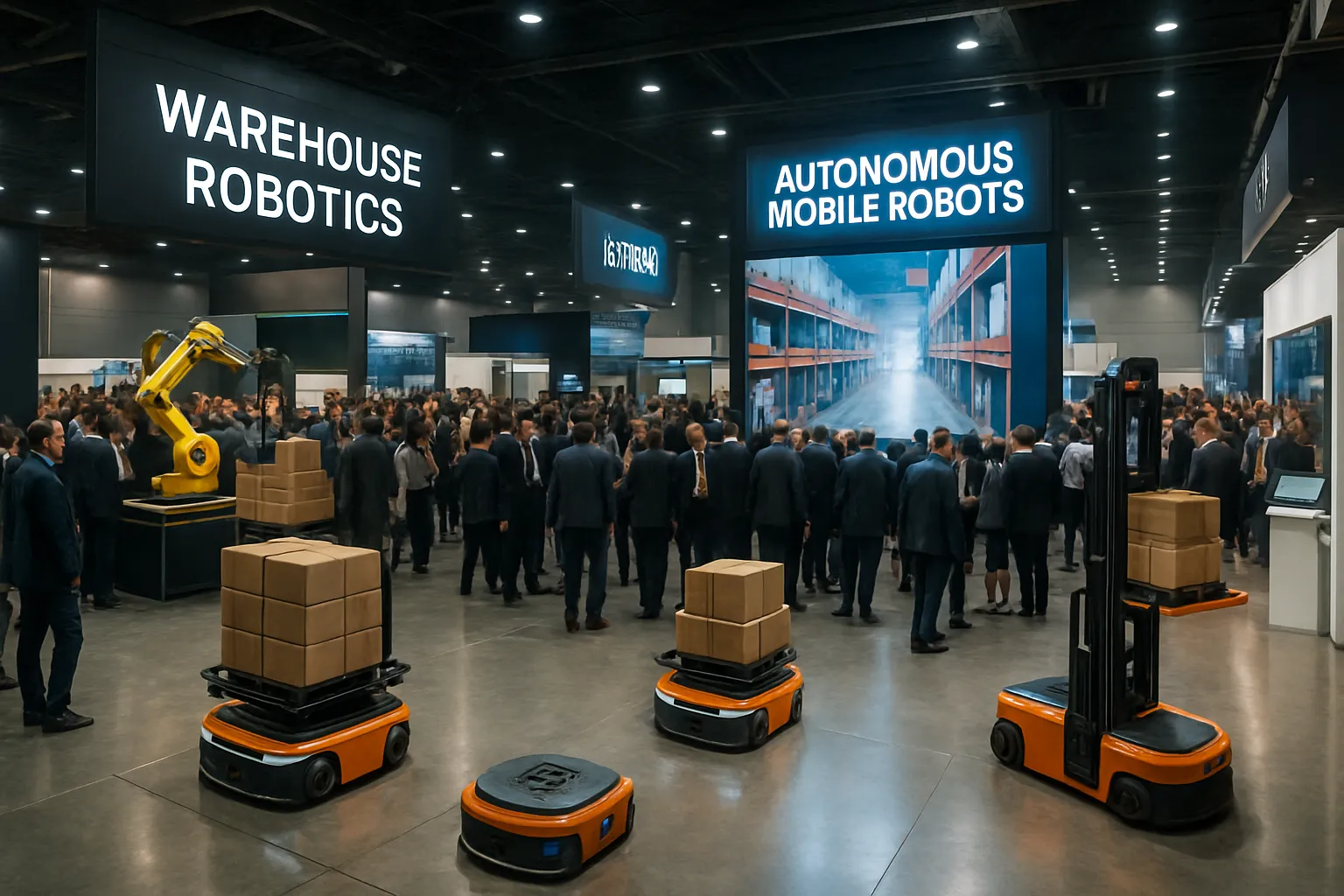
Next week, more than 11,000 logistics professionals will converge on the NEC Birmingham for IntraLogisteX 2026 — the UK's flagship intralogistics exhibition, now in its 11th year. Running March 18–19, the event has grown into something far bigger than a warehouse trade show: with over 300 exhibiting brands and four co-located exhibitions, it's become the single best venue for UK supply chain leaders to benchmark automation investments against real, working technology.
And the timing couldn't be sharper. The UK warehouse automation market reached $2.2 billion in 2024 and is projected to grow at a 10.3% CAGR to reach $5.3 billion by 2033, according to IMARC Group. Globally, the warehouse automation market was valued at $19.23 billion in 2023 and is expected to hit $59.52 billion by 2030 at an 18.7% CAGR, per Grand View Research. UK operators are under simultaneous pressure from e-commerce growth, persistent labour shortages, rising energy costs, and post-Brexit supply chain complexity — and they're spending accordingly.
What Makes IntraLogisteX 2026 Different
This isn't a standalone warehouse show anymore. IntraLogisteX 2026 is co-located with three complementary events: the Robotics & Automation Exhibition, the Sustainable Supply Chain Exhibition, and the newly launched Fulfilment & Last Mile Expo. Together, they create an end-to-end logistics technology ecosystem under one roof.
That co-location matters because the operational challenges facing UK warehouses don't exist in isolation. Automation decisions ripple into sustainability targets. Fulfilment strategies shape last-mile costs. A warehouse execution system choice constrains which robotics platforms you can integrate. IntraLogisteX's four-show format lets decision-makers trace those connections in person rather than piecing them together across separate events throughout the year.
The conference programme reinforces that integrated approach with more than 60 sessions across three theatres, featuring speakers from B&Q, Royal Mail, NHS Supply Chain, Nomad Foods, Rockwell Automation, Bayer, and Airbus. The focus is squarely on deployment — integration challenges, ROI realities, and workforce implications — rather than aspirational technology demos.
Five Technologies to Prioritize on the Show Floor
With 300+ exhibitors spanning six halls, the show floor can overwhelm even experienced visitors. Here are five technology categories worth prioritising based on current market momentum and operational impact.
1. Autonomous Mobile Robots (AMRs) for Pallet-Scale Operations
AMRs have dominated warehouse robotics conversations for years, but the 2026 generation is moving well beyond tote-picking into pallet-scale operations. Exhibitors including Boston Dynamics, Toyota Material Handling, and Swisslog will demonstrate AMR platforms capable of handling full pallets, integrating with existing racking infrastructure, and operating in mixed human-robot environments.
The shift to pallet-scale AMRs matters because it opens automation to distribution centres and 3PL operations that couldn't justify goods-to-person systems for their SKU profiles. According to Logistics Manager, live demonstrations will let visitors see these systems operating in realistic intralogistics environments — a critical evaluation step for operations that have struggled to translate vendor specifications into real-world throughput expectations.
2. Real-Time Digital Twin Platforms for Warehouse Visibility
Dexory is bringing its autonomous scanning robot and DexoryView platform to the show floor, offering a compelling example of how digital twin technology is maturing from planning tool to operational necessity. Their approach — autonomous robots that continuously scan warehouse inventory and feed data into a real-time digital twin — addresses the fundamental visibility gap that plagues most distribution operations: the difference between what the WMS says is in a location and what's actually there.
With warehouse inventory accuracy averaging around 63% across the industry according to multiple studies, the business case for real-time scanning is straightforward. Digital twins built on continuous physical scans rather than periodic cycle counts can drive measurable improvements in pick accuracy, space utilisation, and labour planning.
3. Warehouse Execution Systems (WES) as the Orchestration Layer
As warehouses deploy multiple automation technologies simultaneously — AMRs, conveyors, shuttles, and human pickers — the need for a real-time orchestration layer has become acute. WES platforms sit between the WMS and physical automation, making second-by-second task allocation decisions that maximise throughput across mixed human-robot operations.
Several exhibitors at IntraLogisteX 2026 will showcase WES capabilities, including integration with multi-vendor robotic fleets. For operations running two or three different automation vendors in the same facility — an increasingly common reality — WES is the middleware that prevents those systems from competing for the same tasks or creating bottlenecks at shared infrastructure like conveyors and sortation systems.
4. Sustainable Packaging and Low-Energy Conveyor Systems
The Sustainable Supply Chain Exhibition co-located with IntraLogisteX brings ESG from boardroom slide decks to the warehouse floor. Exhibitors will showcase low-energy conveyor systems, automated sustainable packaging solutions, and energy-efficient storage infrastructure designed to reduce both operating costs and carbon footprints.
This is increasingly a commercial requirement rather than a nice-to-have. Major UK retailers are pushing sustainability mandates down through their supply chains, and 3PLs that can demonstrate measurable energy efficiency gains are winning contract renewals. The co-located format lets visitors evaluate how sustainability investments interact with automation ROI in a single visit.
5. AI-Powered Analytics and Intelligent Warehouse Planning
SAP, Rockwell Automation, and multiple specialist providers will demonstrate AI-driven analytics platforms that move beyond descriptive dashboards into prescriptive decision support. These systems analyse historical throughput data, real-time order profiles, and labour availability to recommend operational changes — from dynamic slotting adjustments to shift-level staffing optimisation.
The maturity curve here is significant. First-generation warehouse AI required data science teams to build and maintain models. The current generation is designed for operations managers, with pre-built models for common warehouse workflows and natural-language interfaces that allow non-technical users to query performance data and receive actionable recommendations.
The UK Market Context: Why Now
The backdrop for IntraLogisteX 2026 is a UK logistics sector at a technological inflection point. Post-Brexit supply chain reconfiguration has driven warehousing demand, with the UK needing an estimated 100 million square feet of additional warehouse space by 2028 according to industry projections. Meanwhile, warehouse labour vacancy rates remain elevated, making automation not just an efficiency play but a capacity necessity.
The convergence of these pressures — space constraints, labour scarcity, sustainability mandates, and customer expectations for faster fulfilment — is accelerating automation investment timelines. Operations that planned three-to-five-year automation roadmaps are compressing them to 18–24 months, and events like IntraLogisteX provide the vendor evaluation density needed to make those compressed timelines realistic.
How CXTMS Connects with UK Warehouse Technology
For logistics operations investing in warehouse automation and visibility technology, the challenge extends beyond the warehouse walls. AMRs and WES platforms optimise internal operations, but upstream freight visibility determines whether those optimised warehouses receive inventory when they need it.
CXTMS bridges that gap by providing real-time freight tracking and multi-modal shipment visibility that feeds directly into warehouse planning systems. When your WES knows that an inbound shipment is delayed by four hours, it can reallocate labour and adjust picking priorities in real time — turning warehouse automation from a local optimisation into a network-wide advantage.
Ready to connect your warehouse technology investments with end-to-end freight visibility? Request a CXTMS demo and see how real-time shipment tracking integrates with your warehouse operations stack.