India’s Diesel and Jet Fuel Export Taxes Are a Reminder That Fuel Risk Starts Upstream

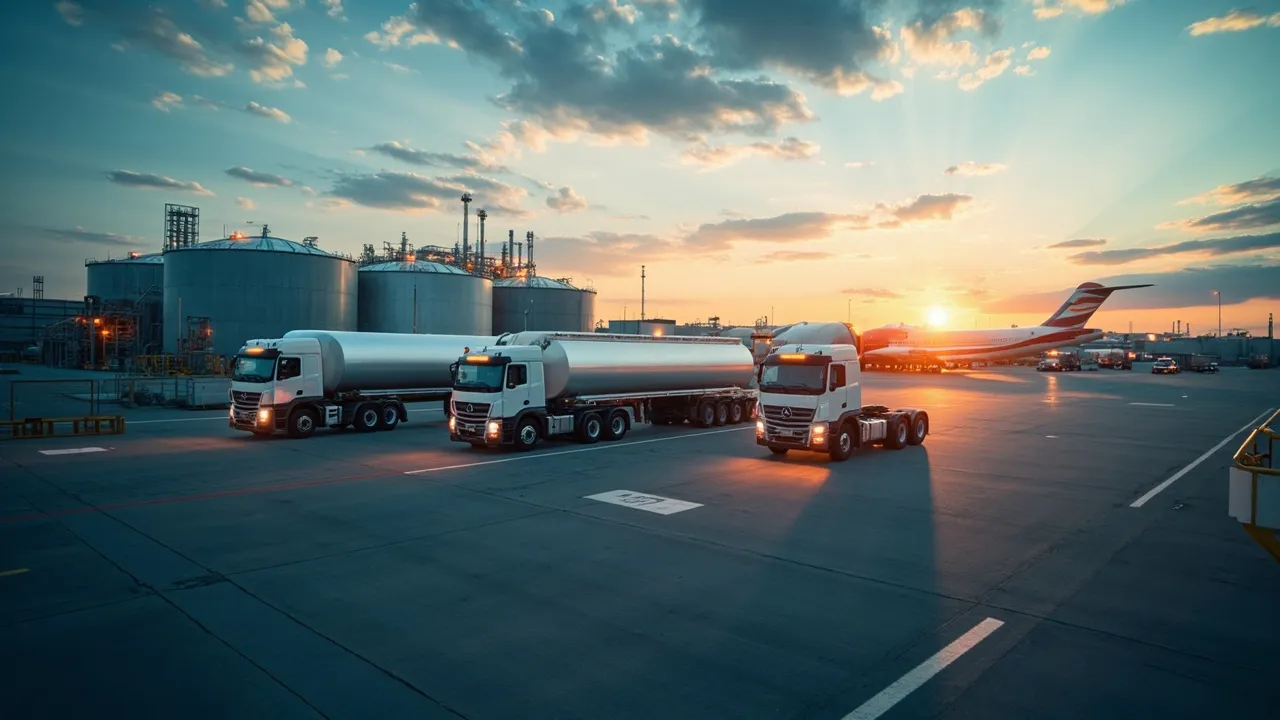
Fuel risk does not begin when a carrier emails a surcharge update. It starts upstream, where governments, refiners, crude markets, export rules, and domestic supply priorities shape the price and availability of the fuels that move freight.
India’s latest windfall-tax change is a clean reminder. Reuters reported that India raised the windfall tax on diesel exports to 14 rupees per liter and the tax on aviation turbine fuel exports to 12.5 rupees per liter, while leaving the petrol export duty unchanged. The new rates apply for the fortnight beginning June 16.
That is not a trucking rate announcement. It is not an air cargo tariff. It may not even show up immediately in a shipper’s domestic freight invoice. But for logistics teams, the signal matters: fuel exposure is shaped before the load is tendered, before the flight is booked, and before the monthly transportation budget is closed.
Export taxes are a freight-cost signal, not just an energy headline
India uses export duties and windfall taxes to influence refined-product flows and protect domestic supply when global price spreads make exports attractive. When diesel and aviation fuel exports become more expensive, the intent is partly to keep more product available at home or capture extraordinary refining gains. But the logistics implication is broader: governments can change fuel economics quickly, and those changes can ripple through regional supply balances.
Diesel is the obvious freight link. It powers linehaul trucking, drayage, yard tractors, port equipment, construction logistics, agriculture movements, and a large share of inland distribution. Aviation turbine fuel is just as sensitive for forwarders and shippers that depend on air cargo, especially for high-value, time-critical, pharmaceutical, electronics, and spare-parts shipments.
The important point is not that one Indian tax adjustment will automatically reset global freight rates. The point is that fuel policy changes can arrive on a fortnightly clock while many shippers still manage transportation budgets on monthly, quarterly, or annual assumptions. That mismatch creates budget volatility.
Diesel volatility is already hitting shipper behavior
The freight market has fresh evidence that shippers are paying attention. Inbound Logistics reported that U.S. diesel prices climbed above $5 per gallon for the first time since 2022, driven largely by Middle East tensions and disruptions to global oil flows. The article also cited a shipper poll in which 44% of respondents listed freight rate increases as the largest expected supply chain impact from the conflict because of rising diesel prices.
That 44% figure is the practical story. Fuel is not merely an accounting line; it changes operational choices. Shippers consolidate loads, rethink route plans, push harder on carrier procurement, shift inventory, and revisit mode decisions when fuel stops behaving like a stable assumption.
The pain is especially sharp because surcharges lag. Carriers may publish weekly or monthly fuel tables, but price spikes can occur faster than recovery mechanisms. Smaller carriers often absorb the shock first. Larger fleets may have better contracting discipline, hedging, or network density, but even they cannot ignore fuel when it becomes a larger share of operating cost.
That means shippers need fuel surcharge planning that is more precise than “accept the table.” They need to understand which lanes are most fuel-sensitive, which contracts have lagging recovery, which accessorials move with energy cost, and where service commitments become uneconomic when diesel rises suddenly.
Air cargo has its own version of the problem
Jet fuel exposure is less visible to many logistics teams because it often arrives embedded in air cargo rates, fuel surcharge indices, expedited quotes, or forwarder pricing. That makes it easy to underestimate.
India’s tax change included aviation turbine fuel, and that matters for any shipper using air freight as a reliability backstop. When ocean schedules slip, inventory gets tight, or a production line is at risk, companies often reach for air cargo. But the cost of that safety valve depends heavily on fuel conditions.
This is where upstream fuel risk turns into planning risk. A company may budget for a certain amount of expedited freight based on historical rates, only to discover that the emergency option is materially more expensive when jet fuel economics shift. If a lane relies on air freight for recovery, that lane deserves a fuel sensitivity threshold. When aviation fuel indices or policy moves cross that threshold, the team should know whether to pre-position inventory, approve alternate routings, or escalate customer commitments.
Fuel alternatives help, but they do not erase exposure
Some companies are testing ways to reduce diesel dependence, and the numbers are promising in the right lane profile. Supply Chain Dive reported that Fuel Transport’s short-haul electric truck pilot with Kenvue Canada produced 44.7% savings on diesel on a multi-stop route in the greater Toronto area.
That is a meaningful result, but it is not a universal escape hatch. The same report noted that, when infrastructure is included, a regional return-to-base battery-electric route could cost 42 cents per mile versus 35 cents per mile for diesel, according to NACFE. In other words, fuel reduction is real, but the operating model still has to work: charging integration, route planning, utilization, maintenance, dwell time, service reliability, and infrastructure cost all matter.
For shippers, the lesson is not “electrify everything.” It is “identify where fuel exposure is controllable.” Dense urban routes, predictable return-to-base operations, multi-stop delivery windows, and high-utilization lanes may deserve EV pilots. Long, irregular, or underutilized lanes may need better surcharge governance first.
Build fuel triggers into freight execution
The strongest freight teams will not wait for finance to discover a budget variance. They will build fuel triggers into execution.
Start with fuel clauses. Contracts should define the index, baseline, adjustment frequency, lag period, floors, caps, and lane applicability. If the clause is vague, disputes arrive exactly when markets are already stressed.
Then review fuel sensitivity by lane. A 500-mile truckload lane, a local dray move, an air expedite, and an intermodal routing do not respond to fuel in the same way. Lane-level surcharge reviews show where exposure is concentrated and where mode shifts might help.
Add event-based budget triggers. A tax change on diesel exports, a jet fuel policy move, a regional refinery disruption, a $5 diesel threshold, or a published carrier surcharge change should automatically prompt a review of affected lanes and customer commitments.
Finally, connect fuel risk to exception management. If higher fuel cost makes a route, carrier, or expedite option unattractive, the system should surface that before a planner books the move. Transportation data, cost rules, carrier commitments, and shipment exceptions need to live in the same workflow.
Fuel risk starts upstream, but the damage shows up downstream: missed budgets, rejected tenders, emergency air freight, margin leakage, and painful customer conversations.
CXTMS helps logistics teams manage freight cost exposure with cleaner lane data, carrier rules, shipment visibility, and exception workflows. If your transportation budget still treats fuel as a monthly surprise, schedule a CXTMS demo and see how better execution data turns volatility into decisions instead of damage.