India Cold Chain Growth Is Becoming a Regional Node Planning Problem

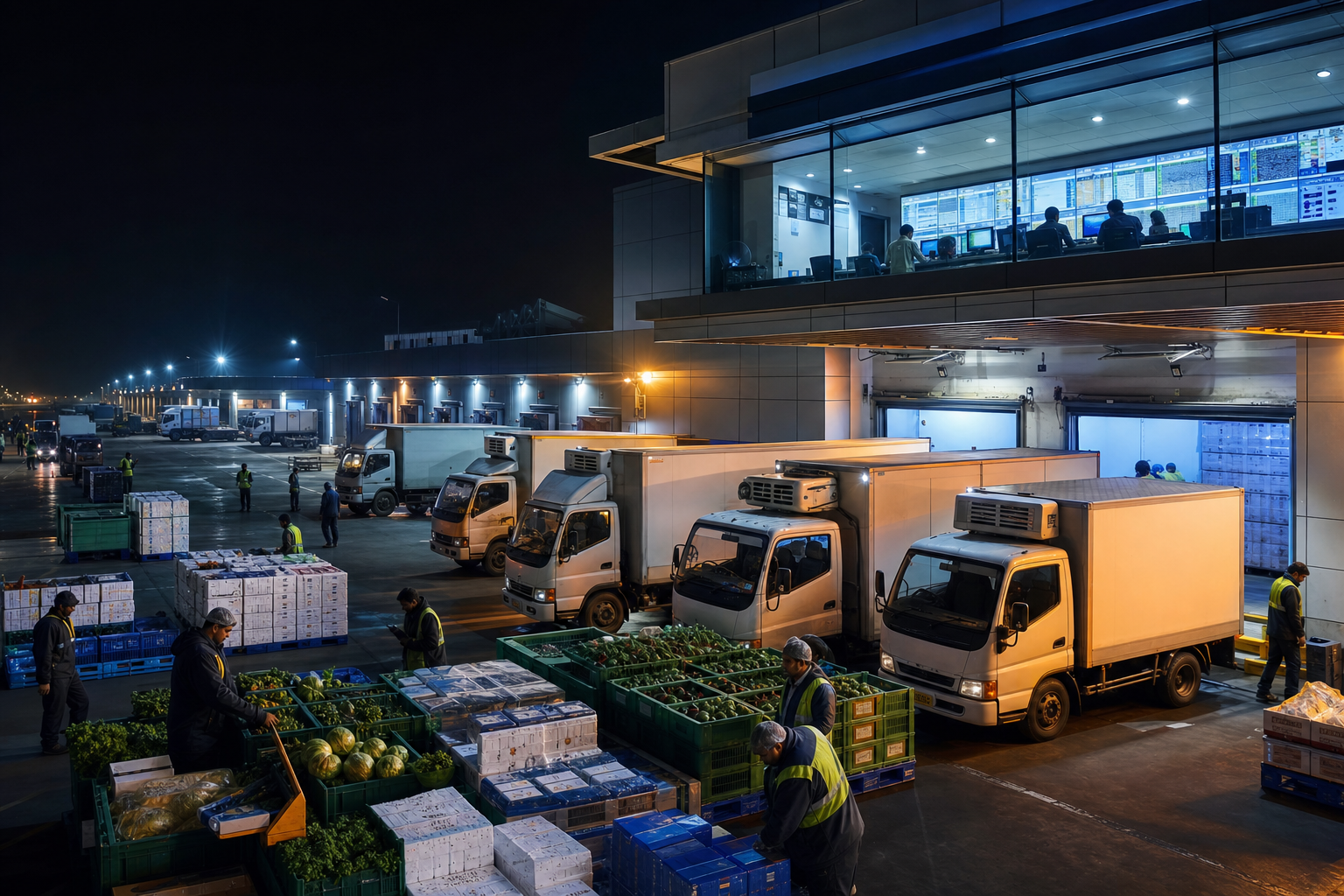
India's cold chain story is not just about building more refrigerated space. It is becoming a regional node planning problem: where to put capacity, which lanes deserve reefer assets, how temperature handoffs are controlled, and how fast exceptions are escalated when product quality is on the line.
The growth case is real. Mordor Intelligence projects India's cold chain logistics market will expand from USD 23.28 billion in 2025 and USD 24.85 billion in 2026 to USD 33.12 billion by 2031, a 5.91% CAGR. Its report also shows why generic capacity planning is a trap: refrigerated storage held 41.24% of 2025 market share, frozen temperature zones represented 51.47% of capacity, dairy and frozen desserts accounted for 23.89% of market size, and pharmaceuticals and biologics are projected to grow fastest at a 6.20% CAGR through 2031.
That mix matters. A frozen dessert network, a vaccine network, a fresh dairy network, and a produce export network may all live under the cold-chain label, but they do not tolerate the same dwell time, packaging, lane risk, carrier qualification, or exception process. Treating them as one service category is how operators create expensive spoilage and invisible service failures.
Growth is uneven by region and product
Cold-chain investment tends to get described in national terms, but product integrity is lost locally. Mordor's data says West India contributed 22.78% of 2025 cold-chain revenue, while East India is forecast to post a 6.01% CAGR from 2026 to 2031. That is a planning signal, not just a market statistic. If demand growth shifts faster than node coverage, operators may end up with the wrong balance of cold rooms, cross-docks, refrigerated vehicles, and qualified carriers.
The same issue appears in demand drivers. Mordor cites e-grocery last-mile refrigerated demand, pharma biologics and vaccine growth, government-supported bulk cold storage, LNG-fueled reefer trucking, AI-optimized route planning, and green-energy reefer fleets as market contributors. Each driver pulls the network in a different direction. E-grocery compresses delivery windows around urban micro-fulfillment. Pharma requires controlled lanes, validated processes, documented custody, and rapid intervention. Agricultural distribution needs rural collection, pre-cooling, consolidation, and reliable movement into urban or export channels.
One national cold-chain playbook cannot serve all of that. The smarter model is a node-by-node design: which products flow through this region, what temperature range they require, what handoffs create risk, which assets are qualified, and what escalation path activates when a shipment misses tolerance.
Road freight growth raises the stakes
Cold chain depends on the broader freight network around it. Mordor Intelligence estimates India's road freight transport market at USD 168.51 billion in 2026, growing at an 8.72% CAGR to USD 255.92 billion by 2031. That expansion brings more density, more organized logistics options, and more competition for dock time, drivers, equipment, and corridor reliability.
For temperature-controlled freight, road growth is a double-edged sword. Better road networks and larger logistics markets can improve reach. But they also increase complexity. A reefer truck stuck behind a generic appointment queue is not just late; it may be degrading inventory. A missed cross-dock cutoff can become a temperature event. A carrier substitution that works for dry freight may be unacceptable for chilled biologics or frozen foods.
This is where regional node planning becomes operationally specific. Operators need to know which lanes can tolerate consolidation, which require direct movement, where buffer capacity exists, and where a single failed handoff would put product at risk. That knowledge cannot stay in spreadsheets or tribal dispatch notes.
Temperature handoffs are where margin disappears
Most cold-chain failures are not dramatic. They happen in small gaps: product waiting on a dock, incomplete pre-cooling, unclear transfer ownership, a reefer unit not verified before loading, a driver delayed without escalation, or a customer appointment missed because the TMS treated the load like ordinary freight.
Those gaps are expensive because cold-chain margin is tied to both service and evidence. Food shippers need freshness and shelf life. Pharma shippers need compliance-grade visibility. Dairy and frozen dessert brands need temperature integrity through storage, linehaul, and last mile. Grocery networks need traceability when something goes wrong. Food Logistics has reported that effective traceability can reduce the scope of a recall by up to 95%, underscoring the value of knowing exactly which shipment, container, or lot was affected instead of freezing whole truckloads or regions.
That traceability benefit depends on clean event data. If shipment milestones, temperature readings, container IDs, carrier handoffs, appointment changes, and exception notes are scattered across systems, the network cannot isolate risk quickly. The operator either overreacts and wastes good product, or underreacts and damages trust.
Different cold chains need different service promises
A practical cold-chain design starts by separating product families.
Pharmaceuticals and biologics need qualified carriers, strict SOPs, documented chain of custody, alert thresholds, and escalation paths that reach decision-makers immediately. Fresh dairy needs fast regional replenishment, reliable chilled capacity, and tight coordination with production schedules. Frozen foods need storage and linehaul discipline, but also careful planning around store delivery windows and urban congestion. Produce needs pre-cooling, consolidation, and fast exception recovery because shelf life starts eroding before the first long-haul mile.
The node strategy should follow those promises. A lane serving vaccine distributors may justify premium capacity, tighter monitoring, and redundant recovery options. A frozen FMCG replenishment lane may focus on high-density routes, appointment precision, and minimizing dwell. A perishable export lane may prioritize origin-side collection reliability and port handoff timing.
The mistake is buying cold-chain capacity first and designing control later. Capacity without orchestration becomes a warehouse with a thermostat.
CXTMS turns cold-chain growth into controlled execution
CXTMS gives logistics teams the control layer required for temperature-sensitive lane design. Instead of managing cold-chain shipments as one more freight mode, teams can connect carrier qualification, service rules, regional node capacity, appointment constraints, shipment events, and exception escalation in the same workflow.
That means planners can define which carriers are approved for which temperature bands, which lanes need direct movement, which nodes can handle multi-temperature freight, and which events should trigger immediate intervention. Dispatch teams can see when a reefer asset is late, when a handoff is at risk, or when a delivery appointment threatens product integrity. Managers can review performance by lane, region, product family, and carrier instead of waiting for claims or spoiled inventory to reveal weak spots.
India's cold-chain market is large enough to reward investment, but growth alone will not protect product quality. The winners will not be the operators with the most generic refrigerated capacity. They will be the ones that know where each node belongs, what promise each lane is making, and how quickly the network responds when temperature-sensitive freight starts to drift from plan.
Ready to design temperature-controlled lanes with the same discipline you bring to cost and service? Schedule a CXTMS demo and see how connected carrier qualification, node planning, and exception workflows protect cold-chain execution before product quality is at risk.