American Eagle's $41 Million Southeast DC Needs a Store-and-Parcel Flow Test

A new distribution center can shorten miles on a network map while making the operation harder inside the building. That is the central test for American Eagle Outfitters as it prepares a $41 million facility in Salisbury, North Carolina: can one node serve stores and ecommerce customers without forcing two very different flows to compete for inventory, labor, dock capacity, and carrier cutoffs?
The location has obvious network appeal. It puts inventory closer to southeastern demand and adds capacity alongside American Eagle's existing facilities. But proximity alone does not produce better service. The facility needs to prove that it can replenish stores in planned waves and release individual parcels at ecommerce speed—especially when both channels peak at once.
A Large Node With a Specific Regional Job
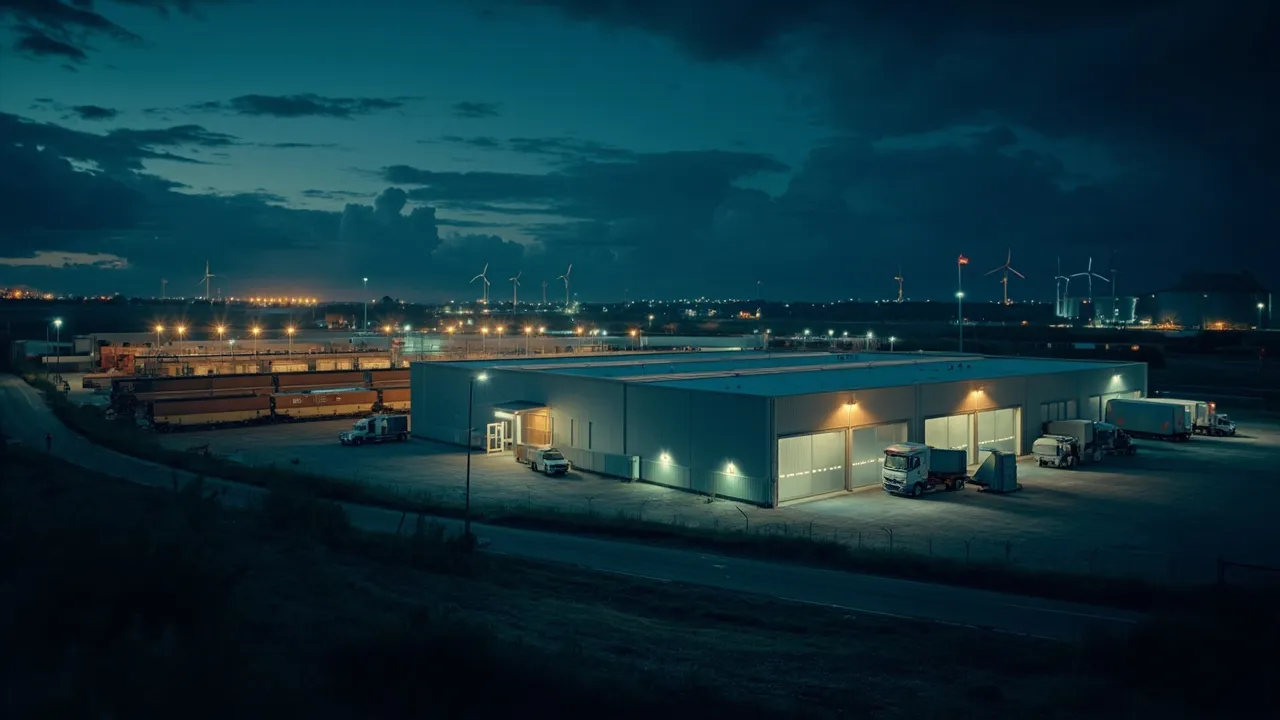
According to Supply Chain Dive, the Salisbury project will occupy 472,980 square feet, begin operating in early 2027, and create more than 200 jobs. The property has 84 dock doors and four drive-in doors.
North Carolina officials also point to 150 million consumers within a day's drive. That reach is strategically useful, but it should not be mistaken for an automatic one-day customer promise. Actual service depends on order cutoffs, pick completion, trailer departure, parcel induction, carrier capacity, and final-mile performance.
The new building joins owned distribution centers in Kansas and Pennsylvania, leased regional facilities in seven U.S. cities, and a West Coast distribution center launched in Phoenix in May. Its value therefore depends on how precisely the network assigns southeastern demand to Salisbury rather than simply adding another stocking point.
Store Replenishment and Parcels Are Different Products
Store freight is usually planned in cartons, pallets, routes, and delivery windows. Orders can be consolidated by destination, staged by trailer, and released on a schedule aligned with store receiving. A late carton may affect shelf availability, but the operation has opportunities to prioritize critical items within a larger replenishment wave.
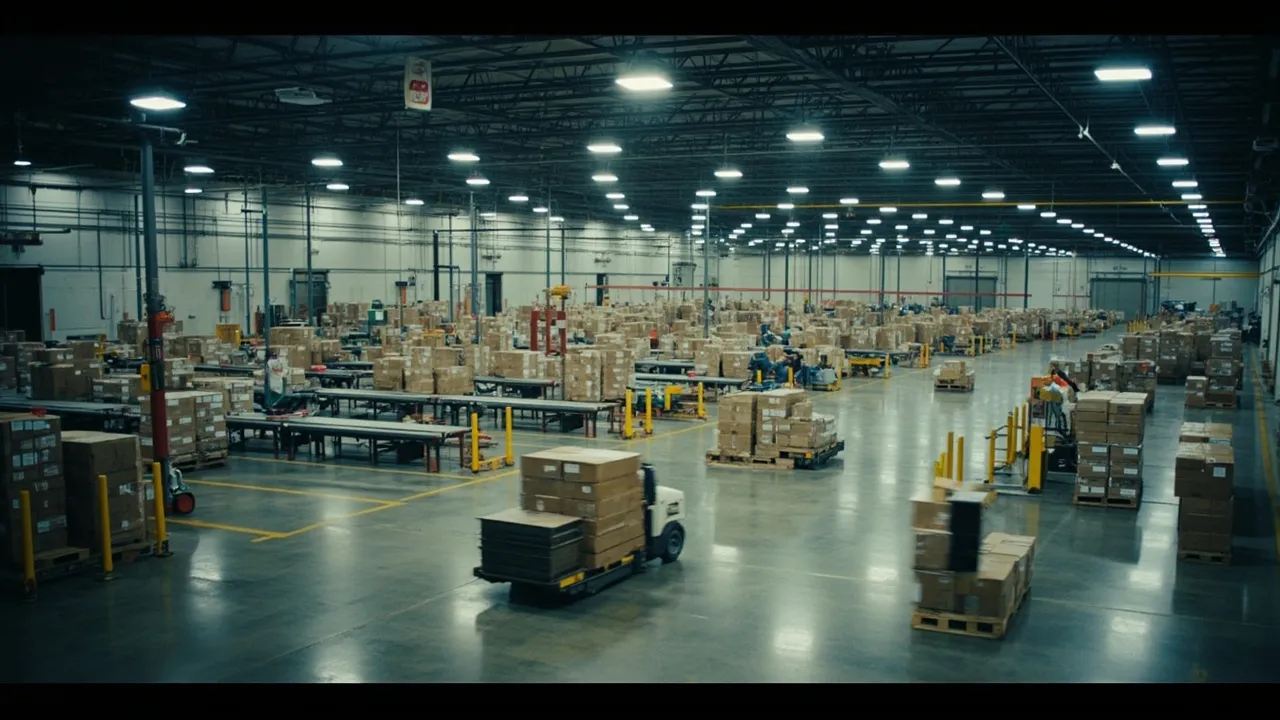
Direct-to-consumer fulfillment behaves differently. It has more orders, fewer units per order, later daily cutoffs, more packaging variation, and a direct connection to each shopper's delivery promise. Parcel carriers impose manifest, trailer-close, and induction deadlines that can turn a warehouse delay of minutes into a service failure of a day.
Those flows can share inventory and infrastructure, but they need distinct operating rules:
- Reserved inventory thresholds by channel, SKU, and location
- Separate order cutoffs and release waves
- Pick paths suited to case quantities versus individual units
- Packing capacity for parcel sizes and store-ready cartons
- Dock schedules aligned with parcel sweeps and store routes
- Exception queues that protect the most time-sensitive promises
Without those controls, a promotional parcel surge can consume units intended for stores, while a large replenishment wave can block sortation or labor needed for the evening parcel cutoff.
Model the Network Effects Before Moving Inventory
Salisbury should reduce outbound distance for many southeastern orders, but the full model must include inbound and transfer consequences. Inventory has to arrive at the new node, and duplicating stock across more buildings can increase working capital and markdown exposure.
For each SKU family, planners should compare four effects. First is parcel-zone exposure: what percentage of southeastern demand moves into a lower zone, and what does that save after residential, delivery-area, and peak surcharges? Second is store-route efficiency: do fuller, more direct loads replace transfers or fragmented deliveries? Third is inventory duplication: how much safety stock is added when demand is split across one more stocking location? Fourth is rebalancing: how often will the network need interfacility transfers when actual regional demand differs from the allocation forecast?
The calculation should use shipment and order history, not population radius alone. Fashion demand varies by market, season, promotion, size, and color. A building can sit closer to customers yet still ship from another region if the required inventory is unavailable in Salisbury.
Peak labor deserves the same scrutiny. More than 200 jobs establishes the planned scale, but the launch model needs hourly labor by process: receiving, putaway, replenishment, picking, packing, sortation, loading, and inventory control. Management should test a normal week, a product launch, a holiday peak, and simultaneous store and online promotions. The key question is where queues form when volume or staffing misses plan.
Use Launch Gates, Not a Calendar Date
The early-2027 target should define when readiness must be proven, not when untested volume must move. A phased ramp can start with limited SKUs, stores, ZIP codes, or order types and expand only when data clears specific gates.
Inventory accuracy is the first gate. System quantity, location, status, and channel availability must match physical stock. Inbound Logistics identifies inventory accuracy and order fill rate as core warehouse measures and recommends tracking receiving, putaway, order, and shipping performance rather than judging the operation through one aggregate number.
Order-cycle time is the second gate. Inbound Logistics defines it as the time from order placement through delivery and recommends separating procurement, inventory, and delivery cycles to expose bottlenecks. For Salisbury, the internal clock should be split further: order release to pick, pick to pack, pack to manifest, and manifest to carrier scan.
The remaining launch gates should include:
- Parcel induction: Orders tendered and accepted before each carrier cutoff, measured by service and destination zone.
- Store fill rate: Requested units shipped complete and on schedule, with substitutions and shortages visible by SKU.
- Order accuracy: Correct item, size, quantity, label, and destination for both channels.
- Inventory reconciliation: Variance by location and reason, with cycle-count corrections completed before broader volume moves.
- Exception recovery: Time to resolve shorts, damages, missed waves, label failures, and carrier rejections.
Targets should be sustained across several consecutive operating cycles. A single successful test day is not enough, particularly if it depends on excess staffing or manually expedited freight.
Make the New Node Earn Its Place
American Eagle's Salisbury investment has the physical scale and regional position to improve Southeast service. The disciplined move is to make every promised benefit measurable: fewer parcel zones, stronger store fill, faster order cycles, lower transfer volume, and controlled inventory growth.
That requires one view connecting order allocation, warehouse milestones, transportation plans, carrier cutoffs, and delivery events. CXTMS helps logistics teams coordinate those movements and detect exceptions before a missed handoff becomes a missed customer promise. Request a CXTMS demo to see how a new distribution node can be launched with measurable transportation and service controls.