CN’s New Shipper Access Deal Makes Rail Optionality a Contract-Data Problem

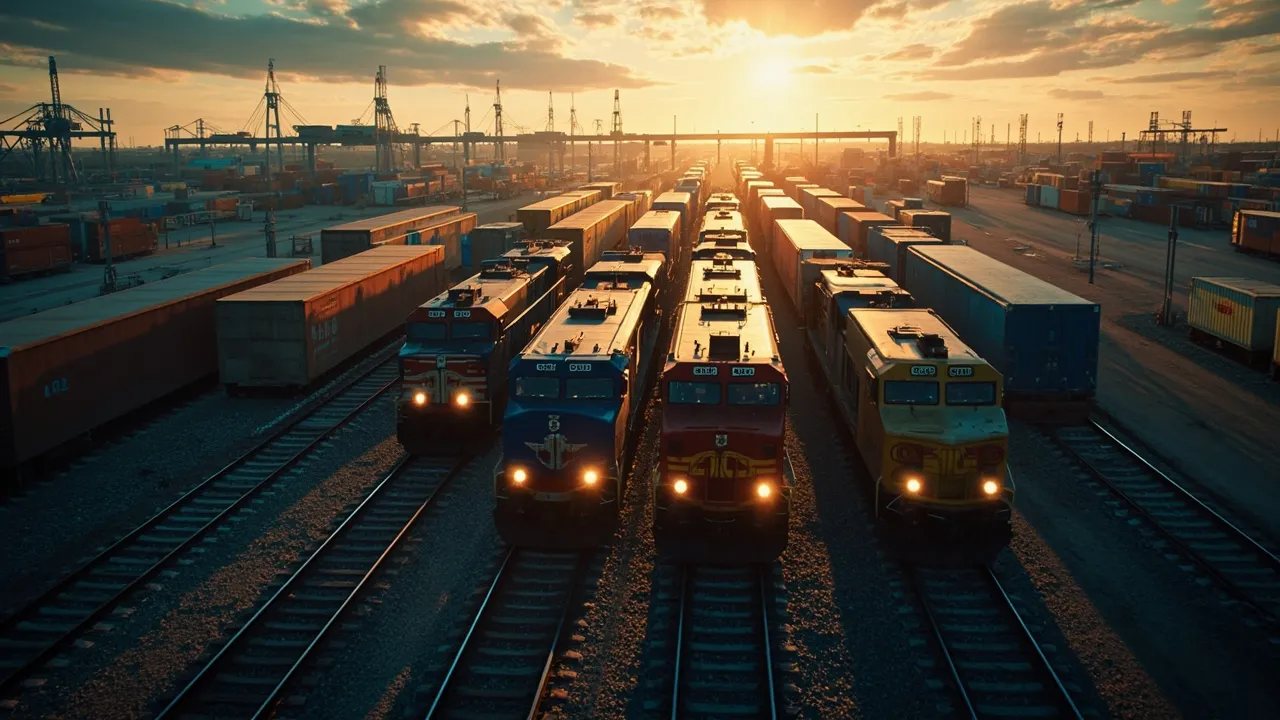
Canadian National’s new agreement with Union Pacific sounds like a straightforward expansion of rail competition. If the proposed Union Pacific–Norfolk Southern merger closes, CN could gain access to shipper facilities where the number of Class I options would otherwise fall from two to one or from three to two.
For shippers, however, access on paper is not the same as a usable transportation option.
The agreement turns rail optionality into a contract-data problem. A procurement team cannot value the new choice from a network map alone. It needs to know which facilities qualify, which lanes can actually be served, how interchange and equipment will work, and whether the resulting service can meet the plant’s operating requirements.
What the agreement actually changes
The arrangement is tied to a proposed $85 billion UP–NS transaction that would connect more than 50,000 route miles across 43 states and approximately 100 ports, according to Logistics Management. It remains contingent on Surface Transportation Board approval and the merger closing.
Its competitive-access provision is targeted rather than universal. CN would gain access to facilities whose Class I choices would be reduced from 2-to-1 or 3-to-2—but only where service is “commercially and operationally feasible.”
The deal also includes structural assets and rights that could make some options more practical. CN would acquire Norfolk Southern’s interests in the Kansas City Terminal Railway Company and the Terminal Railroad Association of St. Louis. It would receive overhead rights between Tuscola and East St. Louis, Illinois, rights to serve customers between St. Louis and Kansas City, and use of Union Pacific’s Neff Yard in Kansas City.
A separate UP–CN agreement adds more connectivity. Supply Chain Dive reports that UP would expand its operating rights over CN’s Elgin, Joliet and Eastern corridor around Chicago, while CN would gain rights over UP’s route between Memphis and Eagle Pass, Texas, supporting Canada–Mexico traffic.
Those provisions can improve network reach. They do not automatically create a competitive quote, a workable schedule, or reliable railcar supply for every shipper.
Contractual access is only the first gate
Rail service depends on a chain of operating conditions. A facility may technically become CN-accessible but still require an interchange, reciprocal switching, terminal handling, or a local service arrangement. Each handoff introduces cost, timing variability, and accountability questions.
Before treating the agreement as leverage in a bid, a shipper should resolve five issues:
- Eligibility: Is the specific facility covered by the 2-to-1 or 3-to-2 test, and how will access be documented?
- Route construction: Can CN provide single-line service, or will another railroad still perform part of the move?
- Physical feasibility: Are track capacity, siding length, clearances, loading windows, and terminal access adequate for the commodity and train type?
- Equipment: Who supplies railcars, how many are required, and what happens during seasonal peaks or prolonged cycle times?
- Commercial terms: Do rates include switching, interchange, demurrage, storage, fuel, and terminal charges?
The phrase “commercially and operationally feasible” matters because it can become the boundary between a contractual remedy and an executable service. Procurement teams should press for measurable definitions, response deadlines, escalation paths, and data-sharing obligations rather than assuming feasibility will be decided consistently.
Build the dataset before modeling savings
The basic unit of analysis should be the facility–origin–destination–commodity combination, not the corporate account. One plant may gain a meaningful second routing while another location under the same contract gains nothing.
For every candidate move, assemble:
- Origin and destination facility, serving carrier, junctions, and interchange points
- Commodity, car type, loading constraints, hazardous-material requirements, and annual volume
- Current rate, accessorials, minimum-volume commitments, and contract expiration
- Scheduled service days, cutoff times, transit target, and interchange dwell
- Empty-car supply, loaded and empty cycle time, fleet ownership, and utilization
- Actual variability, including median transit, 90th-percentile transit, missed switches, and terminal dwell
- Production impact, inventory carrying cost, stockout exposure, and recovery alternatives
This baseline is essential because a lower line-haul quote can be erased by one extra day of cycle time, more private cars, or higher demurrage exposure. It also prevents a shipper from comparing a proposed service promise with an unrealistically clean version of current performance.
A practical rail-optionality scorecard
Score each candidate route from 0 to 5 across four categories, then weight the result according to business priorities:
| Category | Suggested weight | What to test |
|---|---|---|
| Economics | 30% | All-in rate, accessorials, fleet cost, inventory cost |
| Reliability | 30% | Transit distribution, interchange dwell, recovery performance |
| Operability | 25% | Facility fit, switching windows, equipment and terminal capacity |
| Contract strength | 15% | Enforceable access, data rights, service commitments, remedies |
A new route should not qualify as a real option merely because it produces a favorable modeled rate. Require minimum thresholds for operability and reliability. A scorecard can also include a risk penalty for every additional interchange or terminal handoff.
Run three scenarios: expected performance, a peak-period case, and a disruption case. Measure savings against total delivered cost, not the transportation invoice alone. If an alternative requires more railcars, more safety stock, or greater plant schedule flexibility, those costs belong in the comparison.
Use the regulatory window to prepare—not speculate
The STB has not approved the merger, and the access framework may change before implementation. That uncertainty is a reason to improve the data now, not to book hypothetical savings.
Shippers can identify potentially affected facilities, preserve current service records, map contractual renewal dates, and define the operating evidence they will require from carriers. They should also establish a post-approval validation process: request a route design, obtain an all-in quote, test equipment availability, and run a controlled pilot before shifting committed volume.
The strategic value of the CN agreement is not simply another railroad name on a facility map. It is the possibility of a credible alternative backed by clear rights, executable operations, and comparable performance data.
CXTMS helps logistics teams centralize lane, contract, rate, and service-performance data so new transportation options can be evaluated against real operating outcomes. Request a CXTMS demo to build a decision-ready view of your freight network.