Humanoid Robots Enter the Warehouse: How Geekplus, Agility, and Toyota Are Deploying Bipedal Workers in Logistics

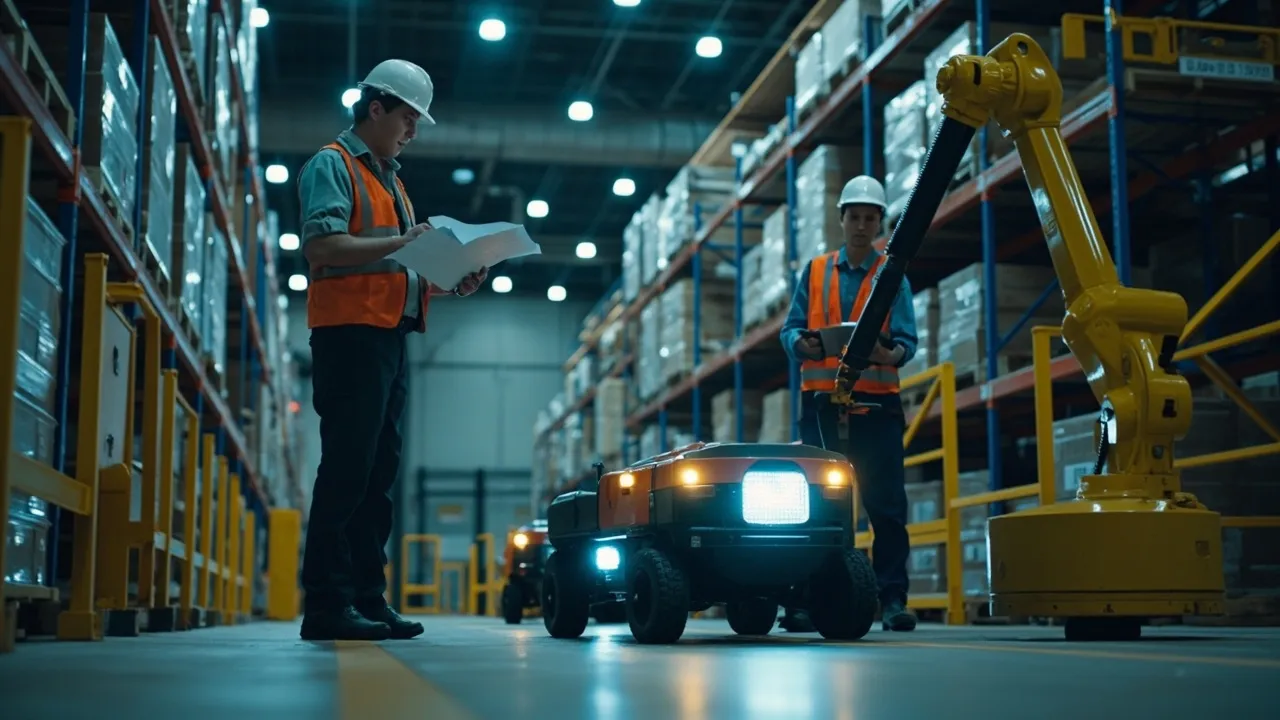
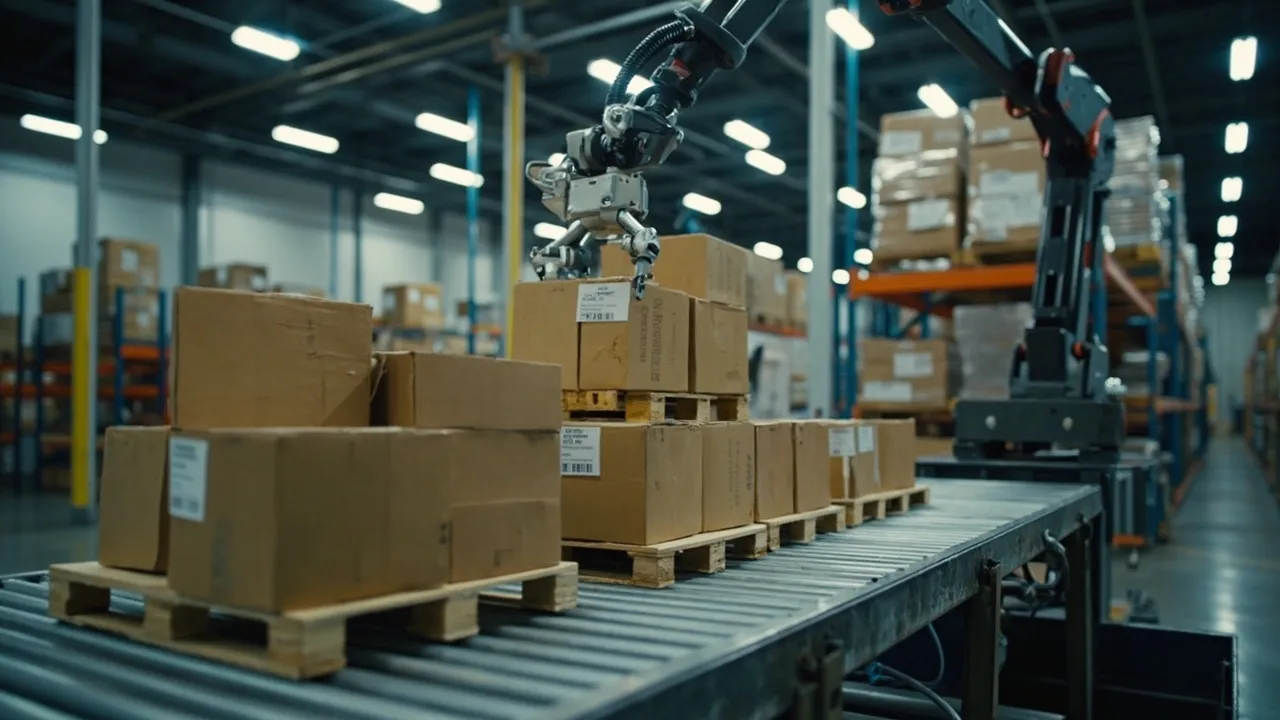
For years, warehouse automation meant AMRs rolling across concrete floors, robotic arms picking items from bins, and AGVs following magnetic strips between staging areas. The form factor was always purpose-built — wheeled, tracked, or mounted. Never bipedal. Never human-shaped.
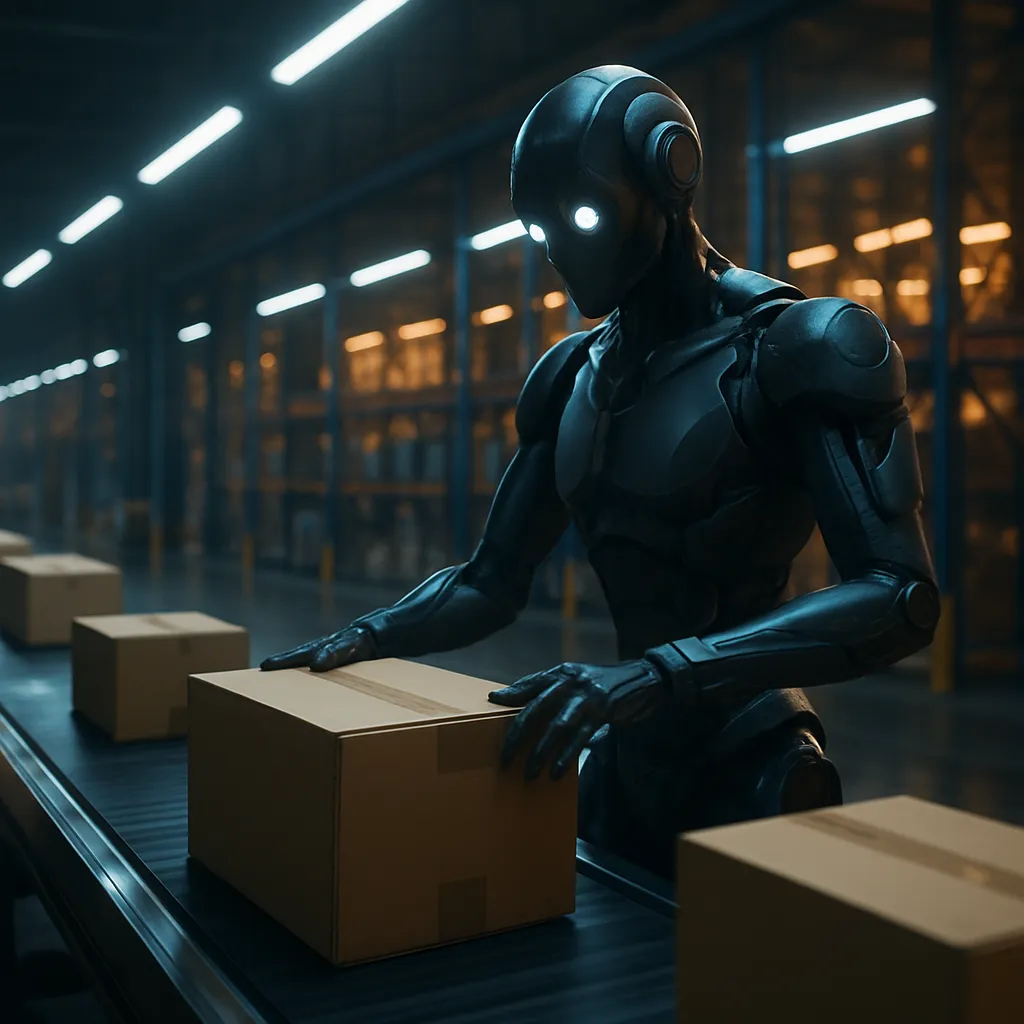
That changed in early 2026. Geekplus unveiled Gino 1, the world's first humanoid robot purpose-built for warehouse operations, at LogiMAT 2026 in Stuttgart. Weeks earlier, Toyota Motor Manufacturing Canada announced a commercial deployment of seven Agility Robotics Digit humanoids at its Woodstock, Ontario factory. And DC Velocity's 2026 warehouse automation trends report now positions humanoids as a distinct category alongside AMRs, cobots, and AS/RS systems.
The humanoid moment in logistics isn't a concept demo anymore. It's a deployment story — and it's moving faster than most supply chain leaders expected.
Geekplus Gino 1: Built for the Warehouse, Not the Lab
Most humanoid robots in development today — from Tesla's Optimus to Figure's 02 — are general-purpose machines designed to eventually work in many environments. Geekplus took the opposite approach. Gino 1 was designed from the ground up for warehouse logistics.
Powered by the company's proprietary "Geekplus Brain" embodied intelligence platform, Gino 1 is engineered to handle the specific challenges of intralogistics: navigating narrow aisle environments, manipulating irregularly shaped packages, and operating alongside existing Geekplus AMR fleets. The robot debuted at LogiMAT 2026 in March, where the company showed a video demonstration of Gino 1 performing tote handling and package placement tasks in a simulated warehouse environment.
What makes Gino 1 significant isn't just the bipedal form factor — it's the integration story. Geekplus is already the world's largest AMR manufacturer by deployment volume. Gino 1 isn't entering a greenfield market; it's being layered into an existing ecosystem of thousands of deployed mobile robots, managed through unified fleet orchestration software.
Toyota and Agility Digit: From Pilot to Payroll
While Geekplus showed what's coming, Toyota showed what's already working. After a year-long pilot project at its Woodstock West plant in Ontario — the facility that builds RAV4 and RAV4 Hybrid SUVs — Toyota Motor Manufacturing Canada moved seven Agility Digit humanoid robots from pilot status to commercial deployment.
The Digit robots handle a specific task: loading and unloading totes from automated tugger systems. It's a physically demanding, repetitive job that sits in the gap between what traditional AMRs can do (move things horizontally) and what fixed robotic arms can reach (structured pick positions). Tote handling from a moving tugger requires the kind of adaptive, bipedal mobility that wheeled robots simply can't replicate.
Toyota is deploying Digit through a robots-as-a-service (RaaS) model — a trend that DC Velocity's 2026 warehouse automation report identifies as one of the defining shifts in the industry. Instead of purchasing humanoids outright, manufacturers pay per-robot subscription fees that include maintenance, software updates, and scalability. This dramatically lowers the barrier to adoption and eliminates the capital expenditure risk that has historically slowed robotics adoption in logistics.
The Market Is Moving Fast — and Logistics Is the Proving Ground
The global humanoid robot market tells a story of explosive growth. MarketsandMarkets projects the market will grow from $2.92 billion in 2025 to $15.26 billion by 2030, a compound annual growth rate of 39.2%. Grand View Research offers a more conservative estimate of $4.04 billion by 2030, while ABI Research pegs it at $6.5 billion and forecasts a critical inflection point between 2026 and 2027 — the period when regulatory, safety, and ROI barriers are expected to be largely resolved.
Regardless of which forecast proves accurate, the directional signal is clear: billions of dollars are flowing into humanoid robotics, and logistics is one of the two primary commercialization pathways (alongside automotive manufacturing).
The expansion of warehouse robotics adoption beyond enterprise giants into mid-market operations further validates this trajectory. As Supply Chain Dive reports, growing robotics adoption is no longer limited to companies with massive automation budgets — smaller and mid-sized warehouses are increasingly deploying robotic solutions, creating a broader ecosystem that humanoids can eventually integrate into.
Cost Reality: Where Humanoids Fit in the Automation Stack
Today, an Agility Digit humanoid is estimated at approximately $250,000 per unit in active pilot programs. Compare that to a typical AMR at $25,000–$50,000, a collaborative robot arm at $30,000–$75,000, or a full AS/RS installation at $1 million or more.
On a pure unit-cost basis, humanoids are expensive. But the comparison isn't apples-to-apples. The value proposition of a humanoid isn't replacing an AMR or a cobot — it's filling the operational gaps that neither can address:
- Unstructured environments: Warehouses designed for human workers, with stairs, mixed-level shelving, and irregular floor layouts that wheeled robots can't navigate.
- Task versatility: A single humanoid can theoretically switch between tote handling, palletizing, inspection, and transport — tasks that would require three or four specialized robots.
- Brownfield deployment: Existing facilities that can't be retrofitted for fixed automation. A humanoid walks into the same space a human worker does, using the same doors, aisles, and workstations.
DC Velocity's 2026 report frames this precisely: humanoid robots are "increasingly positioned as a flexible automation solution where mixed and unpredictable tasks must be completed in facilities designed around human workers." They're not competing with AMRs. They're solving what AMRs can't.
The Integration Challenge: Fleet Orchestration Across Form Factors
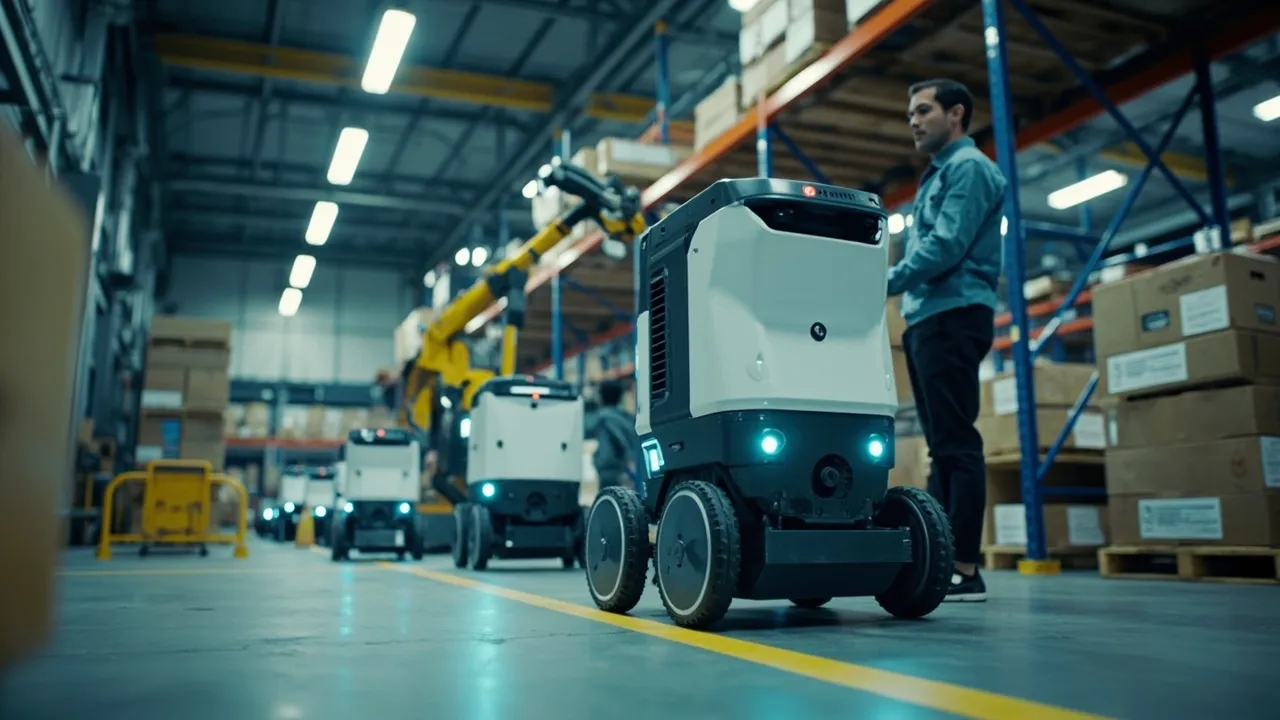
The real complexity isn't building a humanoid that can walk and grasp. It's orchestrating a mixed fleet — AMRs, cobots, humanoids, AGVs, and human workers — all operating in the same facility, coordinated through a single execution layer.
This is where warehouse execution systems (WES) and transportation management platforms become critical. A modern warehouse might deploy Geekplus AMRs for goods-to-person fulfillment, Agility Digit humanoids for unstructured tote handling, and robotic arms for sortation — all needing to share spatial awareness, task queues, and safety protocols.
Platforms like CXTMS are evolving to support this multi-robot orchestration reality, integrating fleet management data from heterogeneous automation systems into unified visibility dashboards. As humanoids move from pilot deployments to commercial scale, the ability to coordinate bipedal robots alongside wheeled and stationary automation — and alongside human workers — will become a core capability requirement for any TMS or WES platform.
Timeline: When Humanoid Warehouse Workers Become Commercially Viable at Scale
Based on current deployment trajectories and market forecasts, here's a realistic timeline:
- 2026–2027: Pilot-to-commercial transitions at major manufacturers (Toyota, Amazon, GXO). Humanoids handle 2–3 specific tasks per deployment. RaaS models dominate.
- 2028–2029: Mid-market logistics providers begin humanoid adoption. Multi-task capability improves. Fleet sizes reach 20–50 units per facility.
- 2030+: Humanoids become a standard category in warehouse automation RFPs. Cost per unit drops below $100,000. Mixed-fleet orchestration is table stakes.
ABI Research's projected inflection point of 2026–2027 aligns with what we're seeing on the ground. Toyota's Digit deployment isn't an experiment — it's a commercial contract. Geekplus isn't showing a concept — it's extending an existing platform. The infrastructure for humanoid logistics is being built right now.
What This Means for Your Warehouse Strategy
You don't need to deploy a humanoid robot tomorrow. But you do need to start planning for a warehouse automation landscape where bipedal workers are part of the fleet — and where your technology platforms can accommodate them.
If your current TMS or WES can't integrate data from multiple robot types, you're building a bottleneck that will cost you in 18–24 months. If your facility design assumes only wheeled automation, you're limiting your options in a market that's moving toward form-factor diversity.
Ready to future-proof your warehouse automation strategy? Request a CXTMS demo to see how our platform integrates multi-robot fleet management, automation visibility, and transportation optimization into a single pane of glass — so you're ready for the humanoid era, and everything that comes with it.