Delaware's $669 Million Container Terminal: Planning the Inland Network Before the Berth Opens

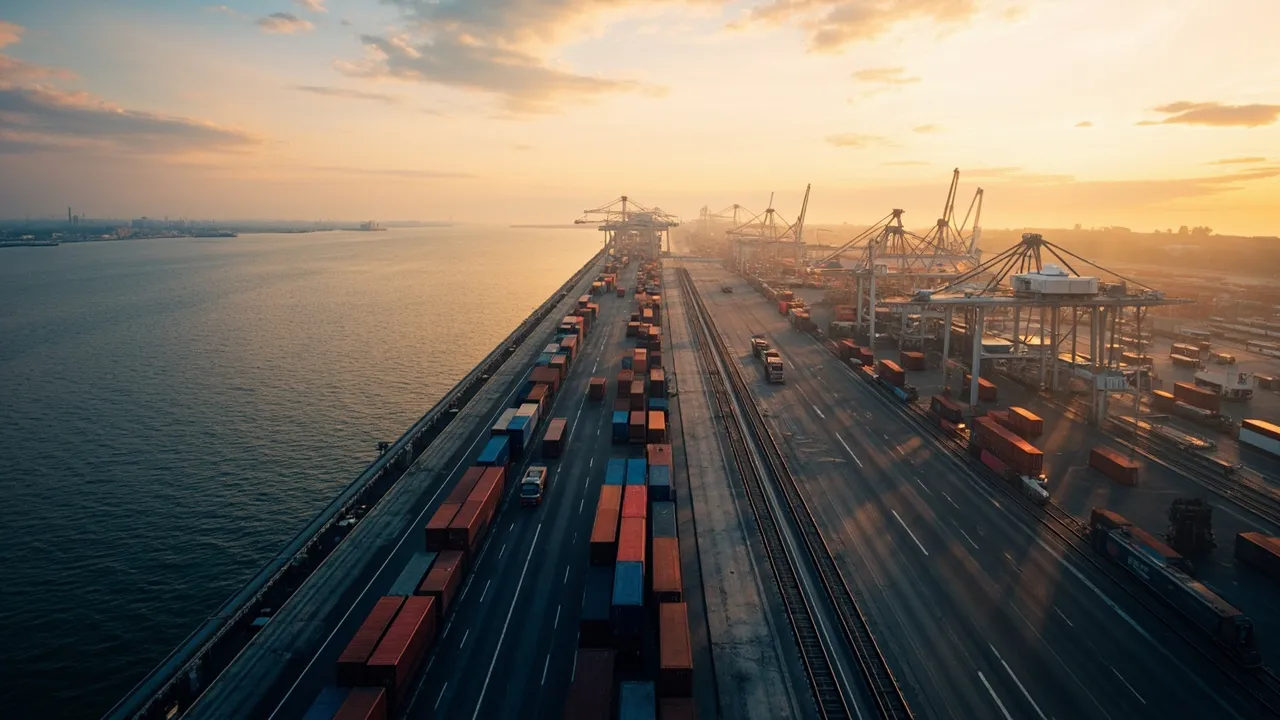
Delaware has broken ground on a container terminal designed to reshape its place in East Coast trade. But for shippers, a new berth is not automatically a new supply chain option. The real test begins after a container crosses the quay.
The $669 million Delaware Container Terminal at Edgemoor is being developed on 137 acres north of Wilmington. According to FreightWaves, the facility is ultimately planned for 1.2 million twenty-foot-equivalent units (TEUs) of annual capacity. Initial operations are expected to reach roughly 40% of that figure before more cranes, yard equipment, and backland infrastructure are added.
That phased opening creates a useful planning window. Importers, exporters, carriers, and forwarders should use it to qualify the entire inland network—not merely compare ocean schedules and terminal handling charges.
Berth capacity is only the first constraint
A port can unload a vessel quickly and still produce slow, expensive freight. Containers must move through customs, secure a chassis, obtain a truck appointment, clear the gate, and reach a warehouse or rail ramp. If any one of those resources is undersized, congestion shifts from ship-side to yard-side.
At ultimate capacity, 1.2 million TEUs averages nearly 3,300 TEUs per calendar day. Actual demand will arrive in waves around vessel calls, making peak requirements substantially higher. Even the initial 40% operating level implies about 480,000 TEUs annually. That is enough volume to strain local drayage capacity or warehouse receiving schedules if stakeholders treat Edgemoor as a simple substitute for an established gateway.
The industry already knows which variables matter. Logistics Management's coverage of port and rail-ramp conditions tracks terminal operations, chassis availability, container storage, transload capacity, outbound capacity, and rail-ramp congestion. Those measures should form the scorecard for any Edgemoor routing decision.
Five dependencies shippers should qualify
1. Drayage supply and operating radius. A published carrier count is not enough. Shippers need committed daily turns by shift, weekend availability, hazmat or overweight capability where relevant, and contingency coverage. They should also model how bridge traffic, appointment windows, and empty-container returns affect the number of productive moves per truck.
2. Chassis access. Confirm whether ocean-carrier, pool, or motor-carrier chassis will support the lane. Identify pickup and return locations, split-move exposure, maintenance response, and peak-day inventory. A box sitting in the terminal because the correct chassis is unavailable is capacity on paper, not capacity in practice.
3. Rail connectivity. Rail can extend the gateway's reach beyond economical drayage distance, but only if service details work. Shippers should validate train frequency, cutoff times, interchange points, available destinations, lift capacity, and last-mile arrangements at the inland ramp. Transit promises should be measured gate-to-ramp and ramp-to-consignee, not just terminal-to-terminal.
4. Warehouse and transload capacity. A distribution center needs dock appointments, labor, floor space, and inventory-system capacity aligned with vessel-driven surges. Beneficial cargo owners should reserve transload slots and define overflow nodes before allocating meaningful volume. The cheapest warehouse rate becomes irrelevant when the building cannot receive the boxes before demurrage begins.
5. Customs and inspection workflows. New routing changes the operational path for entry filing, holds, exams, bonded moves, agriculture review, and release communication. Brokers need location-specific procedures and escalation contacts. Teams should test whether release status flows automatically into the transportation management system and whether holds stop dispatch before a driver makes an unproductive trip.
Use milestone-based allocation gates
The safest approach is not to wait for perfect maturity. It is to increase allocations only when evidence supports the next step.
Gate 1: Network validation. Before booking, document ocean services, commodity eligibility, customs workflows, drayage providers, chassis sources, rail options, and receiving locations. Price the entire door move, including storage, detention, repositioning, and recovery scenarios.
Gate 2: Controlled pilot. Route a small, representative shipment set through the terminal. Include more than easy freight: test a time-sensitive load, a customs hold, an appointment change, and an empty return. Measure availability-to-gate-out time, total dwell, driver turn time, appointment success, and exception resolution.
Gate 3: Repeatability. Increase volume only after performance remains within tolerance across several vessel calls. One smooth week does not prove that chassis, labor, or warehouse capacity can handle a peak.
Gate 4: Seasonal stress. Validate the network during a demand surge or through a tabletop exercise that simulates bunching, weather disruption, equipment shortages, and missed rail cutoffs. Pre-negotiate overflow yards and alternative gateways.
Gate 5: Strategic allocation. Assign steady share only when cost, reliability, and recovery time compare favorably with incumbent ports. Maintain routing flexibility rather than concentrating every shipment at the newest or lowest-quoted option.
Manage the gateway as a connected system
The most important Edgemoor metric will not be maximum crane productivity. It will be end-to-end velocity: how reliably cargo moves from vessel discharge to its next productive node.
A transportation management system should connect bookings, terminal milestones, customs release, appointments, drayage dispatch, rail handoffs, and warehouse receiving. Exception rules can flag containers approaching free-time limits, appointments without released freight, or loads lacking confirmed chassis capacity. A shared operational view also makes it easier to compare Edgemoor against other gateways using the same door-to-door measures.
Delaware's investment could create a valuable alternative in a dense East Coast market. Shippers that qualify the inland network early will be positioned to capture that value. Those that focus only on the berth risk discovering that congestion has not disappeared—it has merely moved inland.
Ready to evaluate new gateway options with end-to-end control? Request a CXTMS demo to see how unified planning, milestone visibility, and exception management can support your port-routing strategy.