CPKC and CSX’s Southeast-Mexico Rail Route Is a Nearshoring Test for Intermodal Execution

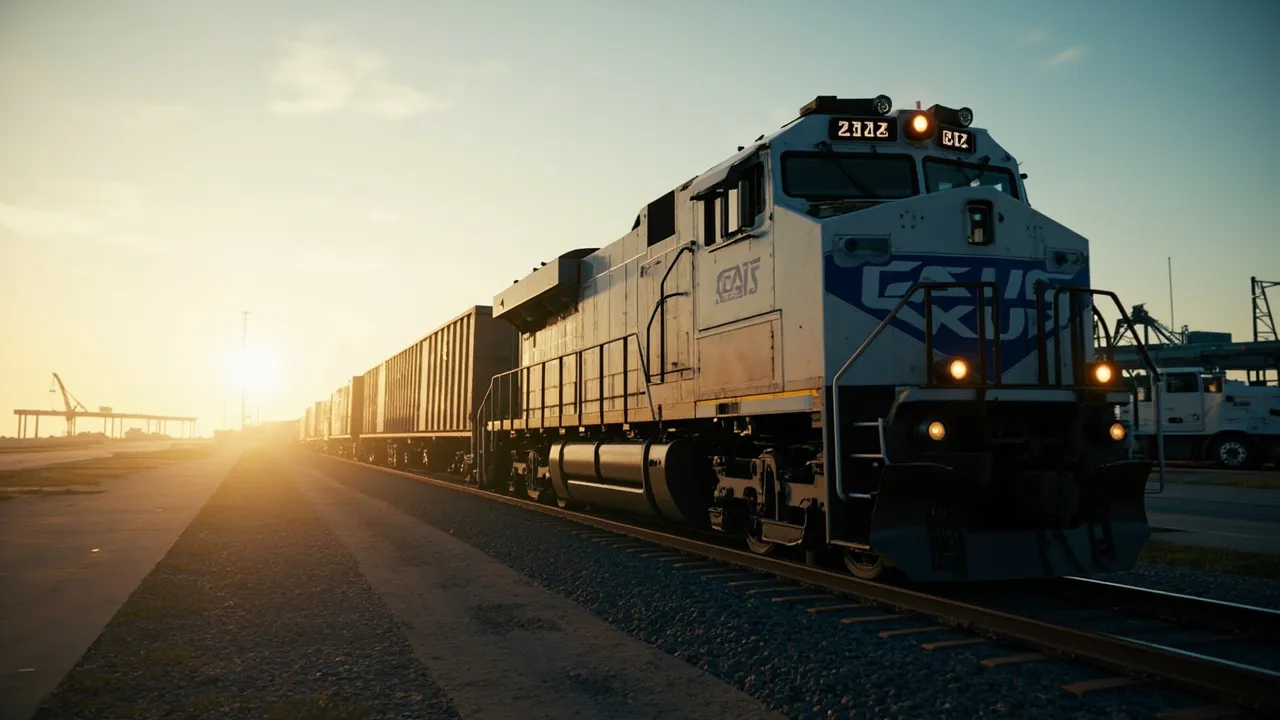
CPKC and CSX are trying to make a practical point about nearshoring: regional manufacturing only works if freight can move across North America with truck-like discipline and rail-level economics.
The two railroads launched an improved Southeast Mexico Express service connecting Mexico, Texas, and the U.S. Southeast, according to Supply Chain Dive. The headline number is hard to ignore. The railroads say infrastructure upgrades reduce transit times by roughly 20% to 45%, including one-day-faster service between Atlanta and Dallas and about two-and-a-half days faster service between Atlanta and central Mexico.
That is not just a railroad product update. It is a test of whether North American supply chains can convert nearshoring enthusiasm into repeatable transportation execution.
Nearshoring needs more than geography
Mexico is close to the U.S. market, deeply tied to automotive and industrial supply chains, and supported by the United States-Mexico-Canada Agreement. But distance alone does not solve logistics. A supplier in Mexico is only strategically closer if the freight path is predictable. If cross-border moves still depend on fragmented drayage, opaque interchange timing, customs delays, and manual exception chasing, the shipper has traded ocean volatility for land-border volatility.
The improved CPKC-CSX route matters because it targets exactly that problem. Supply Chain Dive reported that the service adds origins and destinations including Charlotte, Jacksonville, and Central Florida, with improvements to tracks, bridges, and signal infrastructure across Georgia, Alabama, Mississippi, Louisiana, and Texas. In other words, this is not merely a marketing lane between two major hubs. It is an attempt to make rail more useful to actual shipper networks in the Southeast.
Speed is only one part of the value proposition
The new service is being positioned as faster and more consistent. That matters because rail has always had a difficult sales pitch against trucking on cross-border freight. Intermodal can be cheaper and more sustainable, but many shippers default to truckload when the shipment is urgent, the handoffs are complex, or the cost of a missed appointment is high.
The service improvements directly attack that hesitation. Supply Chain Dive noted that the route offers three-day service from Monterrey to Atlanta and four-day service from central Mexico to Atlanta. The report also cited the railroads’ claim that each train can replace up to 300 semi-trucks, creating both capacity and emissions benefits.
Those numbers are useful, but they are not enough by themselves. A shipper does not buy average transit time. It buys confidence that production parts, finished goods, and replenishment inventory will arrive in the right delivery window.
That means transportation teams should evaluate the route against operational questions, not just published transit claims:
- Can the shipper see container status before the load becomes late?
- Are interchange events visible soon enough to protect downstream appointments?
- Are customs documents complete before the freight reaches the border?
- Is drayage capacity reserved on both ends, or negotiated after arrival?
- Are exceptions routed to the right person with enough context to act?
If the answer is no, the faster rail line still leaves too much risk in the white space between systems.
USMCA uncertainty raises the stakes
The timing also matters because North American trade rules are entering a sensitive period. Supply Chain Brain reported that the USMCA requires the U.S., Mexico, and Canada to decide by July 1, 2026 whether to extend the agreement for another 16 years. If any party objects, the pact moves into annual reviews, with a final expiration date in 2036.
Industry groups are pushing for renewal because uncertainty around rules of origin, technical standards, and trilateral trade structure can directly affect sourcing decisions. Supply Chain Brain noted that Mexico and Canada account for more than 40% of U.S. electrical-sector exports, and Mexico is the United States’ largest import partner for that sector.
For logistics teams, that uncertainty creates a planning paradox. Companies want to regionalize supply chains, but the commercial rules supporting that regionalization may become more contested. That makes transportation flexibility more valuable. A reliable Southeast-Mexico rail option gives shippers another lever if tariffs, classification rules, border documentation, or supplier footprints shift.
But nearshoring freight is not just freight. It carries country-of-origin claims, customs entries, supplier documentation, broker coordination, and audit exposure. A cross-border rail move that cannot connect shipment execution to documentation status will create problems long before arrival.
The handoff problem is where savings disappear
The biggest risk in cross-border intermodal is rarely the linehaul rail move alone. It is the handoff chain.
A shipment might leave the plant on time, miss a drayage cutoff, sit at origin longer than expected, clear the border slower than planned, arrive at the destination ramp without a confirmed pickup, then miss a receiver appointment. Together, those small failures can wipe out the cost advantage that justified the mode shift.
That is why shippers should treat the CPKC-CSX improvement as a process redesign opportunity, not just a new carrier option. Before moving freight from truckload to rail, teams should map every event from supplier release to final delivery: origin appointment, container availability, border documentation, interchange, ramp arrival, drayage dispatch, receiver appointment, detention risk, and proof of delivery.
Then they should define exception rules. If documentation is missing 24 hours before departure, who owns it? If interchange is delayed beyond the planned window, does the system warn the destination drayage provider? If a container arrives early, can the appointment be pulled forward? If a high-priority load risks missing production, when does the team authorize an expedited truck recovery?
Those decisions should not live in inboxes and spreadsheets. They belong in the transportation operating system.
Rail can move nearshoring beyond trucking dependency
The promise of North American regionalization is not that every shipment becomes easier. It is that supply chains gain more usable options. Cross-border truckload will remain essential, especially for urgent, high-touch, or low-volume moves. But if improved rail service can deliver reliable transit windows from Mexico into the Southeast, shippers get a powerful tool for balancing cost, capacity, and resilience.
That is the real significance of the CPKC-CSX route. It gives logistics teams a concrete way to test whether nearshoring can scale without simply pushing more freight onto highways. The winners will not be the teams that read the service announcement and switch modes blindly. The winners will be the teams that build the visibility, documentation discipline, and exception workflows needed to make the route dependable.
CXTMS helps freight forwarders and logistics teams manage exactly that operating layer: multimodal shipment visibility, cross-border documentation checkpoints, appointment coordination, and exception workflows that keep rail, drayage, and customer commitments aligned.
If your nearshoring strategy still depends on manual status checks and heroic dispatching, the network is not ready. Schedule a CXTMS demo to see how cross-border intermodal execution can become a managed workflow instead of a daily fire drill.