The USMCA Review Is Becoming a China-in-Mexico Freight Test

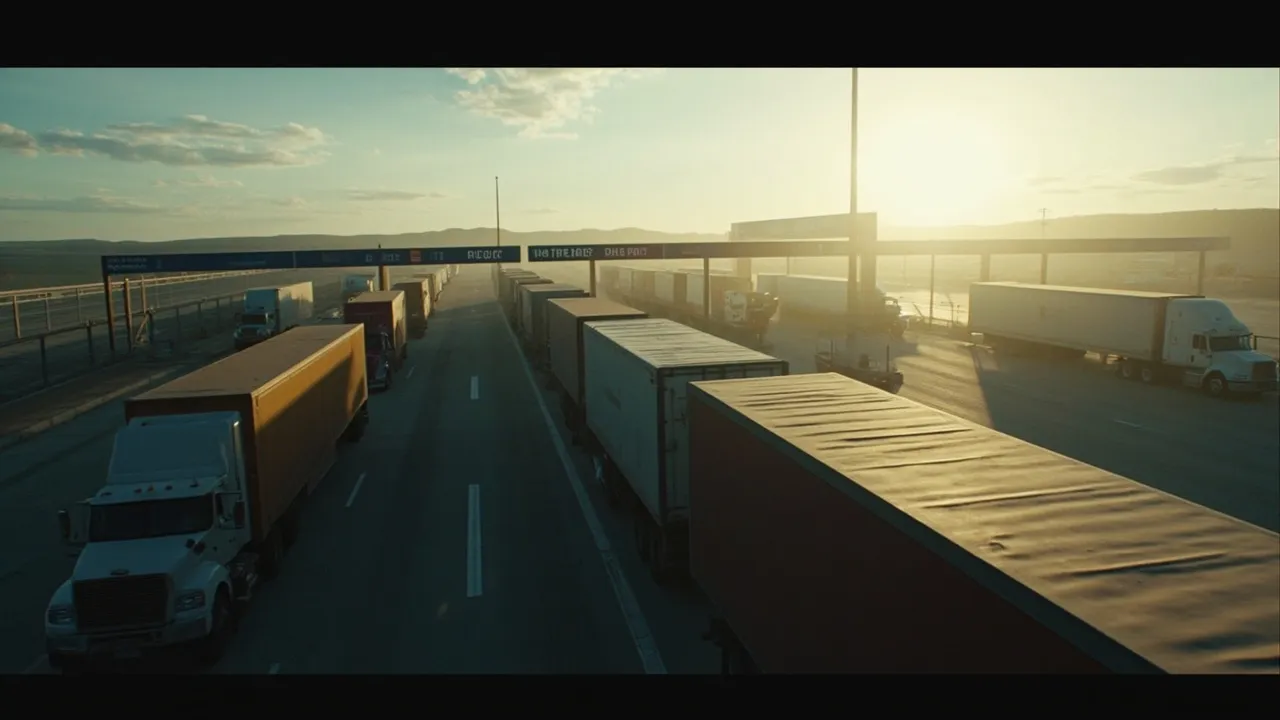
The 2026 USMCA review is no longer just a trade-policy calendar item. It is becoming a practical test of how well North American freight networks can prove where goods are made, who made them, and whether they truly qualify for preferential treatment.
The pressure point is China-in-Mexico manufacturing. As FreightWaves reported, Chinese companies have expanded manufacturing activity in Mexico since the U.S.-China trade war and the post-COVID push for nearshoring. Official data cited in the article shows Mexico received about $2.3 billion in net Chinese foreign direct investment from 2017 to 2024, while private estimates suggest the real figure may be several times higher because some investment moves through offshore entities and greenfield structures.
That does not automatically mean abuse. Many companies are building real Mexican operations, hiring local labor, buying local inputs, and trying to comply with USMCA rules of origin. But it does mean cross-border freight is entering a more skeptical enforcement environment. A shipment that looks routine at the dock door may now trigger questions about origin qualification, supplier identity, tariff exposure, component sourcing, and whether Mexico is being used as a genuine production base or a tariff workaround.
Nearshoring is changing the geography of risk
For years, the nearshoring story was mostly framed as a resilience win: move production closer to U.S. demand, reduce ocean dependency, shorten lead times, and build more flexible North American supply chains. That logic still holds. Mexico remains one of the most compelling manufacturing locations for companies serving the U.S. market.
But the risk profile has changed. The same proximity that makes Mexico attractive also puts it directly inside U.S. trade enforcement debates. The question is not simply whether goods move from Mexico to the United States. It is whether those goods satisfy the rules that allow them to move duty-free or at preferential rates under USMCA.
Reuters captured the policy mood in April when U.S. Trade Representative Jamieson Greer said rules of origin would be a focus of Mexico trade talks. He argued that tougher rules are needed to avoid “transshipment through Mexico,” referring to exporters routing goods through a lower-tariff country to avoid higher U.S. duties. Reuters also noted that qualifying Mexican goods currently enter the United States duty-free under USMCA, making compliance with origin rules commercially critical.
That is the freight angle: preferential treatment is not a static label. It is a claim that has to be supported with data.
Documentation is becoming operational evidence
Cross-border teams should expect documentation requirements to get more serious, even if the USMCA review produces tweaks rather than a full rewrite. FreightWaves cited expectations that the agreement will survive, but with meaningful adjustments around rules of origin and enforcement. For logistics operators, that means the paperwork behind a shipment becomes as important as the physical move.
Four documentation risks matter most.
First, origin qualification needs to be defensible. It is not enough to know that final assembly occurred in Mexico. Shippers need evidence of regional value content, component origin, transformation steps, and supplier declarations when applicable.
Second, supplier identity needs to be clean. If a Chinese supplier reappears as a Mexican entity, that may be perfectly legitimate — but freight forwarders and importers need records showing the legal entity, facility location, production activity, and commercial relationship. Vague vendor names and reused purchase-order templates will not age well under scrutiny.
Third, tariff exposure has to be modeled before booking. A shipment that fails origin qualification can move from expected duty-free treatment to a materially different landed cost. That affects quoting, margin, customer pricing, and whether the chosen transportation mode still makes sense.
Fourth, transshipment concerns require chain-of-custody discipline. Border agencies are increasingly alert to goods that receive only minimal processing before crossing into the United States. Forwarders need milestone data, commercial invoices, packing lists, certificates, production records, and shipment histories that tell a coherent story.
Manufacturing strategy is pulling freight teams into compliance
Deloitte’s 2026 manufacturing outlook argues that supply chain complexity is likely to keep increasing and that manufacturers are investing in digital tools to evaluate trade routes, identify risk, find cost savings, and perform scenario modeling. Deloitte also points to technology that can monitor trade-policy disruption, quantify financial and operational impacts, recommend alternative suppliers, and initiate mitigation steps with human approval.
That is exactly the capability gap many cross-border operations now face. Manufacturing teams may decide to add Mexican capacity for tariff resilience. Procurement may approve a new supplier. Sales may promise faster U.S. delivery. But unless freight and compliance teams are connected early, the shipment execution layer inherits all the risk at the border.
This is where forwarders can create real value. The strongest forwarders will not merely book the truck from Monterrey to Laredo or arrange the customs handoff. They will help shippers build a repeatable workflow that connects sourcing decisions to freight execution:
- Capture supplier origin data before the first purchase order ships.
- Link HS codes, certificates of origin, and rules-of-origin logic to customer and SKU records.
- Flag lanes or vendors with elevated China-origin exposure.
- Store documentation at the shipment level, not in scattered email threads.
- Route exceptions to compliance teams before freight reaches the border.
- Compare landed-cost scenarios when origin eligibility changes.
That workflow turns compliance from a last-minute document chase into a standard operating procedure.
The 2026 review is a routing event
The USMCA review formally sits in the policy world. Operationally, it is a routing event. If enforcement tightens, some freight will still move exactly as planned. Some will require more documentation. Some will shift through different suppliers, modes, brokers, or border crossings. Some may no longer qualify for the economics that justified nearshoring in the first place.
That makes scenario planning essential. Cross-border shippers should identify which products depend most heavily on USMCA treatment, which suppliers have Chinese ownership or high Chinese input content, which lanes have the least buffer for customs delay, and which customers would be most affected by landed-cost changes.
The point is not to avoid Mexico. That would be the wrong lesson. Mexico remains central to North American manufacturing resilience. The point is to make Mexico-based supply chains defensible. In 2026, a clean route will not just be the fastest or cheapest route. It will be the route backed by data strong enough to survive review.
Build the compliance layer before enforcement gets stricter
The companies that wait for final USMCA language will be late. Origin data, supplier records, routing rules, customs documents, and exception workflows take time to clean up. The better move is to build the compliance layer now, while freight teams still have room to test processes before peak disruption.
CXTMS helps logistics teams manage cross-border execution with shipment visibility, document control, exception workflows, and the operational discipline needed when trade rules change faster than freight networks. If your North American lanes need stronger compliance and routing control, schedule a CXTMS demo and build the workflow before the border asks for proof.