Cold Chain Co-Loading Works Only When Customer Custody Stays Visible

Cold chain networks often carry complexity that customers never intended to buy. Two food brands may serve the same retail locations from separate warehouses, on separate trucks, through separate delivery appointments. The products stay organizationally tidy, but the network pays for duplicated storage, low-density routes and repeated stops.
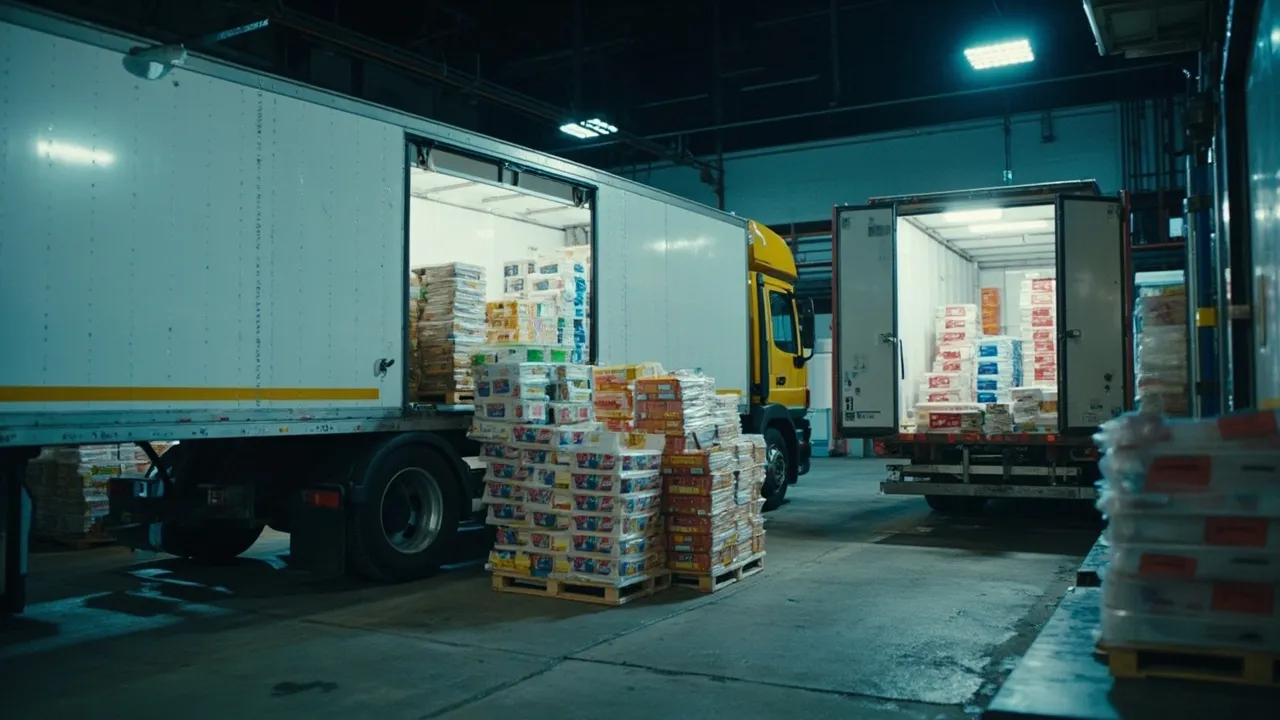
Co-loading offers a cleaner physical model: independently owned products share warehouse capacity, order-building activity, vehicles and delivery points. Food Logistics recently highlighted this approach in a manufacturer case where branded products joined an existing storage and distribution stream. The lesson is compelling, but it comes with a condition: combining the movement cannot combine the custody record.
That distinction matters in a sector where small data gaps can become expensive product losses. Inbound Logistics reports that improved refrigeration could prevent nearly half of the 1.3 billion tons of food wasted globally each year. Co-loading can improve asset use, but it must preserve the evidence needed to protect each customer's inventory.
Shared Capacity Can Remove Four Layers of Waste
The value of co-loading is not limited to putting two shippers' pallets on one trailer. It can remove duplication at four connected points.
First, shared storage reduces the need to reserve separate temperature-controlled space for compatible products. Second, combined order building lets a facility assemble fuller outbound loads. Third, route density improves when multiple brands serve overlapping stores, restaurants or distributors. Fourth, the receiving location gets fewer appointments and touches.
The arithmetic is straightforward. If two brands each send a half-full refrigerated truck to the same five customers, a compatible consolidated route can theoretically replace two vehicle departures with one. Real networks will not achieve that perfect ratio because temperature bands, delivery windows, axle limits and handling rules intervene. Even so, increasing average trailer utilization from 50% to 75% would move the same volume with roughly one-third fewer trips.
Warehouse handling can improve as well. Inbound Logistics describes an automated cold-storage unloading system that cuts trailer unloading from about 30 minutes to less than four. That specific result comes from automation, but it illustrates the wider point: once products enter a coordinated flow, better dock sequencing and fewer fragmented arrivals can multiply the benefit of faster handling.
Combine the Flow, Not the Inventory Identity
The operational mistake is to treat co-loaded goods as one undifferentiated pool. Every pallet, case or handling unit must retain attributes that answer five questions:
- Lot: Which production lot and expiration date does the product carry?
- Owner: Which customer or brand owns it at this moment?
- Temperature: What range applies, and what readings prove compliance?
- Shelf life: How much usable life remains, and which allocation rule applies?
- Delivery: Which order, stop and consignee must receive it?
Those attributes should follow the handling unit through receiving, putaway, picking, staging, loading and delivery. A scan that records only an internal pallet ID is insufficient if employees cannot resolve it immediately to owner, lot and shipment.
Temperature identity deserves particular attention. A shared refrigerated trailer can contain products with different acceptable bands, even when all are loosely described as chilled. Inbound Logistics notes that multi-cell trailers use insulated partitions to carry frozen and chilled goods together. That expands consolidation options, but it also makes zone assignment part of the custody record. The system must know not simply that a pallet was on trailer 214, but that it occupied the correct compartment throughout the trip.
Shelf Life Must Drive Allocation
Ordinary inventory systems often prioritize first-in, first-out. Perishable distribution needs a stronger rule: first-expiry, first-out, constrained by the customer's remaining shelf-life requirement.
A yogurt pallet with 18 days remaining may be acceptable for a nearby foodservice customer but fail a retailer's requirement for 21 days at receipt. Co-loading increases the number of allocation choices inside one facility, which is useful only if the warehouse management system blocks the wrong choice.
Modern cold-chain systems can track every pallet, case and temperature zone while connecting barcode and sensor data to warehouse and transportation platforms. That joined record should validate expiration, customer minimum life, route duration and planned delivery date before loading. The same check should run again when a delay changes the estimated arrival.
Claims and Recalls Need Precise Boundaries
Shared movement changes the investigation question from “What happened to this truck?” to “Which owner's units were affected, during which interval, and under whose control?”
For shortages, the system should compare scanned loading quantity, compartment assignment, seal events and proof-of-delivery quantity by owner and order. For temperature claims, it should connect sensor readings to the correct zone and handling units rather than rejecting an entire mixed load because one compartment experienced an excursion.
Recall readiness is equally important. The operator must be able to isolate a specific lot across inventory on hand, loaded vehicles, completed deliveries and customer locations without freezing unrelated products that happened to share space. Complete visibility and traceability are essential during recalls, as Inbound Logistics has emphasized in its coverage of temperature-controlled logistics.
Contracts should mirror the data. The co-loading agreement needs explicit rules for when custody transfers, who reviews excursions, how concealed damage is documented, which party owns salvage decisions and what evidence controls a claim. Technology cannot resolve an ambiguity the commercial agreement created.
Proof of Delivery Must Remain Customer-Specific
A single stop can include several brands and purchase orders. One signature for the vehicle is not enough. Proof of delivery should capture the consignee, order, owner, handling-unit IDs, delivered quantity, exceptions, timestamp and—where required—temperature status.
If the receiver rejects three cases from one brand, the exception should not contaminate the delivery status of every product on the truck. Drivers need a workflow that records partial acceptance and reason codes at line level without creating a paperwork marathon at the dock.
The best co-loading design therefore makes the physical operation simpler while making the digital chain of custody more precise. Shared trucks and shared buildings create value. Shared ambiguity destroys it.
Make Consolidation Executable in CXTMS
CXTMS helps logistics teams coordinate orders, handling requirements, shipment events and delivery evidence in one transportation workflow. That foundation makes it easier to consolidate compatible freight while preserving the customer-specific controls needed for cold chain execution.
Request a CXTMS demo to see how clearer shipment visibility can support denser routes without losing custody accountability.