Food-Plant Industrial Intelligence Must Join Maintenance Risk to Compliance Data

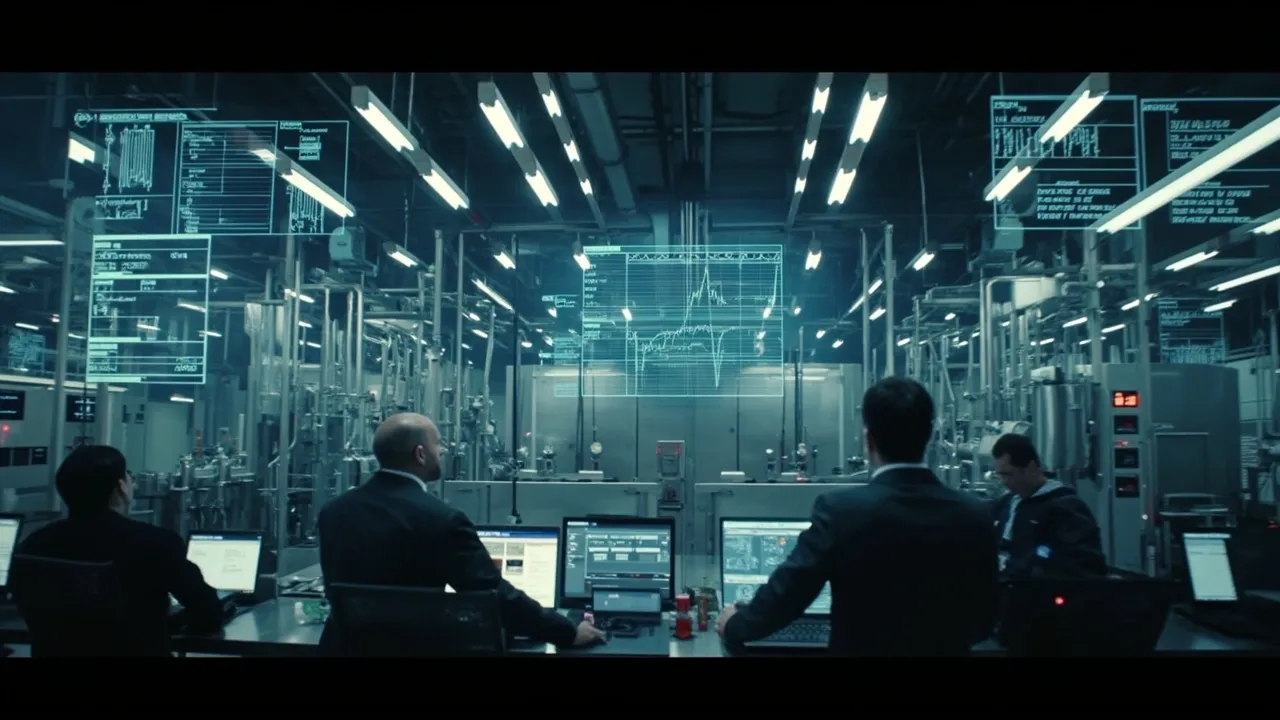
A vibration alert on a filler, pasteurizer, refrigeration compressor, or packaging line is never just a maintenance event in food manufacturing. It may affect temperature control, allergen separation, sanitation timing, lot integrity, customer service, and the ability to ship a finished load. Treating the signal as an isolated work order leaves operations teams to reconstruct those consequences manually—often while product is accumulating and a truck appointment is approaching.
The better model is industrial intelligence that joins asset condition with process history, food-safety controls, inventory identity, customer requirements, and transportation commitments. That connection turns a machine warning into a coordinated business decision.
Why the maintenance system cannot stand alone
Food plants already generate enormous volumes of operational information. A recently launched industrial intelligence platform highlighted by Food Logistics processes more than 16 billion industrial data points annually. Scale, however, is not the same as context. A model may detect an abnormal bearing signature with high confidence and still be unable to answer the questions the plant must resolve:
- Which lots passed through the asset during the suspected risk window?
- Was the relevant critical control point continuously within specification?
- Does the affected SKU have a customer-specific temperature, labeling, or shelf-life requirement?
- Is product already staged, loaded, or in transit?
- Would a controlled shutdown create more food-safety exposure than running to the next sanitation window?
Maintenance data explains what the asset is doing. Process and compliance data explain what that behavior means. The operational record needs both.
There is a measurable prize. Reporting on food-manufacturing deployments, Food Logistics says AI-powered predictive maintenance can reduce downtime by around 30% and labor costs by up to 15%. Those gains become more valuable when the same warning also protects production plans and outbound service.
Turn one warning into four linked decisions
Consider a refrigeration compressor whose current draw and vibration pattern indicate a rising probability of failure. The plant should not simply create a high-priority maintenance ticket. It should move through a linked decision chain.
Production: Identify the lines, recipes, and sanitation cycles dependent on the compressor. Determine whether production can finish the current batch, shift to another line, or stop at a defined control point.
Inventory and quality: Bind the alert window to work orders, ingredient lots, finished-goods lots, temperatures, and quality checks. Automatically place only the defensible scope of product on hold rather than freezing an entire day’s output—or releasing it without adequate review.
Compliance: Compare the event against the plant’s preventive controls, inspection procedures, customer specifications, and corrective-action rules. A normal product temperature does not necessarily eliminate risk if a required monitoring record is incomplete.
Transportation: Recalculate which orders can ship, which appointments need protection, and which loads require substitution or reprioritization. Cold-chain decisions should account for remaining shelf life, reefer availability, dock capacity, route duration, and customer receiving windows.
Cold-chain complexity is increasing as service expectations, energy costs, infrastructure gaps, and sustainability pressures converge, according to another Food Logistics analysis. That makes the bridge between plant events and transportation execution essential.
Data lineage is the foundation of trustworthy AI
When AI recommends a shutdown, product hold, release, or shipment change, the recommendation must be reproducible. The plant needs a lineage record that answers five questions:
- What was observed? Preserve the raw sensor values, inspection results, operator entries, timestamps, units, and device identities.
- What context was joined? Record the asset hierarchy, recipe, production order, lot genealogy, sanitation status, specification version, customer rule, and shipment commitment used.
- What logic was applied? Identify the model and rule versions, confidence score, thresholds, missing-data treatment, and any assumptions.
- What did the system recommend? Store the proposed action, affected lots and orders, expected operational impact, and alternatives considered.
- Who decided? Capture the approver, decision time, rationale, overrides, supporting evidence, and final execution status.
Versioning matters. An audit conducted months later must evaluate a decision against the rule, model, and customer specification active at that moment—not today’s configuration. Sensor clocks and business systems must also be synchronized; otherwise, teams cannot reliably establish whether a lot passed through equipment before or after a fault began.
Keep humans accountable for consequential actions
AI is useful for detecting patterns, narrowing the affected scope, and presenting options. It should not silently make every consequential decision.
A practical approval matrix separates low-risk automation from controlled actions. The system may automatically notify maintenance, open a work request, increase sampling frequency, or flag orders for review. A qualified human should approve a production shutdown, regulatory disposition, product release, destruction, customer notification, or shipment-priority change that creates contractual or food-safety consequences.
The approval screen should show evidence, not merely a risk score: the trend that triggered the alert, impacted lots, critical limits, open quality checks, shipment deadlines, and the cost or service effect of each option. Role separation also matters. Maintenance can confirm asset condition, quality can control hold and release, production can authorize line actions, and logistics can execute shipment changes. Emergency procedures should define who assumes authority when a required approver is unavailable.
Every override becomes learning data. If experienced operators repeatedly reject a recommendation, the organization should review the model, threshold, or missing operational context rather than labeling the humans as noncompliant.
Build the operational loop, not another dashboard
Food-plant industrial intelligence creates value when it closes the loop from detection through disposition and delivery. Start with one high-consequence asset family and map its signals to process steps, lot genealogy, quality controls, customer rules, and open shipments. Define approval rights and audit fields before automating actions. Then measure avoided downtime, hold precision, response time, schedule recovery, waste, and on-time delivery together.
CXTMS connects plant and inventory exceptions to transportation plans, shipment priorities, appointments, and customer commitments. Request a CXTMS demo to see how operational risk can become a controlled, traceable logistics response.