Cobalt Controls Are Turning Battery Materials Into a Routing Risk

Battery supply chains are usually measured in tons, contracts, and cell capacity. That is no longer enough. For cobalt and other critical minerals, the operating question is increasingly whether the shipment is allowed to move, which route it can use, and how quickly the logistics team can prove the origin story behind the material.
That shift is visible in the Democratic Republic of Congo, the world's largest cobalt producer. Reuters reported that Congo is using cobalt controls as it tries to reduce reliance on Chinese operators, strengthen oversight of the sector, and pivot more attention toward Western buyers. Reuters' reporting also described export restrictions as a way to drain excess supply from the market and lift prices.
For logistics leaders, the important point is not only commodity pricing. It is that government control over a raw material can quickly become a routing, documentation, and allocation problem. Battery materials move through permits, traders, concentrators, ports, border crossings, refineries, cathode producers, battery plants, automakers, and auditors. If any one of those control points changes, the physical network has to respond.
Cobalt Is Not Just Another Input
Cobalt is small by weight compared with many bulk commodities, but it carries outsized operational risk. It is tied to EV batteries, consumer electronics, aerospace, defense applications, and industrial equipment. It also sits inside a politically sensitive supply base where origin, labor practices, sanctions exposure, export permissions, and processor ownership matter.
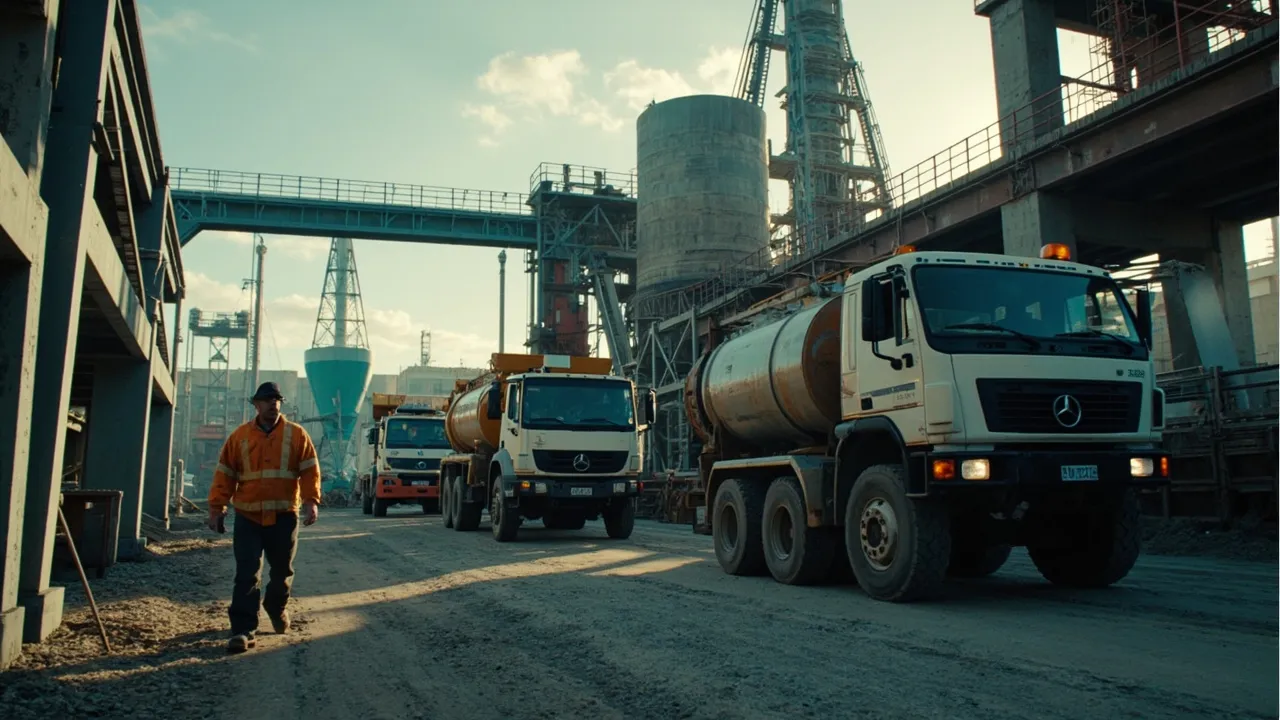
That makes cobalt logistics different from routine raw-material movement. A truck leaving a mine gate is not just hauling mineral product. It is carrying a bundle of claims: where the material originated, whether it was produced under acceptable conditions, who handled it, which license or quota applies, which buyer has allocation rights, and which destination can legally receive it.
The risk is not theoretical. Reuters' Rio Tinto coverage shows how quickly battery-material flows are expected to scale. Reuters reported that Rio Tinto expects lithium to be its fastest-growing division and is working to triple production by 2028 for electric vehicle and battery storage markets. Even though lithium is a different mineral, the logistics lesson applies across the battery chain: rapid production growth increases the penalty for weak routing controls.
Export Controls Change the Transportation Plan
Export controls turn a transportation plan into a live compliance instrument. The old plan might say: move product from mine or warehouse to port, ship to processor, deliver to customer. The new plan has to answer harder questions before the load is released.
Does the shipment have the right export authorization? Is the material covered by a quota, license, or buyer-specific allocation? Are the supplier, trader, carrier, broker, and processor all cleared against sanctions and restricted-party rules? Does the route pass through a country or port that creates additional exposure? Are documents complete enough for customs, bank review, customer audit, and downstream certification?
Those questions have direct operational consequences. A missing certificate of origin can delay a border crossing. A processor allocation change can strand material at a consolidation point. A sanctions review can make a cheaper route unusable.
This is where battery materials logistics becomes a routing risk. The best route on cost or transit time may not be the best route once permit status, buyer allocation, customs proof, and customer compliance rules are included. Transportation teams need a way to compare routes by operational feasibility, not just rate tables.
Processing Capacity Is Becoming Strategic Infrastructure
The cobalt story also fits a broader critical-minerals pattern: countries want more control over processing, not just mining. Reuters reported that Canadian miner Titan Mining and U.S.-based REalloys were selected by the U.S. Army to develop processing facilities for critical minerals. Reuters noted that the Pentagon had been developing small critical-minerals refineries for U.S. military bases as part of a broader push to secure defense supply chains.
That kind of processing investment changes logistics design. If more refining and processing capacity shifts closer to end markets or defense supply nodes, raw and semi-processed material may move through new inland destinations instead of familiar export corridors. Importers may need smaller, more controlled lots to specialized processors, stronger chain-of-custody practices, and mineral-specific documentation long before the shipment reaches the border.
For shippers, this creates a new planning problem. They cannot assume that the historical processor, port, or trade lane will remain the preferred path. A critical-minerals program may require alternate routings for geopolitical reasons even when the old lane still works physically.
What Battery Materials Shippers Should Control
Battery materials logistics needs stronger control points at the shipment level. The first is supplier-origin evidence. Every lot should be tied to supplier records, mine or facility origin, batch identifiers, chain-of-custody documents, and customer-specific compliance requirements. If origin evidence lives in email folders, logistics teams will lose time when controls change.
The second control point is release gating. A cobalt shipment should not move just because freight is booked. It should clear document completeness, permit status, denied-party screening, insurance requirements, allocation approval, and destination acceptance. When one condition is missing, the system should hold the shipment and identify the owner responsible for resolution.
The third is multimodal optionality. Critical minerals often depend on truck, rail, inland storage, port handling, ocean freight, and sometimes air recovery for samples or urgent components. Teams need pre-modeled alternatives that account for lead time, cost, risk, border requirements, and processor windows.
The fourth is scenario planning. If Congo extends controls, if a processor changes acceptance rules, if a port becomes risky, or if a buyer shifts allocation to a Western facility, logistics should be able to model the network impact quickly. Which shipments are affected? Which suppliers are exposed? Which lanes need rerouting? Which customers need new ETAs?
The fifth is auditability. Critical-minerals customers increasingly need evidence, not reassurance. Transportation records should show who released the shipment, which documents were attached, which route was approved, and why any exception was cleared.
CXTMS and Critical-Minerals Execution
Cobalt controls are a warning that battery materials logistics is becoming more governed, more political, and more exception-heavy. The companies that win will not be the ones with the most spreadsheets. They will be the ones that can connect supplier-origin records, compliance holds, routing decisions, and execution milestones before the material is stuck.
CXTMS helps logistics teams manage those controls in one operating layer. Teams can link supplier and origin data to shipments, apply release gates, compare multimodal routing options, manage exception ownership, and preserve audit trails for brokers, customers, and internal compliance teams.
If your network moves critical minerals, battery inputs, or other regulated raw materials, routing cannot be separated from compliance anymore. Request a CXTMS demo to see how CXTMS helps logistics teams build resilient, audit-ready transportation plans for high-risk materials.