Convenience Retail AI Is Becoming a Replenishment Control Layer

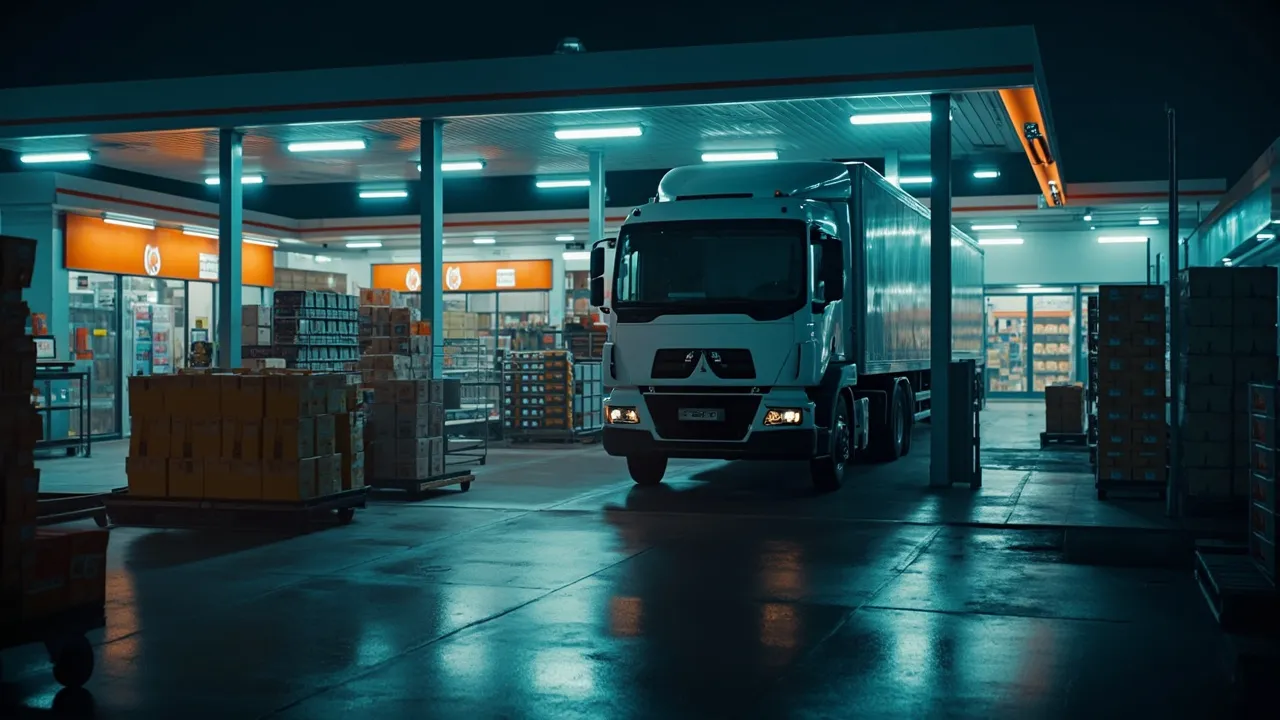
Convenience retail AI is often framed as a pricing story. That is only the surface.
The bigger operational shift is that AI is starting to connect price, demand, inventory, labor, and store execution quickly enough to change replenishment decisions. For convenience stores and fuel sites, that matters because the store format leaves very little room for slow planning. A missed signal can turn into an empty cooler, an overstocked back room, a late vendor delivery, or a promotion that transportation was never prepared to support.
Supply Chain Dive reported that Majors Management is partnering with ResultStack to bring AI-powered decision-making and automation into its convenience retail and fuel distribution business. The initiative covers pricing, inventory, loyalty, labor planning, and customer experience. Majors operates more than 200 company-run convenience stores and has more than 1,000 locations in its distribution network.
That scale is the point. When AI touches pricing and inventory across a distributed retail footprint, replenishment stops being a static reorder process. It becomes a control layer that needs to translate demand signals into supplier schedules, delivery frequency, route constraints, and exception workflows.
C-Stores Are Harder Than They Look
Convenience retail looks simple from the checkout counter. Operationally, it is messy.
The store footprint is small. Back-room storage is limited. SKU velocity can swing sharply by time of day, weather, fuel traffic, neighborhood routines, local events, and promotional pricing. High-frequency categories such as beverages, snacks, tobacco, fresh food, and prepared items do not behave the same way. Fuel-site constraints add another layer because truck access, parking, pump traffic, and delivery windows can make a theoretically simple store drop difficult in practice.
Supplier lead times are also uneven. A store may receive direct-store deliveries from several vendors, distribution-center replenishment from the parent network, and category-specific deliveries for fresh or regulated products. If the AI system sees demand changing but the transportation plan does not receive that signal, the business can optimize the wrong thing.
A price change may lift demand faster than the regular delivery cadence can support. A loyalty offer may drain a local assortment before the next supplier appointment. A labor plan may assume store teams can receive and stock a delivery, while the route plan arrives at the worst possible hour. In convenience retail, the last mile of replenishment is not just mileage. It is store capacity, receiving discipline, shelf labor, and product availability colliding inside a small format.
Pricing Signals Need a Logistics Path
The Majors announcement matters because the AI scope is broad. Pricing, inventory, loyalty, and labor planning are not independent workstreams. They are connected operating signals.
If pricing intelligence recommends a sharper promotion on a fast-moving drink category, transportation should know which stores are exposed, what inventory is already on hand, which suppliers can replenish quickly, and whether the next planned route can absorb the additional volume. If inventory analytics detects a local demand swing, the system should identify whether the fix is a supplier expedite, a DC transfer, a route resequence, or a simple store-level correction.
This is where many technology investments underperform. Logistics Management noted that supply chain technology implementations often fall short when companies rush into tools before defining the business strategy the technology is meant to support. The article quotes Tony Wayda of JBF Consulting: "The technology is just a tool. Don't think you need a tool when you don't know what your strategy is."
For convenience retail, the strategy should be clear: AI should not just predict demand or suggest price moves. It should help stores stay in stock at the lowest practical cost while protecting delivery reliability.
That requires transportation integration. AI-generated demand signals need to flow into replenishment planning, supplier communication, appointment scheduling, and exception management. Otherwise, the system produces better insight but leaves planners to translate that insight through emails, spreadsheets, and late-day phone calls.
Supplier Cost Work Is Already Moving Upstream
The same pattern is visible in grocery. Supply Chain Dive reported that Kroger is working with suppliers to optimize costs, pressing negotiations, using direct sourcing, and removing complexity and waste from goods not for resale. Kroger leaders also described the need to decide where to hold price, where to pass through cost, and how supplier choices affect store economics.
Convenience retail faces a similar logic, but with less room to hide execution problems. If supplier cost work changes order cadence, sourcing mix, minimum quantities, case packs, or delivery frequency, the store network feels it quickly. The lowest unit cost is not always the best replenishment answer if it creates excess inventory, missed delivery windows, or service failures in high-velocity stores.
The operating question becomes: when pricing, supplier cost, and inventory signals change, who owns the transportation response?
For a convenience network, that response should include store-level replenishment rules, supplier performance metrics, delivery window constraints, route capacity, and exception thresholds. Stores should not discover the answer only when a delivery misses the shelf need or arrives with more product than the location can handle.
What a Replenishment Control Layer Should Do
A practical replenishment control layer starts with store-level demand visibility. It should identify which SKUs are moving faster or slower than plan and separate normal noise from meaningful demand shifts.
It then needs supplier scheduling logic. If a category needs replenishment earlier than planned, the system should know which supplier can respond, what lead time applies, and whether a delivery can be added without disrupting the rest of the route plan.
The third requirement is transportation context. Store access windows, delivery frequency, route density, equipment requirements, and unloading limits should influence the replenishment recommendation. A demand signal that ignores delivery feasibility is only half a signal.
The fourth requirement is exception ownership. Stockout risk, overstock risk, supplier delay, missed appointment, late truck, and store receiving conflict should each have an owner and a resolution path. AI is useful when it reduces decision latency, not when it generates alerts no one owns.
The final requirement is feedback. If a promotional price drove demand higher than expected, the replenishment outcome should feed the next planning cycle. If a supplier could not respond in time, that performance should show up in future sourcing and replenishment decisions.
AI Needs Execution Discipline
Majors Management's move shows where convenience retail technology is heading: AI will increasingly sit across the operating system of the store, not inside one isolated analytics project.
That makes replenishment control more important, not less. Pricing intelligence, inventory analytics, loyalty personalization, and labor planning all create operational consequences. The winners will be the retailers that connect those signals to supplier scheduling, delivery execution, and store-level service performance before customers see the failure on the shelf.
CXTMS helps retailers and logistics providers turn replenishment signals into transportation action. It connects supplier scheduling, inbound visibility, store-level delivery performance, route exceptions, and replenishment workflows in one operating layer. If convenience retail AI is starting to change demand faster than your freight process can react, schedule a CXTMS demo to see how CXTMS helps keep replenishment decisions executable.