Amazon and Wiwynn’s Texas Factory Expansion: Synchronize 1,000 New Jobs With Inbound Material Flow

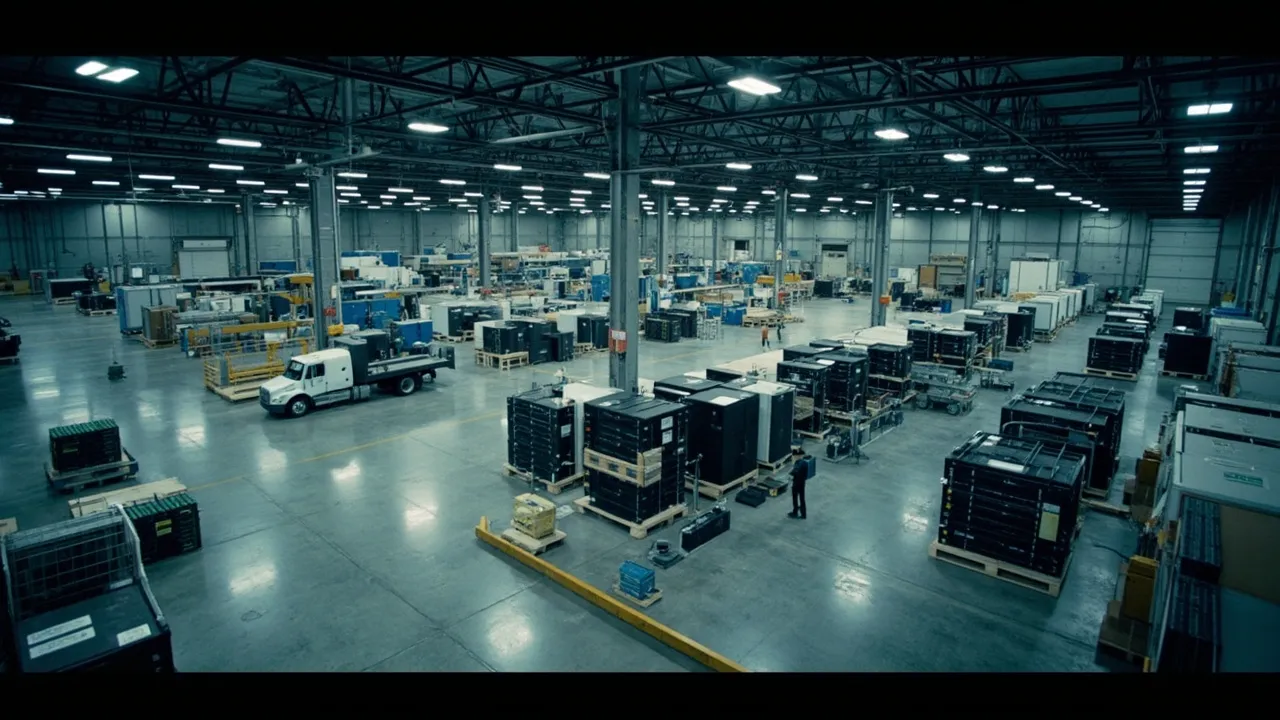
Amazon and Wiwynn’s factory expansion in Socorro, Texas, is a manufacturing growth story with a logistics clock attached. The site will supply U.S.-manufactured server racks for Amazon’s data center infrastructure, adding people and production capacity in a border-region market. But hiring faster than components arrive creates idle labor; bringing material in faster than lines can consume it creates congestion, excess inventory and damage risk.
SupplyChainBrain reports that the companies expect the expansion to create nearly 1,000 advanced manufacturing jobs by the end of 2027. Total employment at the facility is expected to exceed 2,500 in 2027, with a further increase to 4,000 workers at full capacity. Those targets should become operating milestones for transportation and materials teams—not merely workforce statistics.
The practical objective is to synchronize four ramps: labor, equipment, qualified suppliers and production volume. Each moves on a different schedule, yet all four must converge before finished server racks can leave the plant reliably.
Separate the four ramps
The workforce ramp covers recruiting, onboarding, safety training and station qualification. Headcount alone does not equal usable capacity. Planners need qualified labor hours by work center and shift, including supervision and maintenance coverage.
The equipment ramp begins with delivery and placement but continues through utilities connection, calibration, testing and production acceptance. A machine on the floor may still be weeks away from producing conforming output. Oversized equipment also competes with routine inbound freight for dock doors, yard space and rigging resources.
The supplier ramp includes commercial approval, first-article inspection, packaging validation, ASN compliance and stable delivery performance. New sources may be essential as volume rises, but an unqualified substitute cannot rescue a line shortage.
The production-volume ramp should advance only when the other three support it. Tie weekly output targets to demonstrated station capacity, supplier readiness and material availability. This keeps ambitious launch goals from becoming a cycle of expedites and line stoppages.
Create one milestone register across these workstreams. Every milestone needs a planned date, current forecast, accountable owner, dependency and recovery action. If a commissioning date slips, the system should immediately expose which supplier releases, carrier bookings and labor shifts must move with it.
Model inbound demand by material family
Server-rack manufacturing is not one homogeneous inbound stream. Segment it into material families with different planning rules.
- Electronics and computing components are high-value, constraint-prone and often sensitive to static, shock or moisture. Track them by purchase order, lot and required production window, with secure handoffs and escalation paths.
- Rack structures, busbars, cooling assemblies and power hardware are bulky and may consume trailer, dock and floor capacity well before their financial value looks significant.
- Cables, fasteners and production consumables have lower unit value but can stop output when a small part is missing. Replenishment thresholds should reflect consumption variability, not just average usage.
- Packaging materials expand with finished-goods output and require substantial space. Connect cartons, cushioning and pallets to the outbound schedule so they do not crowd production inventory.
- Service and replacement parts need a separate expedited channel. Do not let urgent field-support demand silently drain material allocated to new builds.
This segmentation is especially important as AI infrastructure supply constraints broaden. Supply Chain Dive reported that shortages have spread beyond memory, storage and CPUs to rack-level cooling, networking and power components. Dell raised its fiscal 2027 revenue guidance by $25 billion to $192 billion, illustrating the scale of demand competing for many of the same inputs.
A second Supply Chain Dive analysis found that Dell’s quarterly revenue had risen 88% year over year to $43.8 billion amid strong demand and constrained supply. Large customers were securing infrastructure through three- to five-year deals. Socorro’s inbound plan therefore needs allocation visibility and supplier commitments, not assumptions that spot availability will appear when employment and output rise.
Control the border-region handoff
Socorro sits in the El Paso–Ciudad Juárez manufacturing corridor, making cross-border coordination a likely factor for relevant regional suppliers. Every recurring lane should identify the shipper, broker, carrier, crossing plan, expected documentation and fallback route. The transportation record should connect the supplier ASN to the purchase order, trailer, customs status, dock appointment and production demand.
Do not use border arrival as the delivery promise. Build the forecast from supplier readiness through pickup, crossing, customs release, final-mile travel, yard check-in and unload. Record actual timestamps at every handoff. That reveals whether variability originates at the supplier, crossing, carrier or plant gate.
For critical parts, set a latest-safe-release time. If a shipment misses it, trigger a defined response: change crossing window, use an alternate approved carrier, expedite a partial quantity, reallocate inventory or resequence production. A visible exception is manageable; a late truck discovered by the line is not.
Use dock appointments and ASNs as flow controls
As headcount approaches the 2027 target, the plant should not accept inbound freight on a first-come basis. Dock appointments must reflect material priority, unload duration, labor availability, staging space and line demand. Reserve specific windows for commissioned equipment, high-value electronics and recovery shipments rather than forcing every load into the same queue.
Require suppliers to transmit accurate ASNs before pickup. At minimum, the ASN should contain purchase order, part and quantity, packaging units, dimensions, weight, lot or serial data where applicable, carrier, trailer and estimated arrival. Validate it automatically against open demand and the appointment. Quantity or identity mismatches should be resolved before freight reaches the gate.
Line-side thresholds complete the control loop. Define minimum, target and maximum inventory by part and work center. A minimum breach creates a shortage alert tied to the next confirmed shipment; a maximum breach delays or redirects replenishment before aisles and stations become storage areas. Use time-based coverage for constrained components, because “two days on hand” communicates more than a raw unit count during a changing production ramp.
Run one launch control tower
The daily launch view should combine qualified labor hours, equipment readiness, supplier status, in-transit inventory, dock utilization, line-side coverage and planned output. Useful exceptions include an ASN missing before cutoff, projected inventory below minimum, an appointment likely to miss its window, supplier allocation below plan, commissioning delay or a border hold consuming the production buffer.
Track schedule adherence, ASN accuracy, appointment compliance, shortage minutes, premium freight, dock dwell and inventory coverage by material family. Those measures show whether added labor is converting into stable production rather than hiding logistics failures behind overtime and expedites.
CXTMS connects supplier ASNs, freight bookings, border and carrier events, dock appointments and exception workflows in one operational record. That helps manufacturers align inbound material with commissioning and labor milestones while preserving an auditable response to every disruption.
Book a CXTMS demo to synchronize inbound transportation, factory appointments and material exceptions during your next manufacturing ramp.