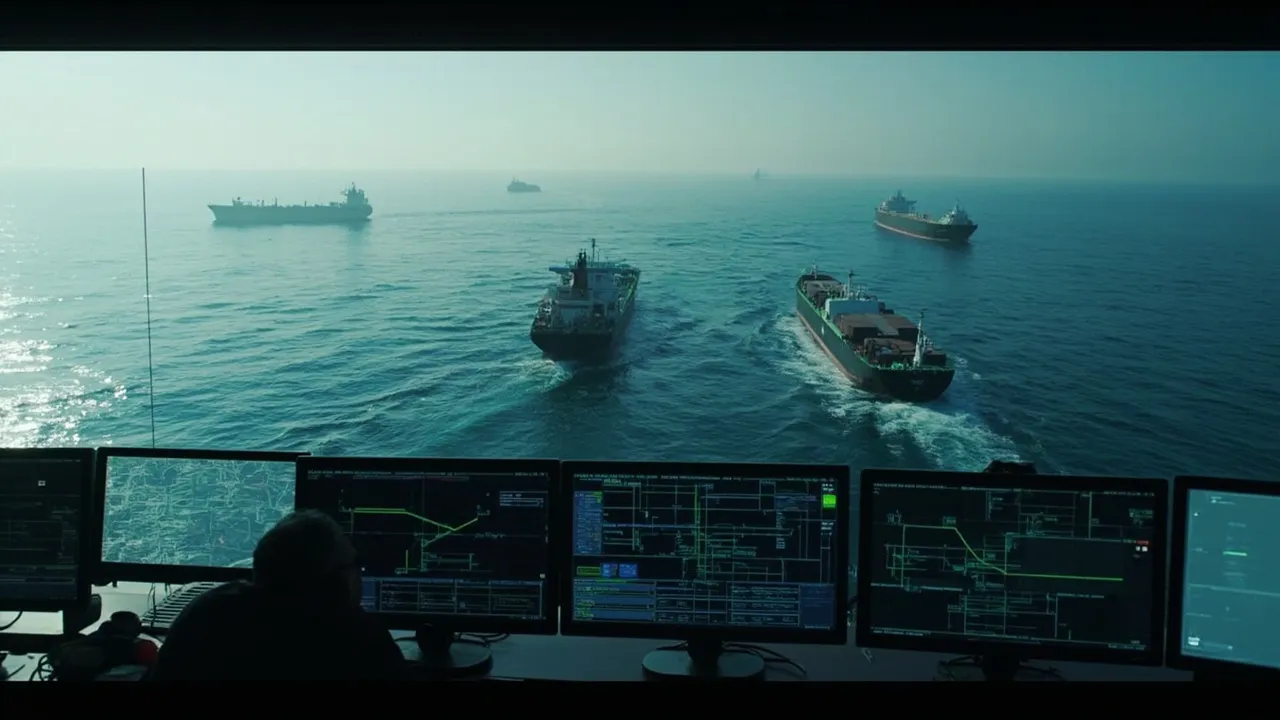
Historic European Drought Turns Waterway Depth Into an Order-Promise Constraint

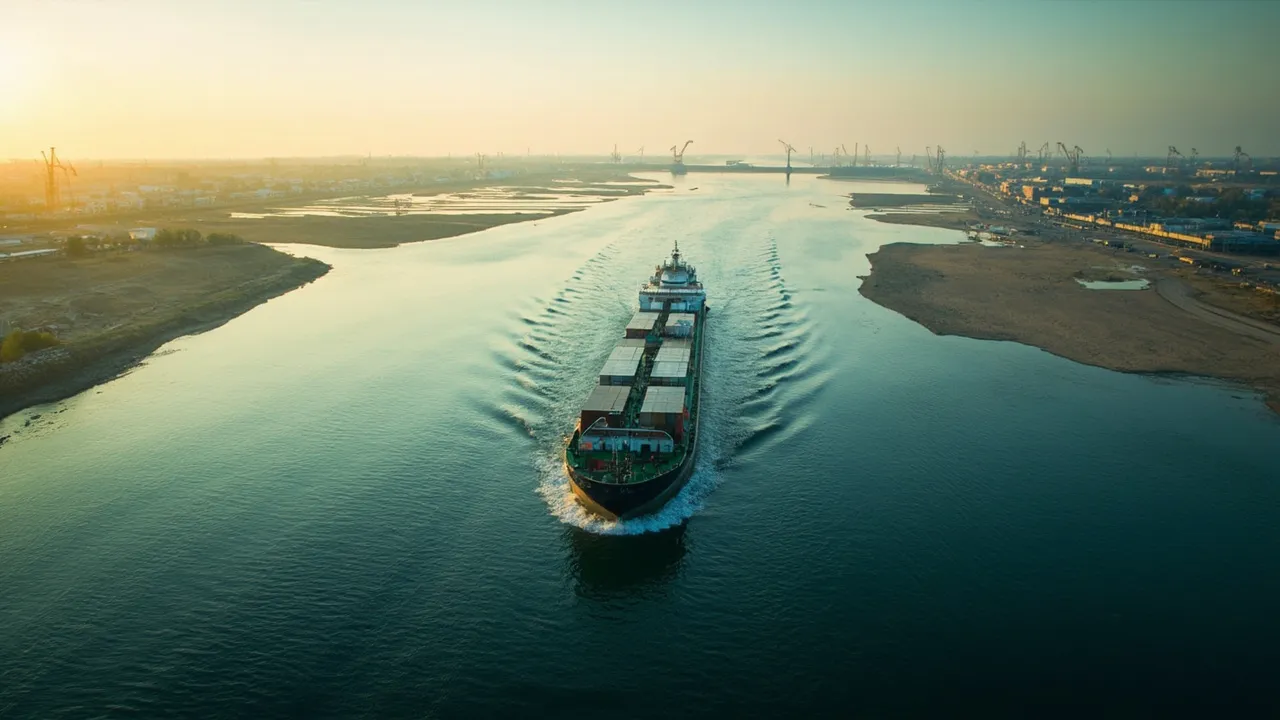
A river gauge is no longer just a navigation data point. For companies moving chemicals, fuels, construction materials, agricultural products, and containers through Europe, it can determine how much inventory will arrive, what transport will cost, and whether a customer promise is still credible.
Europe's historic drought has pushed key waterways to operational extremes. The useful response is not another generic climate-risk dashboard. Procurement, transportation, planning, and customer-service teams need to translate water depth into a common set of shipment assumptions and actions.
The Rhine disruption is a network constraint
SupplyChainBrain reports that European inland waterways carry roughly 473 million tonnes of goods annually. The Rhine handles about 70% of that freight, making low water on the river a constraint for far more than barge operators.
The same report says vessels recently carried less than one-quarter of their usual cargo and that most Rhine inland ports could not be reached by barge. The 700-kilometer corridor between Rotterdam and the German-Swiss border accounts for 40% of Germany's river freight. One month of low water can reduce German industrial production by an estimated 1%.
These figures explain why a small-looking change on a gauge can produce a large commercial effect. A vessel's safe draft falls as navigable depth declines. Payload must then be reduced, spread across additional sailings, or transferred to another mode. A large barge may become unusable altogether.
Past disruption provides a useful scale reference. In a previous Rhine low-water event, FreightWaves reported that a barge normally moving 2,000 metric tons could be restricted to 400–500 tons. That is a 75%–80% payload reduction before considering schedule congestion or unavailable equipment.
Convert gauge readings into capacity assumptions
A planning team should not insert a raw river level into an order-management system. It should convert the reading into a usable capacity band for each relevant vessel class and lane.
Start with the controlling gauge or chokepoint, not a regional weather average. Record the current reading, short-range forecast, vessel's operating draft, required safety clearance, and the carrier's confirmed payload. The output should be a percentage of normal shipment capacity with a confidence range and effective dates.
For example, an internal operating table might define green as 80%–100% of normal payload, amber as 50%–79%, red as 25%–49%, and critical as below 25% or no reliable service. Those percentages are planning bands, not navigation instructions; carriers and waterway authorities remain responsible for safe operations. Their value is that every commercial team works from the same constrained-capacity assumption.
Avoid treating a forecast rise as immediately available capacity. Rainfall must reach the correct catchment, flow downstream, improve the controlling depth, and allow carriers to reposition vessels. Keep forecast capacity separate from confirmed bookings until the operator accepts the load.
Recalculate the order promise, not only the freight plan
When one barge must be replaced, the problem is not solved by selecting “truck” in a transport plan. SupplyChainBrain notes that replacing a single barge may require 100–200 trucks. That capacity may not exist, and forcing the substitution can raise rates, increase handling, congest terminals, and divide one shipment into dozens of arrival events.
Each capacity band should therefore trigger a new available-to-promise calculation. Begin with confirmed inventory and production, then subtract the quantity stranded or delayed by the latest safe payload. Add only alternative-mode capacity that has been quoted and accepted. Finally, incorporate terminal handling, transfer time, new transit time, and a disruption buffer.
This calculation should produce three dates: the earliest credible delivery, the committed date with an agreed confidence level, and the next review point. Customer service can then offer a smaller on-time quantity, a later complete delivery, or split fulfillment from another node. A precise constrained promise is better than preserving an obsolete date until it fails.
The exposure is especially acute for businesses with river-dependent plants. SupplyChainBrain reported that more than 30% of Covestro's finished goods depend on inland shipping and that the company warned it could no longer meet certain delivery obligations. That is the point at which waterway conditions become an order-allocation decision, not merely a transport exception.
Set threshold-based actions before the next reading
Thresholds should assign actions and owners while there is still time to act:
- Green: tender normally, monitor the controlling gauge daily, and identify orders with no modal alternative.
- Amber: confirm carrier payload before releasing orders, reserve rail or truck options, and increase replenishment lead times for exposed locations.
- Red: prioritize cargo by production and customer impact, split orders, activate alternative terminals or suppliers, and re-promise affected deliveries.
- Critical: stop assuming barge capacity, allocate scarce inventory centrally, approve emergency-mode premiums explicitly, and communicate recovery scenarios rather than fixed dates.
Procurement should identify materials whose loss would stop production and ask suppliers to stage inventory away from river-dependent nodes. Transportation should secure conditional capacity and document its expiration. Planning should model inventory by day under reduced payload assumptions. Customer service should use approved reason codes, quantities, and dates drawn from the same execution record.
The trigger to return to normal should also be explicit. One favorable reading is not enough. Require sustained water improvement, carrier confirmation, cleared backlog, and restored terminal throughput before shortening lead times or releasing deferred volume.
Make climate data executable
Europe's drought will eventually ease, but the operating lesson should remain. A resilient network connects physical conditions to vessel capacity, shipment plans, inventory availability, and customer commitments. Otherwise, the gauge changes today while the order promise remains anchored to yesterday's river.
CXTMS gives logistics teams a shared record for orders, capacity, routing decisions, milestones, and exceptions so they can respond to constrained waterways with controlled, auditable actions. Request a CXTMS demo to see how transportation visibility can support faster re-planning and more credible delivery promises.