Drop-and-Hook Only Works When Trailer Pools Have Explicit Rebalancing Rules

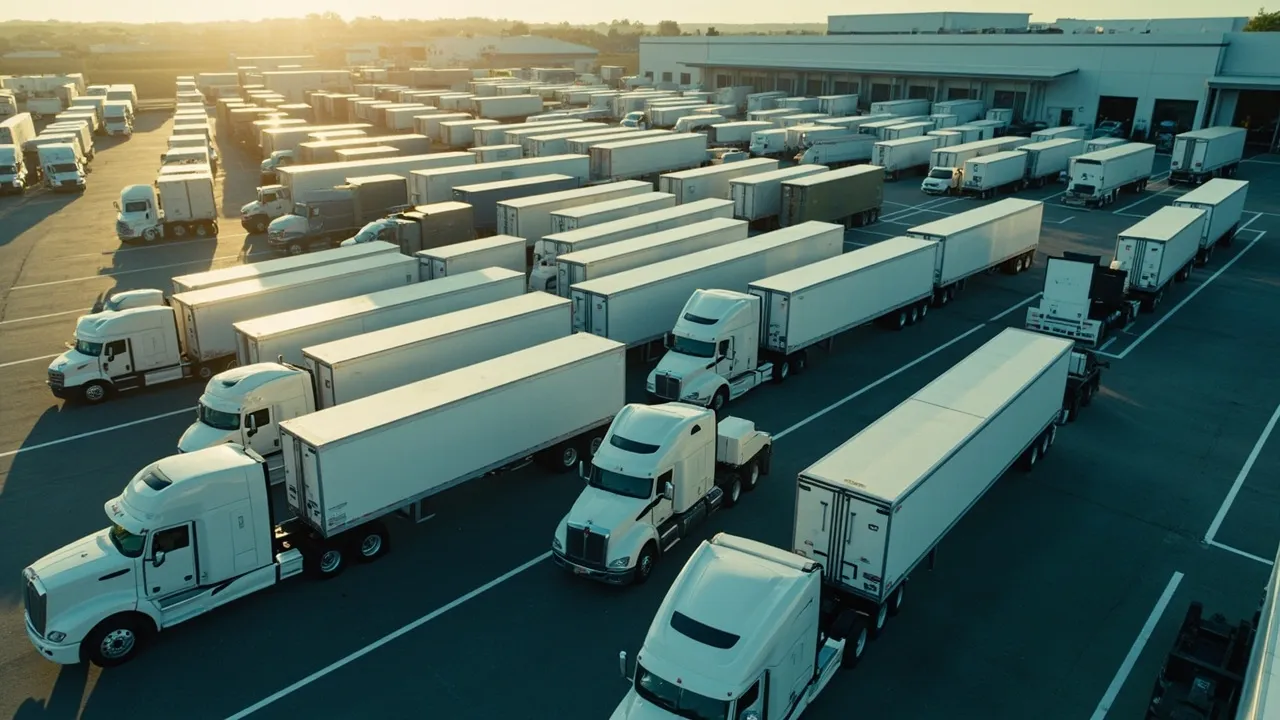
Drop-and-hook freight promises a clean exchange: a driver arrives, leaves one trailer, connects to another, and returns to the road without waiting for warehouse labor. But that speed is not created by the hook itself. It is borrowed from a pool of trailers waiting at the facility.
If nobody defines how large that pool should be, how long each trailer may sit, or who must recover an imbalance, the apparent efficiency at the gate becomes hidden cost in the yard. The operation needs explicit rebalancing rules—not just more equipment.
Drop-and-hook and live unload solve different problems
In a live unload, the tractor and trailer remain together while the facility unloads or loads the freight. The model consumes driver time, but it can use fewer trailers and gives the carrier continuous custody of its equipment. It fits facilities with reliable appointment performance, predictable labor, and short door cycles.
Drop-and-hook separates tractor time from warehouse time. The arriving driver can take a preloaded trailer or leave an inbound unit for later processing. That makes the model valuable when loading tempo and arrival tempo do not line up.
Inbound Logistics describes the basic operating choice clearly: drop pools work when sufficient trailer inventory can absorb tempo swings, while live unload works when doors and labor are predictable. That distinction matters. Drop-and-hook is not automatically the superior method; it is an inventory buffer built from mobile assets.
The model is also widely relevant. Logistics Management reports that the majority of U.S. Fortune 500 shipments move through preloaded drop trailers. Another industry example shows how scale widened access: Convoy Go offered loads to tens of thousands of owner-operators and small carriers after launching in 2017, then expanded nationally in 2019. Those figures show the commercial appeal, but not whether an individual facility is controlling its pool well.
A trailer pool can hide a service failure
A shipper can see on-time pickups while the underlying pool deteriorates. Empty trailers accumulate at a low-volume plant. Loaded units wait at a distribution center because orders, doors, or paperwork are not ready. Damaged or out-of-service trailers remain counted as available. A facility with ten physical trailers may therefore have only six usable ones.
This is the central trap: total trailer count is not operational availability.
Large pools can temporarily cover poor execution. Logistics Management noted that traditional drop programs relied on massive, redundant trailer pools, owned power units, and manual asset management to support consistent volume on dense lanes. Redundancy protects service, but every excess trailer still carries capital, lease, maintenance, insurance, and opportunity costs. Conversely, a pool sized to the average day can fail during a production surge, missed pickup, weekend closure, or weather delay.
The answer is not one network-wide ratio. Each facility needs a policy linked to shipment tempo and recovery lead time.
Five controls every facility should have
Minimum pool. This is the number of usable trailers below which the next planned shipment is at risk. It must exclude damaged, held, loaded-but-blocked, and incorrectly assigned equipment. A site shipping eight loads before the next replenishment opportunity needs a minimum based on those eight commitments—not yesterday's yard count.
Target pool. The target is the normal operating level that covers expected turns plus a measured buffer. It should reflect day-of-week patterns, production schedules, appointment variability, and the time required to reposition equipment. The gap between minimum and target provides controlled resilience.
Aging threshold. Every trailer should have a clock that begins at gate-in or the last meaningful yard event. Empty dwell, loaded dwell, maintenance hold, and administrative hold require separate reason codes. An aging report should identify the oldest equipment before it becomes invisible inventory.
Turns. Pool productivity should be measured as completed loaded cycles per trailer over a defined period. Averages alone can mislead: the same few trailers may turn repeatedly while others remain stranded. Teams should pair turns with median and maximum dwell, plus the percentage of equipment that did not move during the period.
Recovery trigger. A threshold without an action owner is merely a dashboard color. Rules should state when to reposition an empty, arrange a power-only recovery, change an upcoming load to live service, borrow equipment, or escalate a loading constraint. Each trigger needs an owner, response deadline, and approved cost path.
Connect yard events to shipment appointments
A trailer pool cannot be rebalanced from periodic spreadsheets. Transportation teams need a current sequence of gate-in, spot assignment, door move, loading status, ready time, gate-out, and exception events. Logistics Management explains that a yard management system provides real-time control over the number, location, and type of trailers in a yard—precisely the foundation needed for smoother exchanges.
Those events become far more useful when connected to TMS appointments. Suppose a facility has a minimum of six usable empties, seven are currently available, and three outbound appointments are due before the next inbound empty arrives. The physical count looks healthy; the time-phased balance predicts a shortage of two. That forecast should create a recovery task before a driver reaches the gate.
CXTMS can provide the shipment context around that decision: appointment demand, trailer assignment, carrier ownership, shipment priority, and exception responsibility. The practical control is a rolling balance for every site:
projected usable pool = current usable trailers + confirmed arrivals - committed departures - expected holds
Recalculate it whenever an appointment, yard status, or estimated arrival changes. Alert on the projected breach time, not only after the pool falls below minimum.
Make the exchange measurable
Drop-and-hook succeeds when it converts irregular warehouse work into predictable driver flow without losing control of equipment. That requires a facility-level operating contract: minimum and target inventory, aging limits, turns, recovery triggers, and named owners.
The best pool is not the largest one. It is the smallest pool that consistently protects scheduled service—and gives the team enough warning to correct the next imbalance before it reaches the gate.
To connect trailer availability, yard milestones, and shipment appointments in one workflow, request a CXTMS demo.