Lockheed's Domestic Minerals Search Turns Material Qualification Into a Logistics Lead Time


A mineral deposit inside the United States may shorten a line on a geopolitical risk map. It does not automatically create material that a defense manufacturer can put into an aircraft, missile, radar, or satellite.
That gap is now an operational priority. Reuters reported that Lockheed Martin was seeking U.S. mineral supplies following a federal push to strengthen defense supply chains. The effort points to a constraint that procurement dashboards often obscure: domestic availability and production-ready supply are different states.
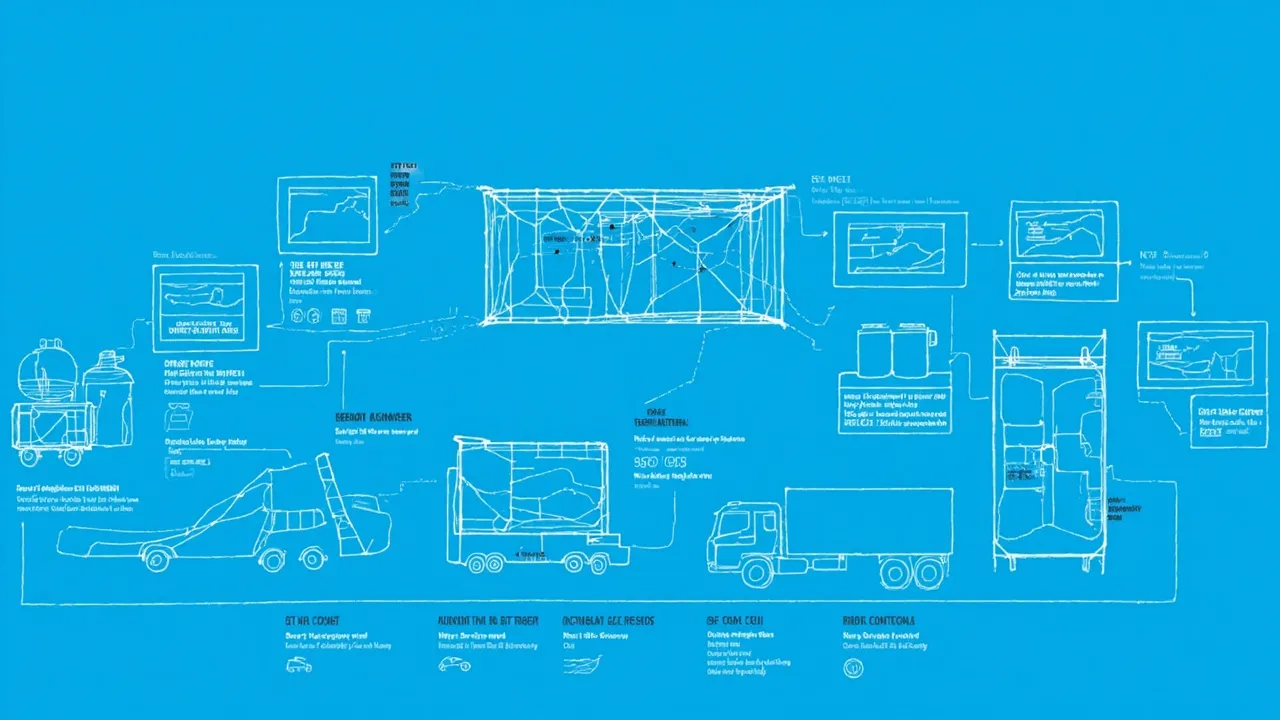
The logistics timeline begins well before a production shipment leaves a mine or processor. Samples must move securely, laboratories must test them, engineering and quality teams must approve them, contracts must establish traceability requirements, and suppliers must prove that repeat production matches the qualified material. If those events are not managed as a connected flow, a promising domestic source can remain unavailable to the factory for months.
Availability is only the first gate
Critical-material sourcing should separate four questions that are too often combined into one supplier status.
Physically available: Does the ore, concentrate, oxide, metal, alloy, or finished input exist at usable volume? A mine announcement or reserve estimate answers only part of this question. Processing capacity, yield, byproducts, and minimum production runs determine what can actually be supplied.
Technically qualified: Does the material meet chemical, mechanical, thermal, magnetic, or purity requirements for the intended part? A source that works for one industrial application may not satisfy an aerospace specification.
Commercially contractable: Can the buyer and supplier agree on price, volume, liability, intellectual property, change control, and capacity reservation? A technically acceptable sample is not a dependable supply agreement.
Traceable and deliverable: Can each production lot retain its identity through processing, packaging, transport, receiving, and consumption? Defense programs may require origin evidence, certificates of analysis, custody records, and approved handling conditions.
Only when all four gates are open does domestic material become usable supply. Reporting a supplier as “available” before then creates false confidence and encourages planners to remove contingency inventory too early.
The pressure extends beyond one company
The federal sourcing push is broader than Lockheed. In March, Reuters reported that the Pentagon asked mining companies to help expand domestic supplies of 13 critical minerals used in semiconductors, weapons, and other products.
Access risk is also changing supplier behavior. A June Reuters report said export controls and licensing delays continued to restrict U.S. companies' access to critical minerals from China. Three-quarters of affected companies were searching for alternative sources.
Those figures matter because qualification resources are finite. When many manufacturers seek alternatives at once, demand rises not only for minerals but also for assay labs, pilot-processing runs, metallurgical expertise, quality audits, secure transport, and engineering approvals. The bottleneck can migrate from raw material to the infrastructure that proves the material is fit for use.
Map the hidden qualification journey
A practical qualification plan should treat every sample as a controlled shipment tied to a specific specification, source, process route, and intended application.
The sequence normally includes:
- Supplier screening and documentation review.
- Sample production, packaging, and chain-of-custody release.
- Transport to one or more laboratories or pilot facilities.
- Chemical and physical testing, including any destructive tests.
- Nonconformance review, retesting, or a second sample round.
- Engineering, quality, security, and customer approvals.
- Pilot-lot production and first-article validation.
- Commercial contracting and capacity reservation.
- Production ramp, lot release, inbound transport, and receiving acceptance.
Each step can create queues. A test may consume the entire sample, forcing another movement from the source. A laboratory result may be valid only for the process route used to make that lot. A processor change can trigger requalification even when the mineral origin stays the same. Production material can arrive on time yet remain blocked because its certificate cannot be matched to the shipment.
This is why qualification lead time belongs in the transportation and supply-chain plan. Freight forwarders and carriers do not decide technical acceptance, but shipment identity, security, temperature or contamination controls, and custody evidence can determine whether a test result is usable.
Build one qualification-to-delivery record
Defense and critical-mineral programs need a record that follows the source from first sample through recurring production. It should connect the supplier and facility, mineral or alloy, country and site of origin, process route, specification revision, sample lot, laboratory, test method, approval status, contract status, production capacity, and every associated shipment.
Milestones should be event-based rather than described as percentages. “Qualification 80% complete” is difficult to act on. “Pilot lot passed chemistry; mechanical testing booked for August 18; engineering approval due August 25” exposes the real dependencies.
Four controls make the record useful:
- A sample chain of custody links seals, handlers, transport events, and lab receipt to the tested lot.
- A specification-to-result map shows which requirements passed, failed, or still lack evidence.
- A change-control trigger flags a different mine face, processor, formulation, facility, or test method that may invalidate approval.
- A ramp-to-delivery view connects qualified monthly output with purchase orders, released lots, transit milestones, and factory demand.
Teams should also measure time between the gates: source identified to sample dispatched, sample received to test complete, test complete to approval, approval to contract, contract to first production lot, and lot release to factory receipt. These intervals reveal whether the next investment belongs in mining capacity, lab capacity, engineering review, documentation, or transportation.
Domestic supply still needs operational proof
Lockheed's search is a reminder that supply-chain resilience is not achieved when a new supplier appears on a list. It is achieved when conforming, traceable material reaches the right production point repeatedly and with evidence intact.
CXTMS gives logistics teams a shared operational record for sample movements, production lots, custody events, documents, exceptions, and delivery milestones. Connecting those events to qualification status helps planners distinguish an attractive source from supply the factory can actually use.
Ready to manage critical-material qualification as an executable logistics plan? Request a CXTMS demo to see how milestone-driven transportation management supports secure, traceable supply.