Tractor Supply's 2,400-Store Instacart Launch Needs Store-Level Delivery Eligibility

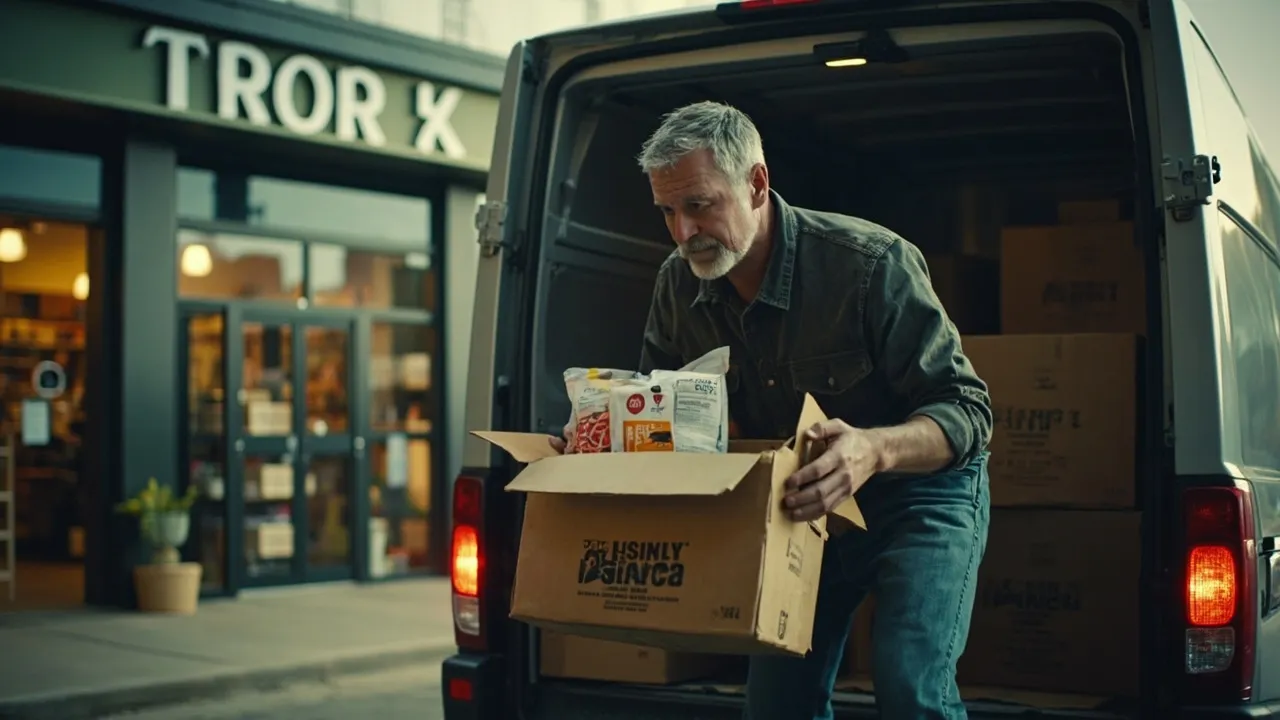
Tractor Supply's new Instacart partnership brings an appealing promise to rural retail: delivery from more than 2,400 stores in as fast as one hour. Customers can order pet food, animal feed, garden products, tools, hardware, and other everyday supplies without making the drive to a store.
That scale is significant. Supply Chain Dive reports that the partnership covers over 2,400 Tractor Supply locations, while Instacart's marketplace includes more than 2,200 national and local retail banners. Yet a national storefront does not create uniform delivery capability. Every order still depends on the conditions at one store, for one basket, at one moment.
The operational challenge is therefore not simply enabling same-day delivery. It is deciding which orders can actually keep the promise before a customer reaches checkout.
Rural Same-Day Delivery Has Different Constraints
An urban grocery order often combines compact products, short routes, dense driver supply, and frequent replacement options. A rural Tractor Supply basket can look very different. A customer may be 25 miles from the nearest store. The order may contain a 50-pound bag of feed, fencing components, batteries, chemicals, or an oversized tool. Driver coverage may change sharply by hour and day.
Five variables can turn an apparently valid order into an exception:
- Distance: A delivery radius that works around a suburban store may produce an uneconomic round trip in a sparsely populated county.
- Dimensions and weight: A product can be on the shelf but too long, heavy, or bulky for the assigned driver's vehicle.
- Regulated goods: Fuels, chemicals, batteries, and other restricted products may require special handling or may be ineligible for crowdsourced delivery.
- Inventory confidence: Store records can lag behind sales, damage, misplacement, or units reserved for another channel.
- Driver capacity: A one-hour window is meaningless when no qualified driver has enough vehicle space and route time.
These are not edge cases to discover after payment. They are checkout inputs.
Last-mile failures are expensive. Inbound Logistics notes that the final mile can represent more than half of total shipping expense and cites an estimate of roughly $17 for a failed delivery. The same source reports that users of advanced route-optimization technology have achieved 20% to 30% reductions in delivery costs and 15% to 18% improvements in fleet utilization. Better decisions before dispatch protect both margin and customer trust.
Build Eligibility at the Store-SKU-Time Level
A single “available for delivery” flag is too coarse. Eligibility should be calculated from the store, SKU, promised window, destination, and current delivery capacity.
At the store level, the system should consider operating hours, picker staffing, local delivery radius, active disruptions, and whether the site supports the service. A store may accept delivery orders on weekday afternoons but reduce its radius during a storm or pause the channel when its staging area reaches capacity.
At the SKU level, rules should include package dimensions, weight, handling restrictions, age or identity requirements, hazmat classification, temperature sensitivity, and substitution policy. The product record also needs a confidence-adjusted available quantity. If the system shows one unit but that store's recent pick accuracy is poor, the safer response may be pickup only or a longer promise.
At the time level, the decision must account for picker workload, expected preparation time, driver supply, vehicle type, route duration, and competing orders. A bag of feed might be eligible at 10 a.m. when a suitable driver is nearby but unavailable for one-hour delivery at 6 p.m.
The final checkout response should be explicit: eligible for the requested window, eligible with a later window, eligible from another store, eligible for pickup only, or ineligible with a clear reason. That gives customers a usable alternative instead of a cancellation.
Treat the Basket as the Real Unit of Work
Item-level approval is necessary but insufficient. Three individually eligible products can form an ineligible basket when their combined weight exceeds vehicle capacity or when one substitution changes the required space.
The eligibility service should evaluate:
- destination and service radius;
- store operating and picking capacity;
- inventory availability and confidence;
- SKU restrictions and physical attributes;
- total basket cube and weight;
- available driver and vehicle capacity; and
- achievable pick, stage, handoff, and travel time.
The promise should be reserved briefly while the customer pays. Otherwise, multiple shoppers can consume the same inventory or delivery slot between quote and confirmation. Once payment clears, the order should lock the selected store, service window, and capacity allocation.
Operational Events Must Improve the Next Promise
Static rules will not remain accurate across 2,400 stores. The delivery network needs a feedback loop built from execution events.
Track the original inventory position, picker acceptance, item found, substitution offered, substitution accepted, order ready, driver arrival, handoff, departure, delivery attempt, proof of delivery, and failure reason. Each event answers a different operational question.
A high substitution rate for a store-SKU combination signals unreliable inventory or poor shelf location data. Repeated late handoffs may indicate insufficient picker staffing rather than a transportation problem. Driver rejections can reveal that dimensions or weight are missing from the product master. Failed attempts concentrated in a ZIP code may justify address validation, different delivery instructions, or a narrower promise window.
Useful measures include first-attempt delivery rate, on-time ready rate, driver wait time, substitutions per order, cancellation rate after payment, cost per completed order, and eligibility-denial reasons. Segment them by store, SKU family, distance band, window, and driver vehicle type. A national average can hide a local rule that is producing preventable failures every day.
The Best Promise Is the One Operations Can Keep
The value of the Tractor Supply and Instacart partnership is broader access, especially for customers who may travel farther for essential farm, pet, and home products. But speed should be the result of a feasible plan, not a blanket marketing setting.
Store-level delivery eligibility creates that discipline. It converts inventory, product, labor, route, and capacity data into a customer promise that can survive contact with the real world. When conditions change, the system can offer a later slot, a different store, pickup, or a revised basket before money changes hands.
For a network spanning thousands of stores and widely different rural markets, that is how “as fast as one hour” becomes a dependable service rather than a source of cancellations.
Ready to coordinate store fulfillment, delivery capacity, and exceptions in one workflow? Request a CXTMS demo to see how precise eligibility rules can turn ambitious delivery promises into reliable execution.