Commercial Vehicle Crackdowns Make Inspection Readiness a Dispatch Constraint

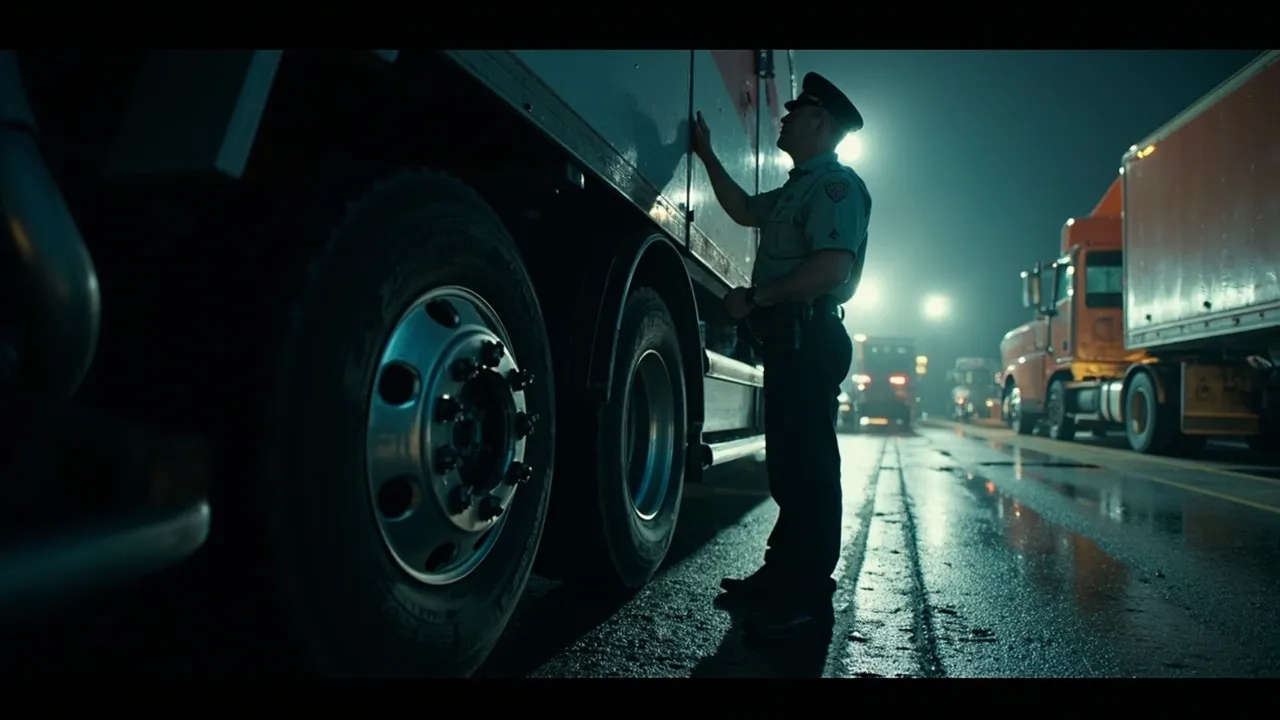
A tractor may be fueled, a driver may be available, and a load may be ready, but none of that creates usable capacity if an inspector can legally stop the trip. Recent enforcement activity across the United States and Ontario is making inspection readiness an operational constraint that dispatch teams must evaluate before assigning equipment.
The numbers are difficult to dismiss. In a three-day Arizona operation, officers completed 96 inspections, found 350 violations, and placed 13 vehicles and 23 drivers out of service. Nebraska troopers inspected 41 trucks, found 155 violations, and sidelined 13 vehicles and two drivers. In Ontario, inspectors removed 10 of 18 trucks from service, according to FreightWaves' roundup of the expanding commercial vehicle crackdown.
These are safety outcomes first, but they are also capacity outcomes. Every out-of-service order converts planned capacity into a delay, repair, reassignment, or failed pickup. Inspection readiness therefore belongs inside the dispatch decision—not in a separate compliance report reviewed after the fact.
A Booked Truck Is Not Necessarily Available Capacity
Traditional dispatch screens emphasize location, empty time, equipment type, and driver hours. Those fields answer whether a truck can theoretically cover a load. They do not always answer whether the truck-driver combination is legally and mechanically ready to pass an inspection.
The recent enforcement findings show how wide that gap can be. Arizona officers cited missing or falsified logbooks, absent commercial driver's licenses, and equipment defects. Nebraska found defective brakes and worn tires. Oklahoma's June results included 186 brake-adjustment defects, 169 missing inspection documents, 141 registration violations, and 123 underinflated or leaking tires.
Any one of those failures can invalidate an otherwise sensible assignment. A dispatcher who discovers the problem at a scale house has fewer options than one who sees it before tender acceptance. The former must manage a roadside exception; the latter can choose another asset, repair a defect, correct a record, or reset the pickup commitment.
The broader benchmark reinforces the risk. During the 2025 International Roadcheck, inspectors conducted 56,178 inspections across the U.S., Canada, and Mexico. FreightWaves reported that 10,148 trucks and 3,342 drivers were grounded, producing out-of-service rates of 18.1% for vehicles and 5.9% for drivers.
Four Checks Should Gate Every Assignment
Inspection readiness should be a structured eligibility test performed before dispatch, with a clear pass, warning, or block status. Four categories matter.
1. Vehicle condition
Confirm recent inspection results and open defects for the tractor and trailer. The check should cover brakes, tires, lights, steering, suspension, coupling devices, cargo-securement equipment, and visible leaks. It should also account for duty cycle: mountain routes, heavy loads, urban stop-start service, and extreme temperatures can accelerate wear.
Brake systems represented 24.4% of vehicle out-of-service violations in the 2025 Roadcheck. Combined with the separate 20%-defective-brakes category, brake-related defects exceeded 40% of vehicle OOS violations. Tires added another 21.4%. A workflow that verifies only annual inspection status misses the components most likely to stop today's trip.
2. Driver credentials
Validate the CDL class and endorsements against the assigned equipment and commodity. Confirm medical certification, license status, and any hazmat qualification before the driver receives the load. No-CDL violations accounted for 24.4% of driver OOS violations in the 2025 Roadcheck, while missing medical cards represented 14.9%.
Credential records need effective and expiration dates, not a static “document on file” flag. Dispatch should receive an automatic block when a required credential is expired, suspended, absent, or incompatible with the assignment.
3. Hours and duty records
Check remaining drive time, on-duty limits, required breaks, and the integrity of the electronic log. Hours-of-service problems led driver OOS violations in the 2025 Roadcheck at 32.4%, while false logs accounted for 10%.
The relevant question is not merely whether a driver can begin the trip. It is whether the driver can complete the planned sequence—including loading dwell, border processing, inspection delays, delivery, and safe parking—without creating an hours exception.
4. Shipment and cross-border documents
The dispatch packet should include registration, insurance evidence, inspection documentation, permits, shipping papers, and commodity-specific records. Cross-border moves add customs references and jurisdiction-specific vehicle and driver requirements. Hazardous materials require particular attention to shipping papers, placarding, loading, and endorsements.
Document presence is not enough. Systems should validate versions, dates, identifiers, and alignment among the shipment, vehicle, trailer, driver, and commodity. A valid document attached to the wrong asset is still an inspection failure waiting to happen.
Feed Inspection Results Back Into Planning
Inspection data has limited value if it ends in a compliance archive. Every roadside result should update the operational profile of the affected asset, driver, lane, and maintenance program.
When an inspection identifies a brake, tire, light, or documentation defect, fleets should record the exact violation, repair action, downtime, cost, and next eligible dispatch time. Repeated defects should raise the maintenance priority of the asset and similar equipment. Clean inspections should also be captured because they provide evidence that preventive controls are working.
Maintenance intervals should respond to actual operating conditions. A recent FreightWaves analysis of preventive-maintenance intervals estimates that a brake-related roadside OOS event commonly creates a four-to-eight-hour delay, apart from towing, repair, load disruption, and longer-term safety-score consequences. The apparent savings from extending service intervals can evaporate when those costs are distributed across maintenance, operations, insurance, and lost business.
A transportation management system can connect those dots. It can prevent an ineligible asset-driver pairing, surface expiring credentials, attach the correct documents, and route inspection outcomes into maintenance and future assignment rules. Dispatchers then see effective capacity: the trucks that are not only nearby and empty, but inspection-ready.
Compliance Must Become an Execution Signal
Commercial vehicle enforcement will continue to find the same fundamentals: brakes, tires, credentials, hours, and records. Fleets cannot eliminate roadside inspections, but they can stop treating the result as unpredictable.
The practical shift is to turn compliance data into a real-time dispatch signal. A load should not move from planned to assigned until the vehicle, driver, hours, and documents pass an eligibility gate. That discipline protects road users while reducing roadside surprises, missed appointments, and expensive capacity substitutions.
Ready to connect inspection readiness, asset assignment, maintenance, and shipment execution in one workflow? Request a CXTMS demo to see how your team can turn compliance status into reliable dispatch capacity.